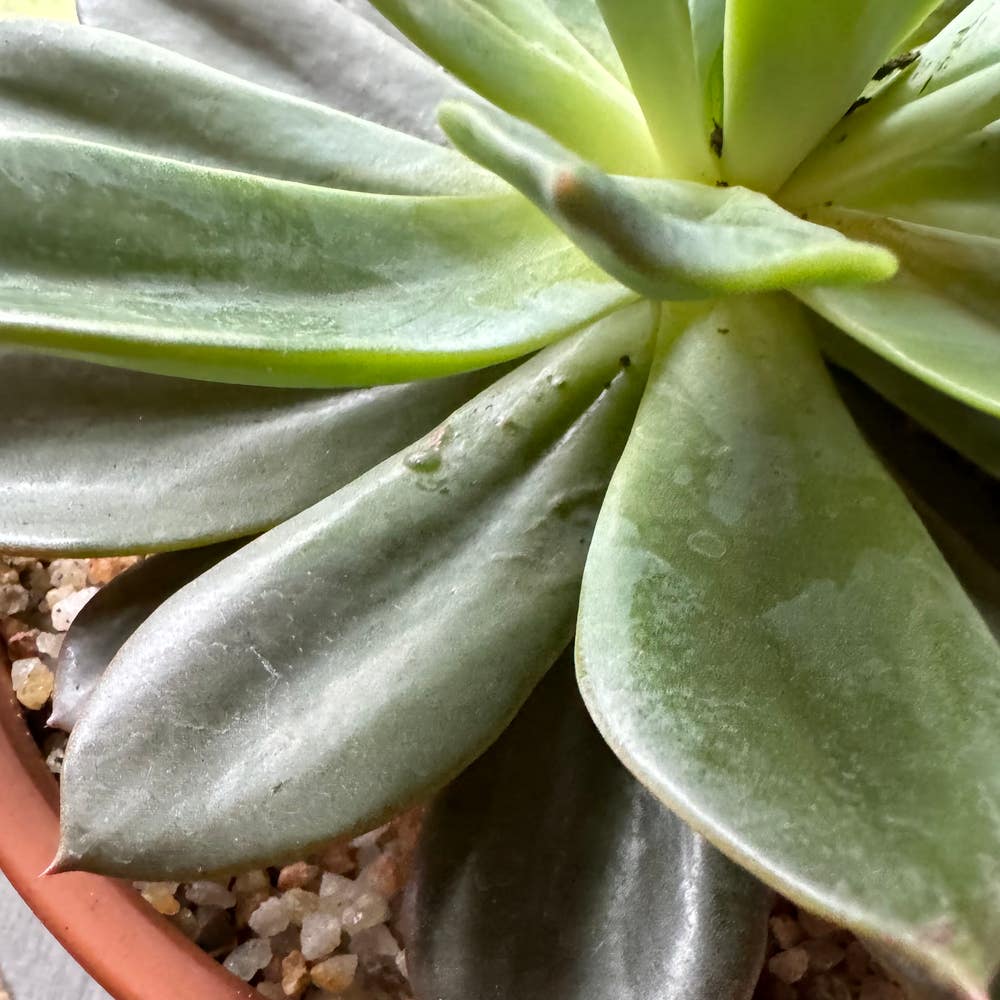
🌵 Understanding Echeveria 'Blue Prince': The Basics
Echeveria 'Blue Prince'
By the Greg Editorial Team
Jan 09, 2025•11 min read
This article was created with the help of AI so we can cover more plants for you. May contain errors. See one? Report it here.
Elevate your space with Echeveria 'Blue Prince' 🌱, a low-maintenance succulent that purifies air and delights the eye!
- 🌞 Echeveria 'Blue Prince' needs 6-8 hours of bright, indirect sunlight daily.
- 🌱 Use well-draining soil and allow it to dry completely between waterings.
- 🐛 Monitor for pests like spider mites and treat with neem oil if needed.
How to Grow
Choosing a Location 🌞
Echeveria 'Blue Prince' thrives in bright, indirect sunlight for about 6-8 hours daily. When deciding between indoor and outdoor placement, consider the temperature and humidity levels to ensure optimal growth.
Soil Preparation 🏜️
For the best results, use a well-draining cactus or succulent mix. Enhance drainage further by adding perlite or sand to the soil.
Planting Techniques 🌱
When planting, make sure the crown of the Echeveria is above soil level. For outdoor planting, space each plant about 12 inches apart to allow for growth.
Watering Guidelines 🚰
Allow the soil to dry out completely between waterings to prevent root rot. Watch for signs of overwatering, such as yellowing leaves or a mushy texture.
Fertilizing Schedule 🍽️
Use a balanced, diluted succulent fertilizer to nourish your plant. Fertilize every 4-6 weeks during the growing season for optimal growth.
Pruning Methods ✂️
Prune your Echeveria by removing any dead or damaged leaves as needed. Always use clean, sharp scissors or pruning shears to avoid introducing disease.
Ongoing Care Tips 🛡️
Regularly monitor your plant for pests and diseases to catch any issues early. Adjust your watering routine based on seasonal changes to keep your Echeveria healthy and thriving.
With these guidelines, you'll be well on your way to nurturing a beautiful Echeveria 'Blue Prince'. Next, let's explore the fascinating world of propagation techniques for this stunning succulent.
Propagation
🌿 Leaf Cuttings
Propagation through leaf cuttings is a moderate challenge but rewarding. Start by selecting healthy, plump leaves from your Echeveria 'Blue Prince'.
Next, allow the cuttings to callous for 1-2 days. This step is crucial as it helps prevent rot when planted.
Once dried, place the cuttings in well-draining soil. Water them lightly to encourage root development.
🌱 Offsets Division
Offsets division is an easy method for propagating your succulent. First, identify small rosettes, or offsets, at the base of the main plant.
Gently twist and pull these offsets from the main plant. Be careful not to damage the roots.
After removal, allow the offsets to dry for a short period before replanting them in soil. This helps to prevent rot and encourages healthy growth.
🌼 Seed Propagation
Seed propagation is the most challenging method but can be quite fulfilling. Start by sourcing seeds, either by purchasing them or collecting from mature plants.
For germination, create a warm, moist environment with indirect light. This is essential for successful seed sprouting.
Typically, you can expect germination to take about 2-3 weeks. Patience is key, but the reward of nurturing new plants is well worth the wait.
With these propagation techniques, you can expand your Echeveria collection and share the beauty of 'Blue Prince' with others. Next, let's explore the lifecycle of this stunning succulent.
Lifecycle
🌱 Stages of Growth
Echeveria 'Blue Prince' is a resilient perennial that can thrive for several years. Understanding its growth stages can help you nurture it effectively.
🌱 Germination
Seeds of Echeveria 'Blue Prince' typically germinate within 2-3 weeks when provided with optimal conditions. This quick turnaround sets the stage for a vibrant plant.
🌱 Seedling Stage
The seedling stage lasts until the plant develops several true leaves, usually taking about 4-6 weeks. During this time, care is crucial to ensure healthy development.
🌱 Vegetative Growth
Once established, the vegetative growth phase kicks in, continuing throughout the growing season from spring to fall. This is when your plant will show its full potential, growing lush and vibrant.
🌸 Flowering
Echeveria 'Blue Prince' usually flowers in late spring to early summer. After blooming, it produces seeds, completing its lifecycle and allowing for potential propagation.
Understanding these stages not only enhances your gardening skills but also deepens your appreciation for this stunning succulent. Next, let’s explore the size characteristics of Echeveria 'Blue Prince' and how they contribute to its appeal.
Size
🌱 Growth Characteristics
Echeveria 'Blue Prince' typically reaches a height of 6 to 12 inches. Its spread can extend up to 12 inches wide, making it a compact yet striking addition to any garden or indoor space.
🚀 Growth Rate
This succulent has a moderate growth rate, which can be influenced by factors such as light and water conditions. Providing optimal care will encourage healthy growth and vibrant foliage.
📏 Summary
Understanding the size and growth characteristics of Echeveria 'Blue Prince' is essential for planning its placement in your home or garden. With the right conditions, this succulent can thrive and become a stunning focal point.
Next, let’s explore the root system of this resilient plant and how it contributes to its overall health.
Roots
🌱 Root System
Echeveria 'Blue Prince' features a fibrous root system that thrives in well-draining conditions. However, it is sensitive to overwatering, which can lead to serious issues.
📏 Depth and Spread
Typically, the roots are shallow, spreading outwards rather than growing deep into the soil. This characteristic allows the plant to absorb moisture efficiently without the risk of drowning.
⚠️ Common Issues
Root rot is a common problem caused by excessive moisture. To prevent this, ensure your pot has adequate drainage and avoid letting the plant sit in water.
✅ Healthy vs. Unhealthy Roots
Healthy roots are firm and exhibit a white or light tan color. In contrast, unhealthy roots will appear dark, mushy, or even emit a foul smell, indicating decay.
🔄 Signs of Rootbound Plants
If you notice roots growing out of drainage holes or circling the pot, your Echeveria may be rootbound. The solution is simple: repot the plant into a larger container with fresh soil to give it room to grow.
Understanding the root system of Echeveria 'Blue Prince' is crucial for its overall health. By monitoring root conditions and ensuring proper care, you can help your plant thrive beautifully.
Next, let’s explore the benefits of growing this stunning succulent.
Benefits
Advantages of Growing 🌿
Echeveria 'Blue Prince' is not just a pretty face; its striking blue-gray foliage adds a unique touch to both indoor and outdoor spaces. This aesthetic appeal makes it a favorite among plant lovers looking to enhance their decor.
Beyond looks, this succulent plays a role in air purification. It filters toxins from the air, contributing to a healthier living environment.
One of the best features of Echeveria 'Blue Prince' is its low maintenance needs. Perfect for busy individuals, it thrives with minimal care, allowing you to enjoy its beauty without the hassle.
Drought resistance is another significant advantage. This plant tolerates dry conditions, meaning you won’t have to worry about frequent watering, making it ideal for those who travel or forget to water regularly.
Finally, Echeveria 'Blue Prince' carries a symbolic weight. It represents resilience and adaptability, qualities that resonate with many cultures and can inspire you in your own life.
With all these benefits, it’s easy to see why Echeveria 'Blue Prince' is a popular choice among succulent enthusiasts.
Transition to Companion Plants 🌼
Now that you know the advantages of growing Echeveria 'Blue Prince', let’s explore which companion plants can enhance its beauty and health in your garden.
Companion Plants
Best Companions 🌱
Companion planting is a fantastic way to enhance your garden's diversity and keep pests at bay. By choosing the right plants, you can create a thriving ecosystem that benefits all your greenery.
Suitable Companions 🌵
For Echeveria 'Blue Prince', other succulents like Sedum and Haworthia make excellent companions. They share similar care requirements, ensuring that your garden remains low-maintenance while providing a visually appealing arrangement.
Plants to Avoid 🚫
On the flip side, steer clear of high moisture or shade-loving plants, such as ferns. These plants can create an environment that Echeveria doesn't thrive in, leading to potential growth issues.
By carefully selecting companion plants, you can cultivate a vibrant and healthy garden that showcases the beauty of Echeveria 'Blue Prince'. Next, let's explore the potential toxicity of this succulent to humans, dogs, and cats.
Toxicity to Humans
🛡️ Safety Overview
Echeveria 'Blue Prince' is generally safe for humans, as it is not listed as toxic by major poison control centers.
However, if ingested in large quantities, it may cause mild skin irritation or digestive discomfort.
⚠️ Caution
Always exercise caution with any plant. If you experience unusual symptoms after contact or ingestion, seek medical advice promptly.
This plant can be a beautiful addition to your home without the worry of toxicity, allowing you to enjoy its aesthetic appeal with peace of mind.
As with any plant, it's wise to keep it out of reach of small children to prevent any accidental ingestion.
In summary, Echeveria 'Blue Prince' offers a low-risk option for plant lovers, making it an excellent choice for both novice and experienced gardeners.
Next, let's explore how this succulent interacts with our furry friends, focusing on its safety for dogs.
Toxicity to Dogs
Safety Overview 🐶
Echeveria 'Blue Prince' is considered safe for dogs, as it is not listed as toxic by major pet poison control centers. This means you can enjoy your succulent without worrying about your furry friend getting into trouble.
Potential Minor Issues 🤢
While generally safe, consuming large quantities may lead to mild gastrointestinal upset in dogs. It's always a good idea to keep an eye on your pet's behavior around new plants.
Tips for Pet Owners 🏡
To ensure a harmonious home, keep Echeveria 'Blue Prince' out of reach of curious pups. Monitoring your dog's interactions with plants can help prevent any potential issues and keep your succulent thriving.
With these precautions, you can enjoy the beauty of your Echeveria while ensuring your dog's safety. Next, let's explore how this plant interacts with our feline friends.
Toxicity to Cats
Safety Overview 🐱
Echeveria 'Blue Prince' is considered safe for cats, as it is not listed as toxic by major pet poison control centers.
Potential Minor Issues ⚠️
While generally safe, excessive consumption may lead to mild gastrointestinal upset.
Tips for Cat Owners 🐾
It's always a good idea to monitor your cat's behavior around new plants. Keeping an eye on their interactions can help ensure they don't nibble too much.
With a little caution, you can enjoy the beauty of Echeveria 'Blue Prince' without worrying about your feline friend.
Problems
Common Issues 🌱
Growing Echeveria 'Blue Prince' can be a rewarding experience, but it’s not without its challenges. Here are some common issues you might encounter.
Incorrect Watering 💧
One of the most frequent problems is incorrect watering. If you notice yellowing leaves or wilting, it’s a sign that your plant may be overwatered or underwatered.
Incorrect Light Conditions ☀️
Light conditions are crucial for healthy growth. Etiolated growth, where the plant stretches towards the light, indicates that your Echeveria isn't getting enough sunlight.
Diseases 🦠
Fungal diseases can also pose a threat. Watch out for powdery mildew and root rot, which can develop in overly moist conditions.
Growth Problems 📉
Lastly, you might face growth problems. If your plant isn’t growing, appears to be leaning, or looks leggy, it’s time to reassess its care conditions.
By keeping an eye on these common issues, you can ensure your Echeveria 'Blue Prince' thrives. Next, let’s explore the pests that could threaten your succulent's health.
Bugs
🐜 Pest Issues
Echeveria 'Blue Prince' is known for its resilience, but it can still fall prey to certain pests. The most common culprits include spider mites, mealybugs, and aphids.
🔍 Identifying Pests
- Spider Mites: Look for fine webbing on the leaves and a stippled appearance.
- Mealybugs: These appear as white, cottony masses on the plant.
- Aphids: Small, green or black insects clustered on new growth.
💊 Treatment Options
If you spot any of these pests, don’t panic! Effective treatment options are available.
- Neem Oil: This natural pesticide disrupts the life cycle of pests without harming your plant.
- Insecticidal Soap: A gentle yet effective solution that suffocates pests on contact.
🛡️ Prevention Tips
To keep your Echeveria thriving, regular monitoring is key. Check your plants frequently for any signs of infestation.
- Maintain good air circulation around your plants.
- Avoid overcrowding to minimize pest attraction.
By staying vigilant and using these treatments, you can protect your Echeveria 'Blue Prince' and enjoy its beauty for years to come. Next, let’s explore what animals might pose a threat to your succulent.
What Eats Echeveria 'Blue Prince'
🦌 Animal Threats
Echeveria 'Blue Prince' can attract a few hungry visitors. Common culprits include deer, rabbits, and squirrels, all of which may nibble on the succulent leaves.
👀 Signs of Presence
Keep an eye out for signs of these munching marauders. Chewed leaves or missing foliage are clear indicators that your plant has been targeted.
🚫 Deterrent Methods
To protect your precious Echeveria, consider using deterrent methods. Chemical repellents can be effective, or you might opt for physical barriers like fencing to keep these animals at bay.
By being proactive, you can enjoy your Echeveria 'Blue Prince' without the worry of it becoming a snack for local wildlife. Next, let’s explore the common problems that can affect its growth and health.
⚠️ Safety First
This content is for general information and may contain errors, omissions, or outdated details. It is not medical, veterinary advice, or an endorsement of therapeutic claims.
Always consult a qualified healthcare professional before using any plant as food, medicine, or supplement.
Never eat any plant (or feed one to pets) without confirming its identity with at least two trusted sources.
If you suspect poisoning, call Poison Control (800) 222-1222, the Pet Poison Helpline (800) 213-6680, or your local emergency service immediately.
Spotted an error? Please report it here.
Cultivate a thriving Echeveria 'Blue Prince' 🌵 with Greg's personalized care tips and watering reminders, ensuring your succulent flourishes beautifully in your home!