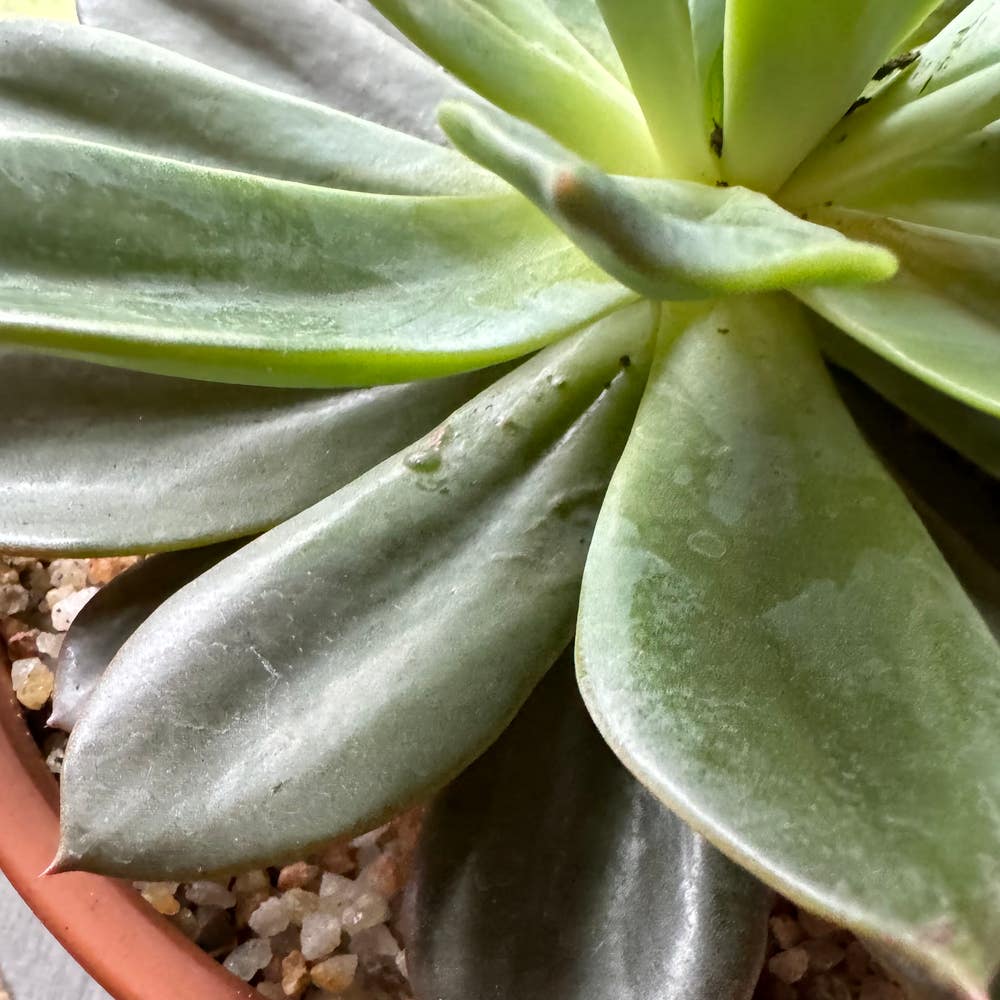
Why Are My Echeveria 'Blue Prince' Leaves Dropping?
Echeveria 'Blue Prince'
By the Greg Editorial Team
Jun 18, 2024•3 min read
This article was created with the help of AI so we can cover more plants for you. May contain errors. See one? Report it here.
Prevent the fall of your 'Blue Prince' 👑 by decoding its leaf-drop distress signals! 🍂
- Overwatering and underwatering can both cause leaf drop; check soil moisture.
- Sunburnt or reaching leaves? Adjust light exposure for your Echeveria 'Blue Prince'.
- Pests stressing your plant? Tackle them quickly to prevent leaf loss.
Spotting the Trouble Signs
🚨 Telltale Symptoms of Distress
Echeveria 'Blue Prince' is a stoic plant, but yellowing leaves at the top are its white flag. New growth turning pale is your clue to a care routine check-up. Spotted or curled leaves aren't just quirky—they're stress signals. And if your succulent's leaves are drooping like they've given up, it's time for some plant parenthood.
🚨 When It's More Than Just Old Age
Leaf shedding is normal, but a sudden leaf-drop spree, especially among the newer leaves, screams for attention. If your 'Blue Prince' is shedding like it's prepping for a desert getaway, it's more than just old age. Keep an eye out for wilting, discoloration, or a mushy feel to the stems—these are distress flares not to be ignored.

The Usual Suspects: Common Causes of Leaf Drop
🌧️ Too Much Love: The Perils of Overwatering
Overwatering is like a helicopter parent for plants; it smothers. Your Echeveria 'Blue Prince' might be silently screaming for air if you notice mushy stems or yellowing leaves. This succulent isn't a fan of wet feet. If the soil feels like a damp sponge, it's time to back off and let it breathe.
🏜️ Thirsty Roots: The Underwatering Equation
On the flip side, underwatering turns your plant into a botanical version of a parched hiker. Droopy leaves and bone-dry soil are your red flags. If the top inch of soil is as dry as a week-old loaf of bread, it's time to give your plant a long, quenching drink.
🌞 Feeling the Burn: Light and Temperature Factors
Echeveria 'Blue Prince' loves the sun, but everything in moderation. If your plant's leaves are starting to look like they've had a bit too much fun in the sun, or if they're reaching out like they're trying to escape from a dark cave, you'll need to adjust their light exposure. A sunburnt or etiolated succulent is a sign you've missed the mark.
🐜 Unwanted Guests: Tackling Pest Problems
Pests are like that one guest who overstays their welcome and eats all your food. If you spot any uninvited critters, it's eviction time. Pests can stress your plant out to the point of dropping leaves. Keep an eye out for signs of infestation, such as sticky residue or tiny bite marks, and be ready to show them the door with appropriate treatments.

Turning Over a New Leaf: Solutions and Prevention
💧 Fine-Tuning Your Watering Technique
Watering is more art than science. Your Echeveria 'Blue Prince' craves precision, not a flood. Check the soil before each watering—dry to the touch? Go ahead. Soggy? Hold off. Remember, room-temperature water is the gold standard, avoiding any root shock. And always water at the base to prevent unwanted leaf moisture and potential fungal issues.
🌞 Creating the Ideal Sun and Heat Retreat
Your succulent's leaves will tell you if they're getting too much sun or not enough. Crispy edges? Dial back the sunbathing. Stretching out? They're reaching for more light. Aim for a spot that offers bright, indirect sunlight and a consistent temperature. Think of it as creating a personal oasis for your plant, where it can bask without fear of a sunburn.
🐜 Evicting Pests: Keeping Your Plant Bug-Free
Pests are party crashers. Inspect your Echeveria regularly, especially under the leaves and near the soil. If you spot freeloaders, show them the door with a gentle insecticidal soap or neem oil treatment. Keep the area around your plant tidy—debris is an open invitation for pests to settle in. Remember, a strong, healthy plant is less inviting to bugs, so keep up with your watering, lighting, and soil maintenance.

⚠️ Safety First
This content is for general information and may contain errors, omissions, or outdated details. It is not medical, veterinary advice, or an endorsement of therapeutic claims.
Always consult a qualified healthcare professional before using any plant as food, medicine, or supplement.
Never eat any plant (or feed one to pets) without confirming its identity with at least two trusted sources.
If you suspect poisoning, call Poison Control (800) 222-1222, the Pet Poison Helpline (800) 213-6680, or your local emergency service immediately.
Spotted an error? Please report it here.
Prevent your Echeveria 'Blue Prince' from dropping its regal leaves by setting up custom care alerts 🌱 with Greg for a perfectly pampered succulent.