Why Are My Echeveria 'Blue Prince' Leaves Curling?
Echeveria 'Blue Prince'
By the Greg Editorial Team
Jun 18, 2024•3 min read
This article was created with the help of AI so we can cover more plants for you. May contain errors. See one? Report it here.
Unravel the mystery 🕵️♂️ behind your Echeveria 'Blue Prince's' curling leaves for a lusher, happier plant! 🌿
- Discoloration and wilting signal Echeveria 'Blue Prince' distress.
- 🌱 Adjust watering and soil drainage to prevent curling.
- Consistent care and seasonal adjustments keep leaves uncurled.
Spotting the Curl: Identifying Leaf Curling Signs
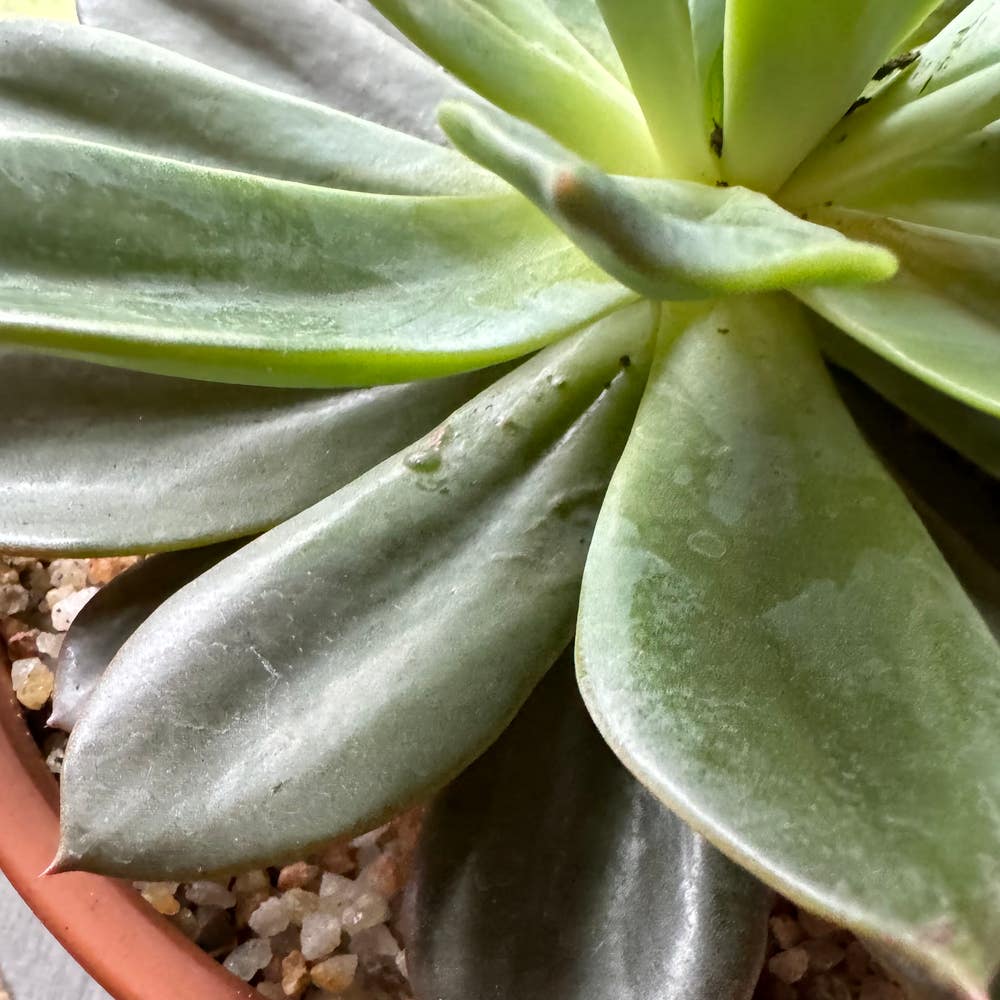
🌿 Visual Clues of Distress
- Discoloration and wilting are the plant's cry for help.
- Unusual growth patterns are like a red flag waving for attention.
🕵️ Investigating the Root Cause
- Watering routine and soil condition are the usual suspects.
- Environmental factors could be the unseen culprits.

Thirsty or Drowning? Balancing Water Needs
💧 Fine-Tuning Watering Habits
Echeveria 'Blue Prince' is not a fan of soggy feet. Adjust your watering frequency based on the soil's dryness, not the calendar. If the top inch feels like a desert, it's time to water. If it's damp, give it a break.
Establish a watering schedule that's more of a guideline than a strict rule. Monitor your plant's mood swings—droopy leaves and dry soil scream for a drink, while a heavy pot suggests a watering hiatus.
🚰 Soil Check-Up
Ensure your Echeveria's home isn't a swamp. Proper drainage is non-negotiable to prevent waterlogged roots. A well-draining soil mix is like a good insurance policy—it keeps you from the root rot disaster.
Check the pot's drainage holes—are they clear or clogged? If it's the latter, it's time for some pot surgery. Clear those blockages and let the water flow freely.

Sunbathing and Chill: Light and Temperature Control
🌞 Getting the Light Just Right
Echeveria 'Blue Prince' thrives in bright, indirect sunlight. Direct sun can leave leaves as crisp as overcooked bacon. If it's stretching out, it's a cry for more light. Find that sweet spot where the sun is a gentle caress, not a harsh slap.
🌡️ Keeping the Temperature in Check
Keep your Echeveria 'Blue Prince' in a comfort zone between 60°F and 85°F. Below 55°F, and you're asking for trouble. During heatwaves, think of shade as your plant's best friend. And remember, consistency is key—avoid placing your plant where temperature swings are more dramatic than a reality TV show.

Soil and Drainage: The Foundation of Health
🌱 Choosing the Right Mix
Well-draining soil is non-negotiable for Echeveria 'Blue Prince'. Opt for a mix that's more gritty than your average garden dirt, something that screams "I'm airy!" A concoction of sandy or gritty soil, tailored for succulents, is your ticket to happy plant roots. Perlite or coarse sand can be your go-to amendments when jazzing up regular potting soil.
🌿 Repotting for Success
When your Echeveria 'Blue Prince' starts giving you the side-eye, it might be time to repot. Roots peeking out of drainage holes are a dead giveaway. Grab a pot that's a size larger with plenty of drainage holes. Think of repotting as a root revival—more space, better air flow, and a fresh start. It's like moving to a bigger apartment with better ventilation.
Curl Prevention: Keeping Leaves Happy
🌱 Consistent Care Routine
Sticking to a care schedule that suits Echeveria 'Blue Prince' is non-negotiable.
🛡️ Proactive Measures
Adjusting care with seasonal changes is crucial to prevent leaf curling.
Curl Prevention: Keeping Leaves Happy
🌱 Consistent Care Routine
Regular care is the secret sauce for a thriving Echeveria 'Blue Prince'. Watering should be as predictable as your morning coffee, and the soil should feel like a well-pressed sponge—moist but never soggy.
🛡️ Proactive Measures
As seasons shift, so should your care tactics. Summer might call for more shade, while winter whispers for less water. Stay ahead of the game and your Echeveria 'Blue Prince' won't throw a fit with curled leaves.
⚠️ Safety First
This content is for general information and may contain errors, omissions, or outdated details. It is not medical, veterinary advice, or an endorsement of therapeutic claims.
Always consult a qualified healthcare professional before using any plant as food, medicine, or supplement.
Never eat any plant (or feed one to pets) without confirming its identity with at least two trusted sources.
If you suspect poisoning, call Poison Control (800) 222-1222, the Pet Poison Helpline (800) 213-6680, or your local emergency service immediately.
Spotted an error? Please report it here.
Revive your Echeveria 'Blue Prince' and prevent leaf curling by using Greg to monitor 🌱 the perfect balance of water, light, and soil, ensuring your succulent stays as vibrant as nature intended.