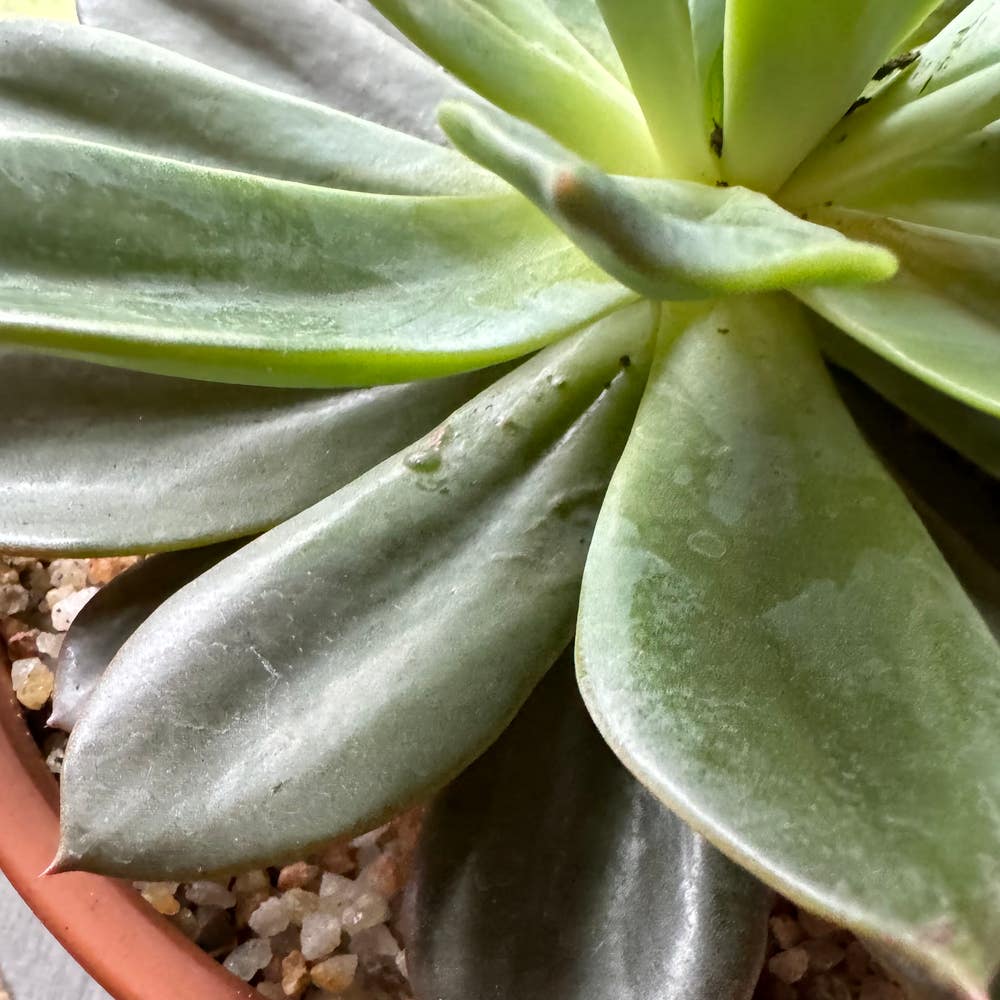
Why Are There Brown Spots on My Echeveria 'Blue Prince'?
Echeveria 'Blue Prince'
By the Greg Editorial Team
Jun 18, 2024•5 min read
This article was created with the help of AI so we can cover more plants for you. May contain errors. See one? Report it here.
Solve the puzzle of brown spots on your Echeveria 'Blue Prince' and restore its royal luster! 🌵👑
- Sunburn, water, disease, damage: multiple causes for brown spots.
- 🌞🚿 Prevent spots: adjust light, water wisely, and handle gently.
- Early detection is key to treating and preventing further issues.
Spotting the Trouble: Identifying Brown Spots
🎨 Types of Brown Spots
Echeveria 'Blue Prince' can develop brown spots for various reasons. Sunburn spots typically appear on the leaves that get the most exposure to light, presenting as dry, crispy areas. Water spots are a result of moisture issues and often look soft or mushy. Disease-related spots can be trickier, showing up with yellow halos or concentric rings, signaling a possible fungal or bacterial problem.
🕵️ Spot Patterns and What They Indicate
Patterns are like the fingerprints of plant problems. Uniform spots across the leaves might suggest environmental stress, while randomly scattered ones could point to a pest issue. Spots on the underside of leaves often indicate a more insidious problem, like pests or disease. Conversely, topside blemishes are usually related to environmental factors like sunburn or physical damage. Keep an eye on the edges versus the center of the leaf; edge spots often result from sunburn, while center spots can be a sign of a more systemic issue.

Sunburn: When Your Plant Gets Too Much Sun
🕶️ Recognizing Sunburn Spots
Sunburn on Echeveria 'Blue Prince' is no joke. Brown spots are the plant's SOS, signaling an excess of sunlight. These spots often show up as dry, crispy patches on the leaves, especially those facing the sun. If your succulent's leaves are more parched than a desert traveler, it's time to rethink its sunbathing habits.
🌅 Shifting Your Plant's Sunbathing Routine
Adjusting your plant's exposure to sunlight is crucial. Start by gradually moving your Echeveria to a spot with bright, but indirect light. Think of it as easing into a hot bath rather than jumping into a boiling pot. Increase the amount of indirect sunlight over a few weeks, avoiding the harsh midday rays. This way, your plant won't feel like it's under a magnifying glass at high noon.

Water Woes: The Overwatering Connection
💦 Signs of Overwatering
Mushy leaves are the hallmark of overwatering in your Echeveria 'Blue Prince'. They're not just going soft on you; they're literally drowning in excess moisture. If the leaves have taken on a soggy appearance, it's a clear distress signal.
Yellowing or browning of the leaves is another red flag. It's like the plant's way of saying, "I've had enough!" And if you notice a funky smell emanating from the soil, that's the stench of root rot setting in.
Fine-Tuning Your Watering Schedule
To avoid the slippery slope to Brown Spot City, check the soil before watering. If it's dry to the touch, give your plant a drink. If not, step away from the watering can.
Seasonal changes matter. During the cooler months, your Echeveria 'Blue Prince' is more of a couch potato and drinks less. So, water sparingly.
Remember, a good soak followed by a drought is the Echeveria's jam. Mimic the desert—where these succulents thrive—by allowing the soil to dry out completely between waterings.
Lastly, ensure your pot has drainage holes. It's not just about how much you water, but also about where that water goes. No drainage equals a one-way ticket to Soggy Leaf Land.

Battling the Blight: Fungal and Bacterial Foes
🍄 Spotting the Signs of Infection
Fungal invaders might throw a party on your Echeveria 'Blue Prince', leaving behind brown spots with a powdery texture or concentric rings. Bacterial guests are less subtle, creating slimy, water-soaked lesions that scream "I'm here!" at the top of their lungs.
- Fungal: Look for spots with a bull's-eye pattern or a powdery surface.
- Bacterial: Watch out for wet, slimy spots that feel like a bad handshake.
🛡️ Fighting Back: Treatment and Prevention
When it comes to treatment, fungicides and bactericides are your go-to. But before you wage chemical warfare, make sure you've correctly identified the culprit. Prevention is your best defense—keep your Echeveria dry and happy with good air circulation and judicious watering.
- Fungicides: Choose your weapon wisely. Organic options like neem oil can be effective, but for tougher cases, you might need the heavy artillery like copper-based products.
- Bactericides: Copper is king. It's like the bouncer at the door, keeping bacterial riff-raff out.
Pro Tip: Always sterilize your tools after pruning away infected parts to avoid spreading the problem. A simple bleach solution or rubbing alcohol does the trick.
Remember, the best offense is a good defense. Keep an eye out for early signs of trouble and act fast—like you're sniping weeds in your garden before they even know what's hit them.
Physical Damage: Accidents Happen
🤕 The Impact of Bruises and Breaks
Echeveria 'Blue Prince' is not immune to the clumsiness of daily life. Brown spots can emerge from physical harm, such as a leaf being bent, dropped, or brushed too harshly. These spots are typically localized and won't spread like those caused by disease.
Gentle Handling and Care Tips
Handle with care to prevent these unsightly blemishes. When moving or repotting your plant, imagine you're cradling a fragile antique. Use sterilized tools for any pruning to avoid infection, and always support the plant's base. Remember, a little gentleness goes a long way in keeping your Echeveria spot-free.
⚠️ Safety First
This content is for general information and may contain errors, omissions, or outdated details. It is not medical, veterinary advice, or an endorsement of therapeutic claims.
Always consult a qualified healthcare professional before using any plant as food, medicine, or supplement.
Never eat any plant (or feed one to pets) without confirming its identity with at least two trusted sources.
If you suspect poisoning, call Poison Control (800) 222-1222, the Pet Poison Helpline (800) 213-6680, or your local emergency service immediately.
Spotted an error? Please report it here.
Keep your Echeveria 'Blue Prince' spot-free 🛡️ with Greg's personalized care reminders, helping you prevent those pesky brown spots before they start!