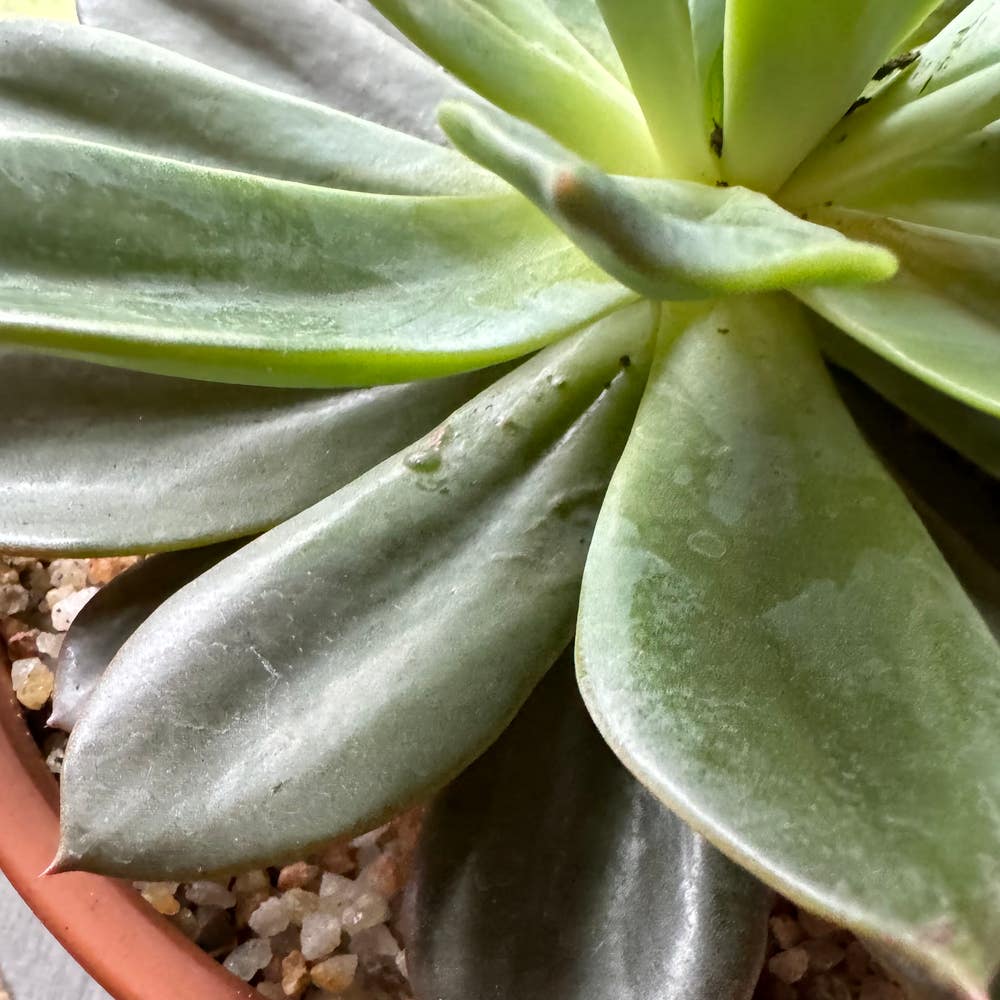
Echeveria 'Blue Prince' - Fertilizing 101
Echeveria 'Blue Prince'
By the Greg Editorial Team
Jun 18, 2024•4 min read
This article was created with the help of AI so we can cover more plants for you. May contain errors. See one? Report it here.
Nurture a regal 'Blue Prince' 🌵 to its full glory with our essential fertilizing tips and tricks!
- Low-nitrogen fertilizers like 5-10-10 are ideal for 'Blue Prince'.
- Fertilize bi-weekly in growth phases, less during winter dormancy.
- Dilute and apply carefully to avoid over-fertilization damage.
Picking the Right Fertilizer for Your 'Blue Prince'
💪 Balanced Succulent Nutrition
Balanced, low-nitrogen fertilizers are key to the well-being of your Echeveria 'Blue Prince'. They encourage robust growth without pushing the plant to sacrifice its stunning blooms for leaf production. A ratio like 5-10-10 is often recommended, ensuring your succulent gets just enough nitrogen for foliage while promoting root development and flowering.
🌱 Organic vs. Synthetic: What's Best for Your Echeveria
When it comes to organic versus synthetic fertilizers, it's a bit of a tug-of-war. Organic options release nutrients slowly, improving soil health over time and providing a long-term buffet for your 'Blue Prince'. Synthetic fertilizers, on the other hand, are the fast food of plant nutrition—quick and effective, but easy to overdo. They can give your plant a rapid growth boost, but there's a higher risk of nutrient burn if you're not careful.
Consider the environment and your plant's needs before choosing. Organic fertilizers are like a slow-drip IV of nutrients, while synthetics are a shot in the arm. Both can work wonders, but it's all about the right dose at the right time.

Timing is Everything: When to Fertilize
💥 Growth Spurts: Fertilizing During Active Growth
Spring and summer are the Echeveria 'Blue Prince's' version of a power surge. This is when it's all about the growth. Fertilize every two to four weeks during these seasons to back up those succulent ambitions. It's like giving a leg-up to an athlete in training—only the athlete is your plant, and the training is its active growth phase.
❄️ Winter Slumber: Adjusting for Dormancy
As the days shorten and the chill sets in, your 'Blue Prince' starts to snooze. Ease up on the fertilizing—once a month or even less is the game plan here. Think of it as respecting the plant's need for a little R&R. Overdoing it at this stage is like offering an espresso shot to someone in deep sleep—unnecessary and unwelcome. Keep an eye on your plant; if it's still pushing out new growth despite the season, a light feeding might still be on the cards. But when in doubt, less is more.

The How-To of Fertilizing Echeveria 'Blue Prince'
💧 Dilution Solutions: Getting the Mix Right
To prevent your 'Blue Prince' from experiencing the horticultural equivalent of a sugar rush, dilution is key. Half-strength is the golden rule for mixing water-soluble fertilizers. Ignore the urge to go full-strength; it's not a powerlifting competition. Check the label for specifics, because each brand has its own idea of what "half-strength" entails.
🌱 Application Techniques: Soil vs. Foliar Feeding
🌿 Soil Feeding: The Root of the Matter
Apply diluted fertilizer directly to the soil, ensuring it's evenly distributed. Think of it as seasoning a steak – you want it just right, not too bland, not too salty. Avoid getting fertilizer on the leaves or stem; it's not a marinade.
🍃 Foliar Feeding: A Leafy Approach
For a quick nutrient fix, consider foliar feeding. Mix your fertilizer even more diluted than for soil application, and gently mist the leaves. It's like a spa treatment for your 'Blue Prince', but don't overdo it – this isn't a water park. Remember, the roots should still be the main course, with foliar feeding as the occasional appetizer.

Overdoing It: Recognizing and Fixing Over-Fertilization
🚫 Telltale Signs Your Plant is Over-Fed
Salt buildup on the soil's surface or pot edges is a dead giveaway of over-fertilization. If your Echeveria 'Blue Prince' has stunted growth or its progress has come to a screeching halt, it's time to reassess your fertilizing tactics. Brown leaf tips or a crusty white layer are your plant's SOS signals. Don't ignore them.
🛠️ The Recovery Plan
When you've pushed the nutrient envelope too far, stop all fertilization immediately. If you see fertilizer on the soil's surface, remove it. Begin the recovery by flushing the soil with water to wash away excess nutrients. Repeat this process every few days, and keep an eye out for signs of recovery. Remember, over-fertilization symptoms can look a lot like over-watering, so make sure you're addressing the right problem.
Prune any damaged leaves to help your plant focus on recovery. For potted plants, consider a fresh start in new, nutrient-free soil. Patience is your best friend here; give your 'Blue Prince' a break from fertilizers and watch for its triumphant return to health.
⚠️ Safety First
This content is for general information and may contain errors, omissions, or outdated details. It is not medical, veterinary advice, or an endorsement of therapeutic claims.
Always consult a qualified healthcare professional before using any plant as food, medicine, or supplement.
Never eat any plant (or feed one to pets) without confirming its identity with at least two trusted sources.
If you suspect poisoning, call Poison Control (800) 222-1222, the Pet Poison Helpline (800) 213-6680, or your local emergency service immediately.
Spotted an error? Please report it here.
Ensure your Echeveria 'Blue Prince' receives balanced nourishment 👑 with Greg's tailored fertilizing reminders, so it thrives without the risk of over-fertilization.