Why Does My Echeveria 'Blue Prince' Have Yellow Leaves? 🍂
Echeveria 'Blue Prince'
By the Greg Editorial Team
Jun 18, 2024•3 min read
This article was created with the help of AI so we can cover more plants for you. May contain errors. See one? Report it here.
Save your 'Blue Prince' 🌱 from yellow peril with top succulent care secrets!
- Yellow leaves signal distress; investigate for over/underwatering, sunburn, or pests.
- Adjust watering and light to prevent and fix yellowing in Echeveria 'Blue Prince'.
- Consistent care and inspection help avoid yellow leaves and maintain plant health.
Spotting the Trouble: Identifying Yellow Leaves
🟡 When Yellow Flags Go Up
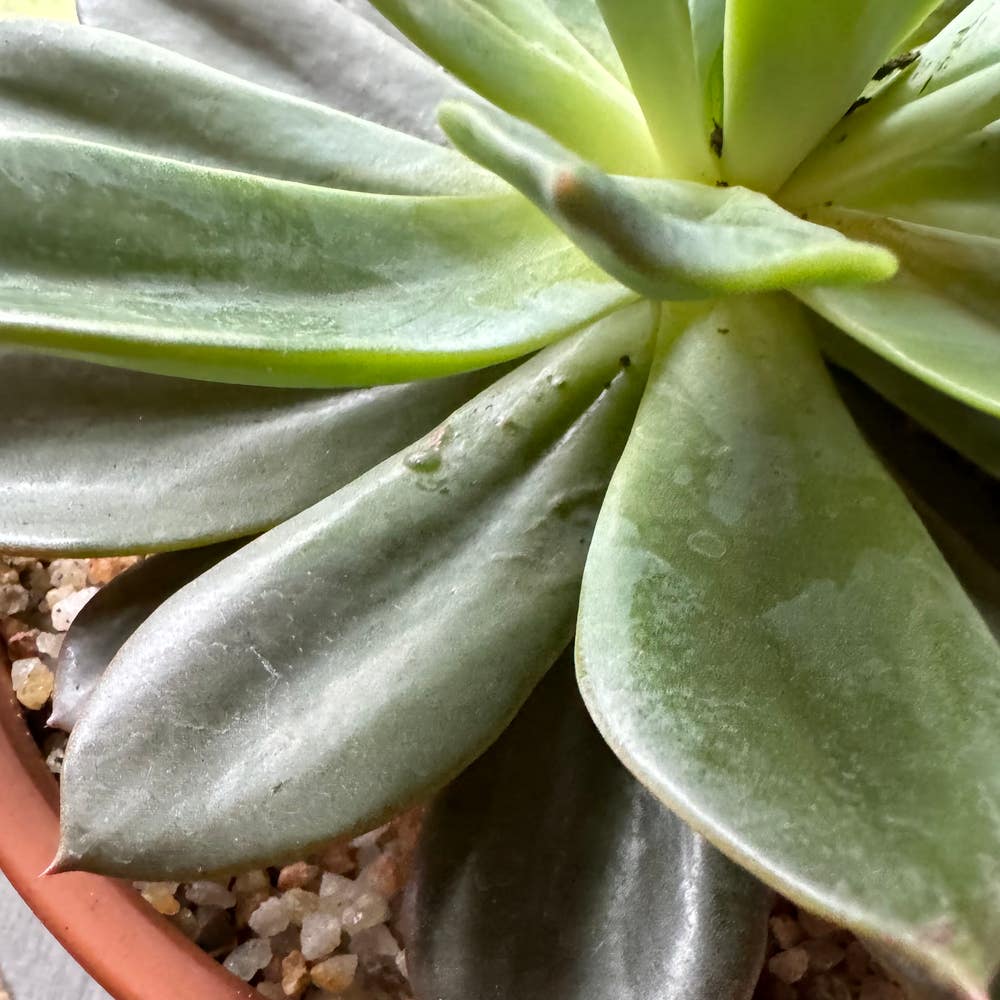
Yellow leaves on your Echeveria 'Blue Prince' are the plant's distress signal. Early signs include a change in the leaf color, especially if the yellowing is on the upper, newer leaves. This is your cue to become a plant detective.
🎨 Different Shades of Concern
Understanding the spectrum of yellowing is crucial for plant health. Not all yellow leaves are a cause for concern; it's normal for older leaves to yellow and drop off. However, if new foliage is turning yellow, it's time to scrutinize your care routine.

The Usual Suspects: Common Causes of Yellow Leaves
💧 Too Much H2O? Overwatering Woes
Overwatering is a common misstep that can turn your Echeveria 'Blue Prince' into a yellow mess. Signs include mushy, swollen leaves and a general look of being waterlogged. This excess moisture suffocates roots, leading to a lack of oxygen and eventual root rot.
🏜️ Parched Plants: The Underwatering Connection
On the flip side, underwatering can leave your succulent's leaves looking pale and lifeless. The soil will feel bone-dry, and leaves may become brittle. Your plant is essentially dehydrated, craving a consistent sip, not a deluge.
🌞 Sunburnt Succulents: When the Sun is Too Much
Too much direct sunlight can scorch your Echeveria, causing sunburn. Yellow patches or a bleached appearance are telltale signs. It's like a plant sunbathing without sunscreen—risky business.
🐜 Uninvited Guests: Pest Infestations
Pests are the party crashers no one wants. Mealybugs, aphids, and spider mites can all lead to yellowing leaves. Check for sticky residue or webbing, and evict these freeloaders with insecticidal soap or neem oil. Regular inspections are your best defense.

Turning Over a New Leaf: Fixing Yellow Leaves
💧 Adjusting Watering Habits
Watering is more art than science when it comes to succulents. Check the soil; if it's dry an inch down, it's time to water. Your Echeveria 'Blue Prince' wants a drink, not a swim, so ensure good drainage to avoid waterlogged roots.
☀️ Shifting the Sunlight Equation
Too much sun can turn your succulent into a yellow mess. Aim for bright, indirect light. If your Echeveria starts to look sun-kissed, it's time to throw some shade—literally. A sheer curtain can work wonders.
🐜 Showing Pests the Door
Pests are like that one guest who overstays their welcome. Keep an eye out for freeloaders like aphids and mealybugs. If you spot them, show them the door with insecticidal soap or neem oil. Remember, vigilance is your best defense.

Keeping the Green: Preventing Yellow Leaves
🌱 Consistency is Key: Routine Care
Consistency in your care routine is the unsung hero in the battle against yellow leaves. Like a trusty alarm clock, it keeps everything on track. Watering should be regular but not overdone—think of it as a steady rhythm, not a sporadic dance.
🏡 The Right Foundation: Soil and Pot Essentials
Choosing the right soil mix and pot is like setting up a strong foundation for a house. A well-draining succulent mix with added perlite or coarse sand ensures your Echeveria 'Blue Prince' isn't sitting in moisture for too long. And don't skimp on the pot—it needs drainage holes to let excess water escape, not a sealed chamber of plant doom.
⚠️ Safety First
This content is for general information and may contain errors, omissions, or outdated details. It is not medical, veterinary advice, or an endorsement of therapeutic claims.
Always consult a qualified healthcare professional before using any plant as food, medicine, or supplement.
Never eat any plant (or feed one to pets) without confirming its identity with at least two trusted sources.
If you suspect poisoning, call Poison Control (800) 222-1222, the Pet Poison Helpline (800) 213-6680, or your local emergency service immediately.
Spotted an error? Please report it here.
Revive your Echeveria 'Blue Prince' from yellow to youthful 💚 with Greg's tailored care reminders that help you adjust watering and lighting for a happier plant.