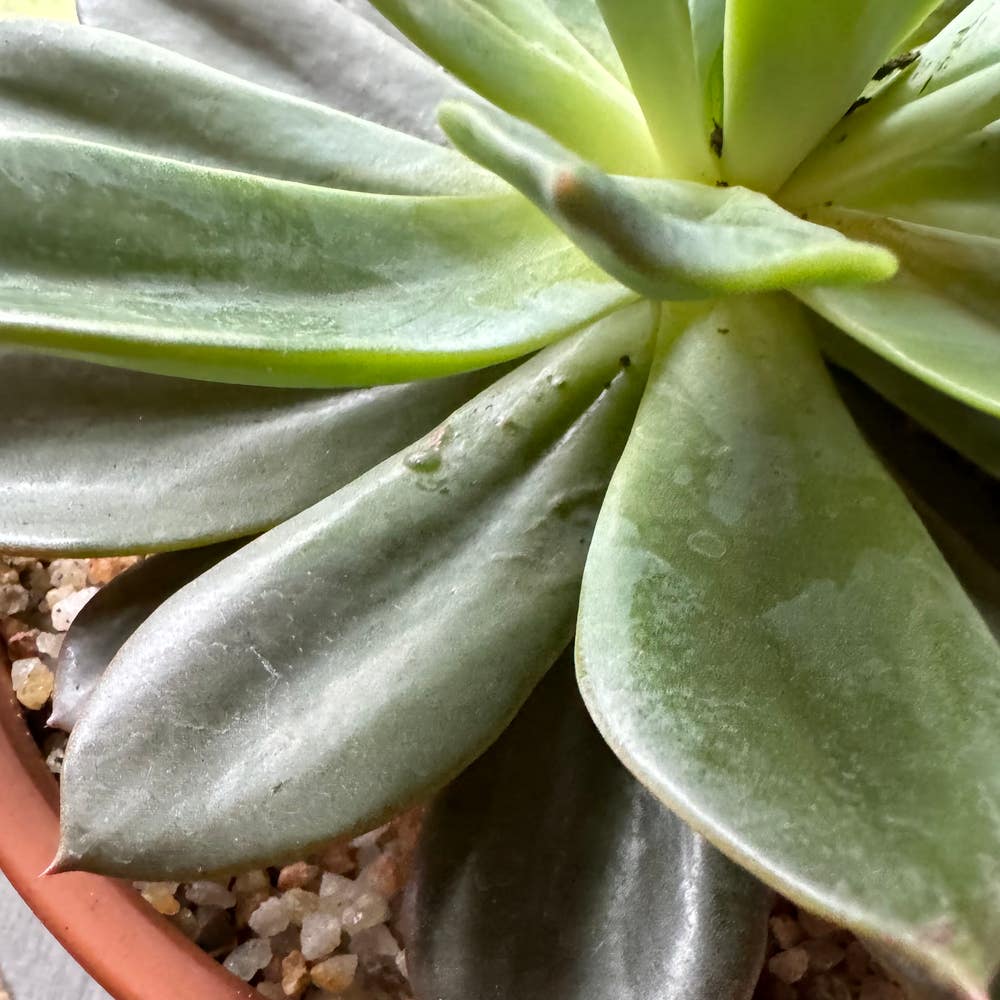
💧 Why Are My Echeveria 'Blue Prince' Leaves Mushy?
Echeveria 'Blue Prince'
By the Greg Editorial Team
Jun 18, 2024•3 min read
This article was created with the help of AI so we can cover more plants for you. May contain errors. See one? Report it here.
Stop the squish in your 'Blue Prince' 🌵—learn the must-know signs and fixes for overwatering woes!
- Overwatering causes mushy leaves, adjust watering to prevent.
- Root rot signaled by foul odor, requires immediate action.
- Well-draining soil and pots essential for healthy Echeveria 'Blue Prince'.
Spotting the Signs of Trouble
🚰 Telltale Symptoms of Overwatering
Yellow leaves are your first clue that your Echeveria 'Blue Prince' might be drowning in excess water. When leaves turn soft and translucent, it's a clear signal to reevaluate your watering habits. These succulents need moderation, not a flood.
🍄 Root Rot: A Sneaky Culprit
Detecting root rot begins with a nose check—a foul odor is a distress call from your plant. Roots should be white and firm, not dark and mushy. If you spot blackened stems or leaves, it's time for an urgent plant intervention.

First Aid for Your Succulent
🚑 Immediate Steps to Take
Cease watering immediately if your Echeveria 'Blue Prince' has mushy leaves—it's a red flag for overwatering. Let the soil dry out completely to halt further damage. Sterilize your pruning tools and snip off the affected leaves to redirect the plant's energy to healthier growth. Remember, it's like an emergency intervention for your succulent's well-being.
💧 Adjusting Your Watering Routine
Watering frequency needs a serious tweak. During the growing season, water your Echeveria 'Blue Prince' once every two weeks, and in the dormant winter months, cut back to once a month. Always wait until the soil is bone-dry. It's not just about watering less; it's about watering right. Use the "soak and dry" method—thoroughly drench the soil, then let it dry out completely. This mimics the natural arid conditions these succulents adore.

Creating the Ideal Environment for Recovery
🌵 Choosing the Right Soil Mix
Well-draining soil is non-negotiable for the Echeveria 'Blue Prince'. A gritty, sandy mix, akin to what you'd find in a succulent's natural habitat, is paramount. Perlite or coarse sand can be added to regular potting soil to amp up the drainage. Remember, the goal is to mimic a desert, not a swamp.
🏺 The Importance of Proper Potting
The pot is more than a home—it's a life support system. Drainage holes are a must to avoid soggy soil syndrome. When repotting, which should be as infrequent as a blue moon, choose a container slightly larger than the current one. Here's a quick guide:
- Water your Echeveria a day before the big move.
- Gently remove the plant, whispering apologies for the disturbance.
- Inspect and trim any dodgy roots.
- Nestle the plant in its new abode with the well-draining soil mix.
- Water sparingly and avoid direct sunlight like a vampire for a few days post-repotting.
Keep these tips in your back pocket, and your Echeveria 'Blue Prince' will be on the road to recovery, flaunting firm, healthy leaves in no time.

Long-Term Care Strategies
👀 Monitoring and Adjusting Care Habits
Vigilance is key in maintaining the health of your Echeveria 'Blue Prince'. Regularly observe your plant's condition, noting any changes in leaf color or texture. Seasonal shifts significantly impact your succulent's needs. During winter, reduce watering to mimic its natural dormant state. Conversely, summer may call for increased hydration, but always with caution to prevent overwatering.
🛡️ Preventative Measures to Keep Leaves Firm and Healthy
To fend off future mushy leaf episodes, consistency in care is crucial. Ensure your Echeveria 'Blue Prince' is potted in a well-draining mix to avoid waterlogged roots. Environmental control plays a pivotal role; place your plant in a location with bright, indirect light and good air circulation. Remember, a stable environment helps prevent stress, which can lead to mushy leaves.
⚠️ Safety First
This content is for general information and may contain errors, omissions, or outdated details. It is not medical, veterinary advice, or an endorsement of therapeutic claims.
Always consult a qualified healthcare professional before using any plant as food, medicine, or supplement.
Never eat any plant (or feed one to pets) without confirming its identity with at least two trusted sources.
If you suspect poisoning, call Poison Control (800) 222-1222, the Pet Poison Helpline (800) 213-6680, or your local emergency service immediately.
Spotted an error? Please report it here.
Revive your Echeveria 'Blue Prince' from soggy to superb 🌟 with Greg's custom watering reminders that specifically prevent overwatering and root rot.