How Can You Tell If A Echeveria 'Blue Prince' Is Dying?
Echeveria 'Blue Prince'
By the Greg Editorial Team
Jun 18, 2024•5 min read
This article was created with the help of AI so we can cover more plants for you. May contain errors. See one? Report it here.
Revive your wilting Echeveria 'Blue Prince' 🌵 by decoding its SOS signals and applying life-saving fixes!
- Wilting and discoloration signal overwatering or distress in Echeveria 'Blue Prince'.
- Leaf spots and stunted growth hint at pests, disease, or environmental stress.
- Adjust care and monitor recovery to revive your Echeveria 'Blue Prince'.
Spotting Trouble: Key Distress Signals
🚩 Wilting, Discoloration, and Spots
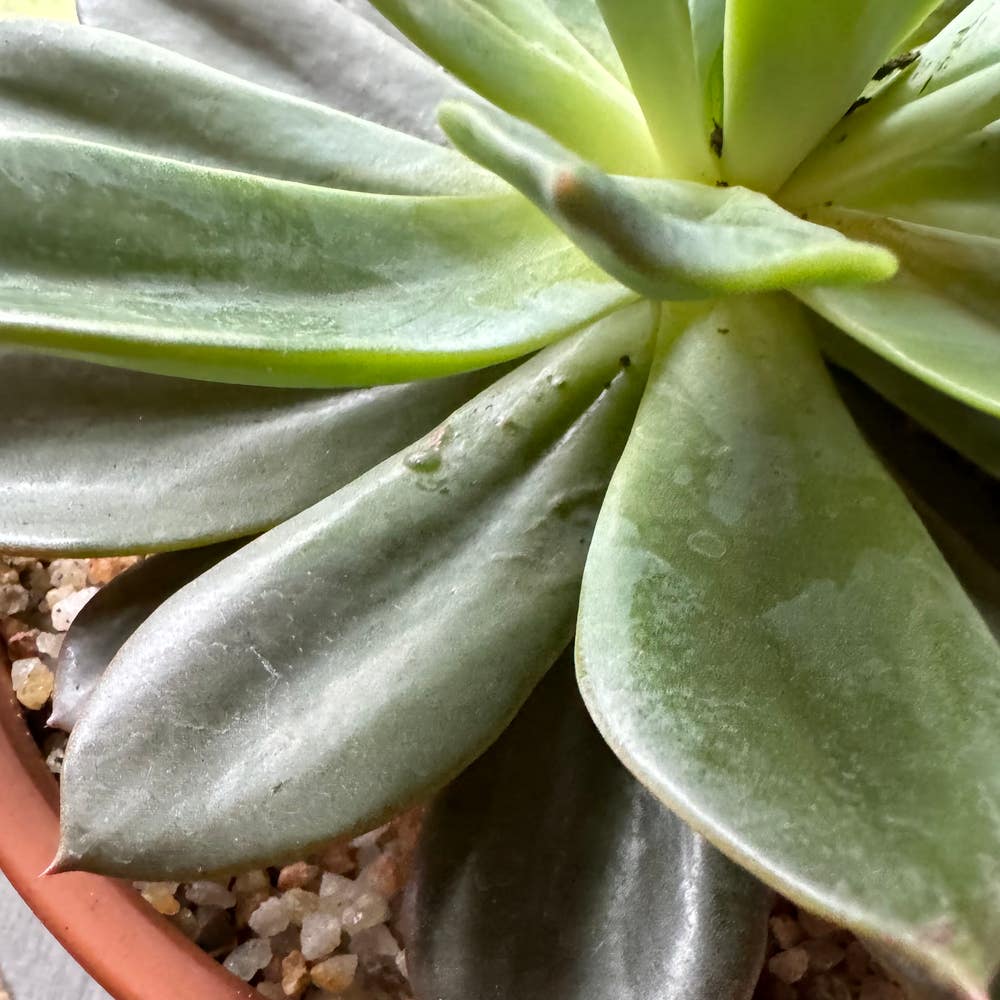
When your Echeveria 'Blue Prince' starts looking less like royalty and more like a court jester, it's time to pay attention. Wilting leaves are the plant's white flag of surrender, a clear sign that all is not well in the kingdom. If the normally thick, waxy leaves begin to look translucent, think of it as the plant's way of saying it's drowning—overwatering is likely the culprit.
Discoloration is another visual shout for help. Leaves that should be a regal blue-green turning yellow or brown are not trying out a new fashion trend; they're in distress. And let's not overlook spots—these unsightly blemishes can be the plant's version of acne, often a symptom of fungal infections or pests setting up camp.
🚩 Growth and Behavior Red Flags
A stunted Echeveria 'Blue Prince' is a sad sight. If growth has slowed to a snail's pace, it's a red flag that the plant's needs aren't being met. Unusual leaf behavior, like curling or the development of odd growth patterns, is akin to the plant waving its arms around trying to get your attention. It's not just being quirky; it's likely struggling with environmental stressors or nutritional deficiencies.
Keep an eye out for new leaves that seem to be struggling to make their grand entrance. If they're smaller than usual or look like they've been through a battle, it's time to reassess your care routine. Remember, your Echeveria isn't just being dramatic—it's communicating its needs in the only way it can.

Nailing Down the Problem
💧 Water Woes: Too Much or Too Little
Dry soil and crispy leaves? Your Echeveria 'Blue Prince' is shouting for hydration. Conversely, yellowing leaves that feel mushy are screaming "I'm drowning!" Overwatering is a common misstep. Remember, these desert dwellers need a thorough drink followed by a complete soil dry-out. It's a delicate dance between drench and drought.
🌞 Light and Temperature Tangles
Leaves stretching out like they're trying to escape? Not enough light. Leaves turning as yellow as a school bus? Too much sun. Your succulent is begging for that perfect sun-kissed glow, not a full-on tan. And temperature? Brown spots or edges are subtle hints of a plant left out in the cold, while wilting could mean your Echeveria is baking in the heat.
🐜 Unwelcome Guests: Pests
Mealybugs, spider mites, and aphids – oh my! These critters are the uninvited guests at your plant's party. Sticky residue or webbing? Time to show these pests the door. Overwatering can roll out the red carpet for these bugs, so keep the soil's moisture just right to avoid infestations.

Specific Issues and Their Fixes
🔥 Scorched Leaves and Fungal Foes
Scorched leaves on your Echeveria 'Blue Prince' scream too much sun. If the leaf edges resemble crispy bacon, it's time to dial back on the rays. Relocate your plant to a spot with indirect light or create some shade. Fungal issues, like mold, thrive in high humidity. Improve air circulation with a fan or by placing your plant in a breezier location. Water at the base to avoid wet leaves and clear away any debris to prevent fungal parties.
💀 The Dreaded Root Rot
Root rot is the silent killer of the plant world. Black or brown lesions on leaves are a distress signal. If the soil smells like a swamp and the roots are mushier than overcooked noodles, it's time for action. Cut away the rotted roots with sterilized scissors and give your plant a fresh start in well-draining soil. Fungicides can help, but they're the band-aid, not the cure. Prevention is key—water carefully and ensure proper drainage to keep root rot from crashing your Echeveria's vibe.

The Road to Recovery
💧 Step 1: Assess and Address the Watering Regimen
Overwatering is a common misstep with Echeveria 'Blue Prince'. If the soil feels soggy, it's time to ease up on the H2O. Conversely, bone-dry soil calls for a more regular watering schedule. Remember, the goal is moist, not swampy or parched.
✂️ Step 2: Prune with Purpose
Snip off any dead or dying leaves to redirect the plant's energy to recovery. Use clean, sharp scissors and cut with confidence, but don't overdo it. The plant is vulnerable, so every leaf counts.
🌞 Step 3: Optimize Light and Temperature
Your Echeveria craves bright, indirect sunlight. If it's stretching out or fading, it's begging for more rays. Relocate it to a spot that gets the right amount of light without turning it into a succulent crisp.
🐜 Step 4: Pest Patrol
Inspect your plant for uninvited guests. If pests are partying, show them the door with neem oil or insecticidal soap. Be thorough but gentle—your plant is not a battlefield.
🌱 Step 5: Root Rehabilitation
If root rot is the culprit, it's surgery time. Remove the plant from its pot, trim away the rotten roots, and repot in fresh, well-draining soil. This is a delicate operation, so proceed with care.
👀 Step 6: Monitor, Adapt, and Encourage
Keep a close eye on your recovering Echeveria. Adjust care as needed and don't be shy with the encouragement. Plants may not have ears, but they can certainly feel your good vibes.
🎉 Step 7: Celebrate Every Victory
Every new leaf is a high-five from Mother Nature. Celebrate the small wins and keep the momentum going. Your Echeveria's comeback is a testament to your green thumb and dedication.
⚠️ Safety First
This content is for general information and may contain errors, omissions, or outdated details. It is not medical, veterinary advice, or an endorsement of therapeutic claims.
Always consult a qualified healthcare professional before using any plant as food, medicine, or supplement.
Never eat any plant (or feed one to pets) without confirming its identity with at least two trusted sources.
If you suspect poisoning, call Poison Control (800) 222-1222, the Pet Poison Helpline (800) 213-6680, or your local emergency service immediately.
Spotted an error? Please report it here.
Revive your Echeveria 'Blue Prince' from the brink with Greg's tailored watering and sunlight reminders 🌵, turning those warning signs into a success story.