Black Spots on My Echeveria 'Blue Prince' Leaves
Echeveria 'Blue Prince'
By the Greg Editorial Team
Jun 18, 2024•5 min read
This article was created with the help of AI so we can cover more plants for you. May contain errors. See one? Report it here.
Banish black spots 🌑 and keep your 'Blue Prince' succulent thriving with these pro care tips.
- Overwatering and sunburn lead to black spots; adjust water and light.
- Fungal infections and damage also cause spots; keep leaves dry and handle with care.
- Prevent with good drainage, dry soil between waterings, and indirect light.
Spotting the Trouble: Recognizing Black Spots
🕵️♂️ Visual Guide to Black Spots
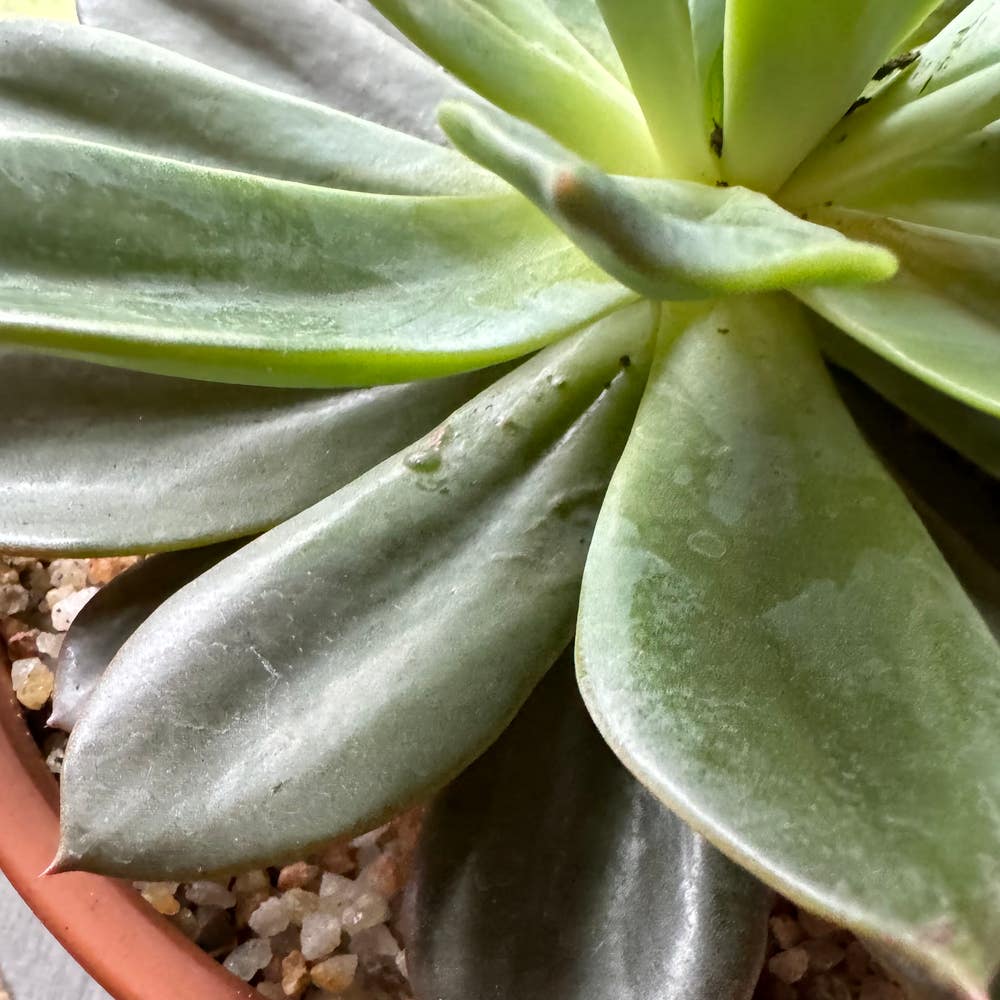
Black spots on Echeveria 'Blue Prince' are more than unsightly; they're a sign of distress. These spots can be tiny specks or grow into larger blotches. They may appear raised, sunken, or even slimy. Look for dark margins or concentric rings—these details suggest a cry for help.
Location, Location, Location
Check the undersides of leaves; spots love to hide there. It's not just mature leaves that are affected—new growth can also show black-tipped edges. Regular inspections are crucial, as early detection can prevent a small issue from becoming a major problem. Keep an eye on the spots over time to ensure accurate diagnosis and treatment.

The Usual Suspects: Uncovering the Causes
🚿 Too Much Love: The Overwatering Connection
Overwatering is like a helicopter parent for plants; it means well but can smother. Your Echeveria 'Blue Prince' might be sitting in soggy soil, which is a VIP pass for fungi to throw a black spot gala. Root rot and other moisture-loving issues arise when the plant's feet stay wet for too long. Dial back the watering and let the soil dry out to avoid these aquatic woes.
🌞 When the Sun's Kiss Burns: Sunburn as a Culprit
Sunburn isn't just for beachgoers. Echeveria 'Blue Prince' can get scorched, too, resulting in crispy, blackened leaves. If your succulent is looking like it forgot the sunscreen, it's probably had too much direct sunlight. Aim for bright, indirect light to keep your plant from turning into a leafy crisp.
🍄 Unwanted Guests: Fungal Infections That Leave a Mark
Fungal infections are like that one guest who overstays their welcome and leaves a mess. They thrive in the damp conditions created by overzealous watering and poor air circulation. Spots from these freeloaders can turn your plant's leaves into a dappled canvas of decay. Keep the air moving and the leaves dry to show these party crashers the door.
🤕 Oops, Did I Do That? Physical Damage and Its Aftermath
Sometimes, black spots are just bruises from our own clumsy love. Bumping, dropping, or squeezing your Echeveria 'Blue Prince' can lead to darkened areas on the leaves. Handle your succulent with the same care you'd use for a ripe peach to avoid these physical faux pas.

The Plant Doctor Is In: Treating Black Spots
💧 Drying Out: Watering Wisely
Overwatering is the fast track to fungal issues. To avoid this, only water your Echeveria 'Blue Prince' when the soil feels dry. Stick your finger an inch into the soil; if it's damp, hold off on the H2O. Remember, the base of the plant is your target—keep those leaves dry.
🌤 Shady Business: Sunlight Management
Too much sun can scorch leaves, leading to black spots. Your 'Blue Prince' needs indirect light or filtered sun. If it's basking in direct rays, move it to a spot where it can enjoy the sunshine without the risk of sunburn.
🍄 Fungus Among Us: Fungal Treatment
If a fungal infection is the culprit, it's time for treatment. Start with natural options like neem oil. If those don't work, a chemical fungicide might be necessary. Always follow the label instructions carefully and apply during calm weather to avoid spreading the treatment.
🛡 Handle with Care: Physical Damage Prevention
Your succulent's leaves are delicate. When you're handling your 'Blue Prince', be gentle. Use sterilized tools for pruning and avoid bumping the plant. This will prevent physical damage that can lead to black spots.

Keeping It Spotless: Prevention Tips
💧 Water Wisdom
Water sparingly—your Echeveria 'Blue Prince' isn't a fan of soggy feet. Let the soil dry out between waterings, like a mini drought your plant will appreciate. Stick to deep watering to encourage strong root growth, but always check the soil first; it should feel like a wrung-out sponge, not a soaked one.
🌞 Light the Way
Indirect light is your plant's best friend. Too much direct sunlight can lead to sunburn, while too little will leave your 'Blue Prince' yearning for more. Find that sweet spot where the light is bright but diffused, like a sunny spot shielded by a sheer curtain.
🍄 Fungal Foes Be Gone
Keep the leaves dry to avoid unwanted fungal parties. Base watering is the way to go, steering clear of overhead watering that can leave foliage vulnerable. Cleanliness is crucial—remove fallen leaves promptly and ensure good air circulation without exposing your plant to harsh drafts.
🌱 Handling with Care
When it comes to pruning, use tools that are cleaner than a whistle. Dirty tools can spread diseases faster than a rumor in a small town. And when repotting, don't just clean—bleach your pots to ensure they're as sterile as an operating room.
🌍 Environmental Stability
Stability is key. Avoid moving your 'Blue Prince' around like it's part of a shell game. Find a stable environment with consistent indirect light and stick to it. And remember, good drainage is non-negotiable—your plant's roots need to breathe, not swim.
⚠️ Safety First
This content is for general information and may contain errors, omissions, or outdated details. It is not medical, veterinary advice, or an endorsement of therapeutic claims.
Always consult a qualified healthcare professional before using any plant as food, medicine, or supplement.
Never eat any plant (or feed one to pets) without confirming its identity with at least two trusted sources.
If you suspect poisoning, call Poison Control (800) 222-1222, the Pet Poison Helpline (800) 213-6680, or your local emergency service immediately.
Spotted an error? Please report it here.
Prevent black spots 🛑 on your Echeveria 'Blue Prince' with Greg's custom watering and lighting plans, ensuring your succulent stays healthy and blemish-free.