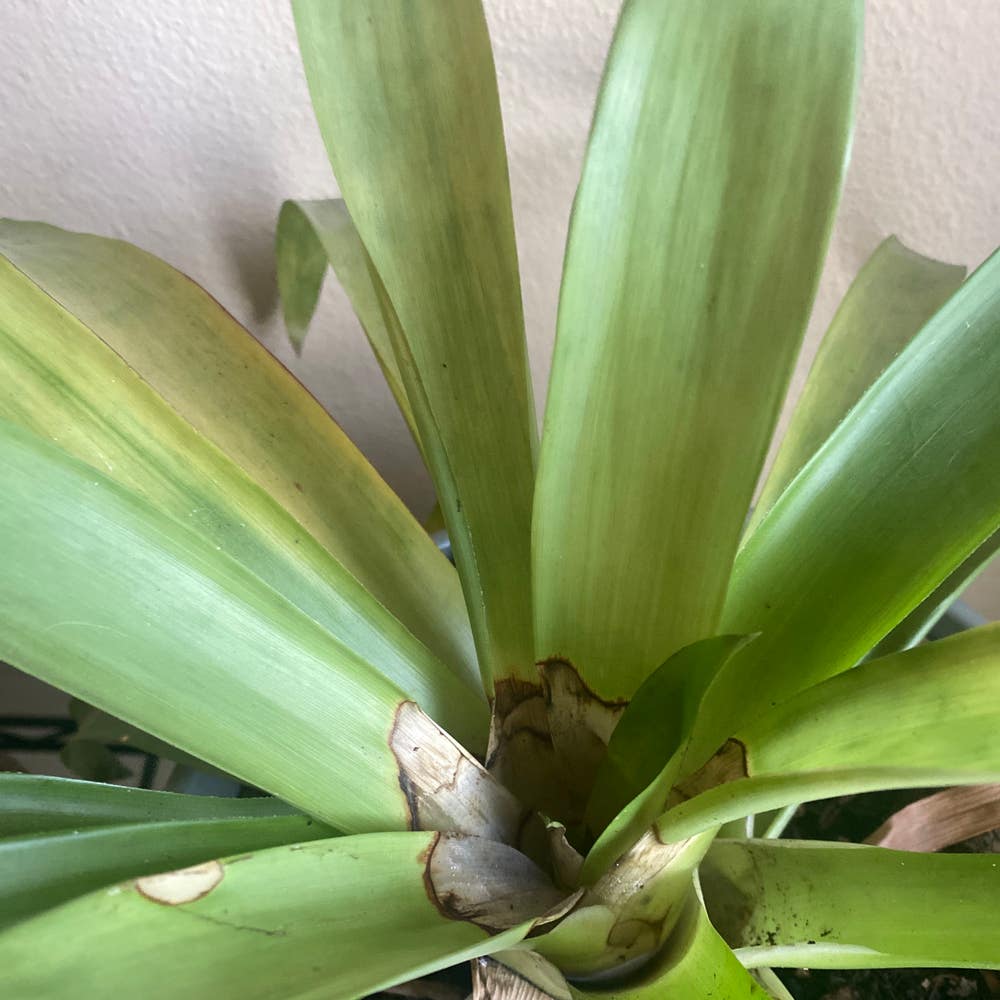
🍂 Why Does My Neoregelia lilliputiana Have Yellow Leaves?
Neoregelia lilliputiana
By the Greg Editorial Team
Apr 06, 2024•3 min read
This article was created with the help of AI so we can cover more plants for you. May contain errors. See one? Report it here.
Solve the mystery of your Neoregelia's yellow leaves 🍂 and bring back its lush green glory with our expert guide!
- Improper light causes yellowing: Adjust to bright, indirect exposure.
- Watering balance is key: Check soil moisture before watering again.
- Consistent care routine: Include fertilization, temperature control, and pest prevention.
Pinpointing the Culprits Behind Yellow Leaves
💡 Light Levels: Finding the Sweet Spot
Neoregelia lilliputiana's leaves can yellow from improper light exposure. Too much light can scorch leaves, while too little can weaken the plant.
🌞 Adjusting Light for Health
To prevent yellowing, provide bright, indirect light. If leaves show signs of burning, move the plant to a shadier spot. Conversely, if leaves lack vibrancy, increase light exposure gradually.
🚰 Water Woes: Striking the Right Balance
Overwatering and underwatering can both lead to yellow leaves. Soggy soil and wilted leaves often indicate too much water, while dry, brittle leaves suggest dehydration.
🍽️ Perfecting Your Watering Routine
Ensure the top inch of soil is dry before watering again. This rhythm helps maintain the right moisture level, preventing root rot and keeping leaves green.
🌱 Feeding Finesse: Nutrients Neoregelia Craves
Nutrient imbalances can cause leaves to yellow. Signs of deficiency include pale leaves and stunted growth, while excess nutrients can lead to salt buildup in the soil.
🌿 Fertilization Tips
Use a balanced, water-soluble fertilizer, and apply it sparingly. Over-fertilization can harm the plant as much as neglect. Watch for yellow leaves with green veins, which may indicate a nitrogen deficiency.
Temperature and Environmental Stressors
🌡️ Keeping It Cool (or Warm)
Temperature fluctuations are the silent stressors of the plant world. Your Neoregelia lilliputiana is no exception. Yellowing leaves can signal distress from the highs and lows of its environment. To combat this, maintain a consistent temperature akin to its tropical origins. Indoors, dodge drafts and vents like they're bad dance partners. Outdoors, think of your plant as a VIP guest; give it cover from cold snaps and bring it inside when the weather gets too avant-garde.
🛡️ Battling Pests and Diseases
When it comes to pests and diseases, they're the uninvited party crashers turning your Neoregelia's leaves yellow. Keep an eye out for the telltale signs: spotty leaves might mean fungal foes are gatecrashing, while overall yellowing could be a red flag for an insect infestation. Cleanliness is your first line of defense—nematodes detest it. For prevention, adopt a care routine as regular as your morning espresso. Spot a problem? Act fast, prune with precision, and consider eco-friendly insecticides or fungicides. Remember, a healthy plant is less likely to succumb to these yellow-leaf conspirators.
Reviving Your Neoregelia lilliputiana
🚨 Immediate Interventions
When your Neoregelia lilliputiana starts sporting yellow leaves, it's crunch time. First, assess the soil's moisture. If it's more waterlogged than a swamp, stop watering and let it dry. For desert-dry soil, it's time to quench your plant's thirst thoroughly. Now, let's talk about the sunbathing habits of your Neoregelia. Too much sun can bleach those leaves faster than a bottle of peroxide, so aim for bright, indirect light. If your plant's been lurking in the shadows, bring it into the light, but not too much – think bright but not direct.
Long-Term Love and Care
Long-term care for your Neoregelia lilliputiana is like a good skincare routine – it's all about consistency. Establish a watering schedule that's just right for the season. Make sure the pot's drainage could win an Olympic gold, and the soil is more supportive than your best friend. Fertilize with a balanced touch; your plant's diet should be more Mediterranean than fast food. Keep the temperature and humidity steady – your plant's comfort zone is a priority. And always be on the lookout for pests and diseases; prevention is better than cure. Rotate your plant to promote even growth and avoid the one-sided look. Stick to these habits, and your Neoregelia will be less yellow and more mellow.
⚠️ Safety First
This content is for general information and may contain errors, omissions, or outdated details. It is not medical, veterinary advice, or an endorsement of therapeutic claims.
Always consult a qualified healthcare professional before using any plant as food, medicine, or supplement.
Never eat any plant (or feed one to pets) without confirming its identity with at least two trusted sources.
If you suspect poisoning, call Poison Control (800) 222-1222, the Pet Poison Helpline (800) 213-6680, or your local emergency service immediately.
Spotted an error? Please report it here.
Avoid the yellow-leaf blues in your Neoregelia lilliputiana by balancing light and moisture with Greg's personalized care reminders 🌿, ensuring your plant thrives in its own tropical paradise at home.