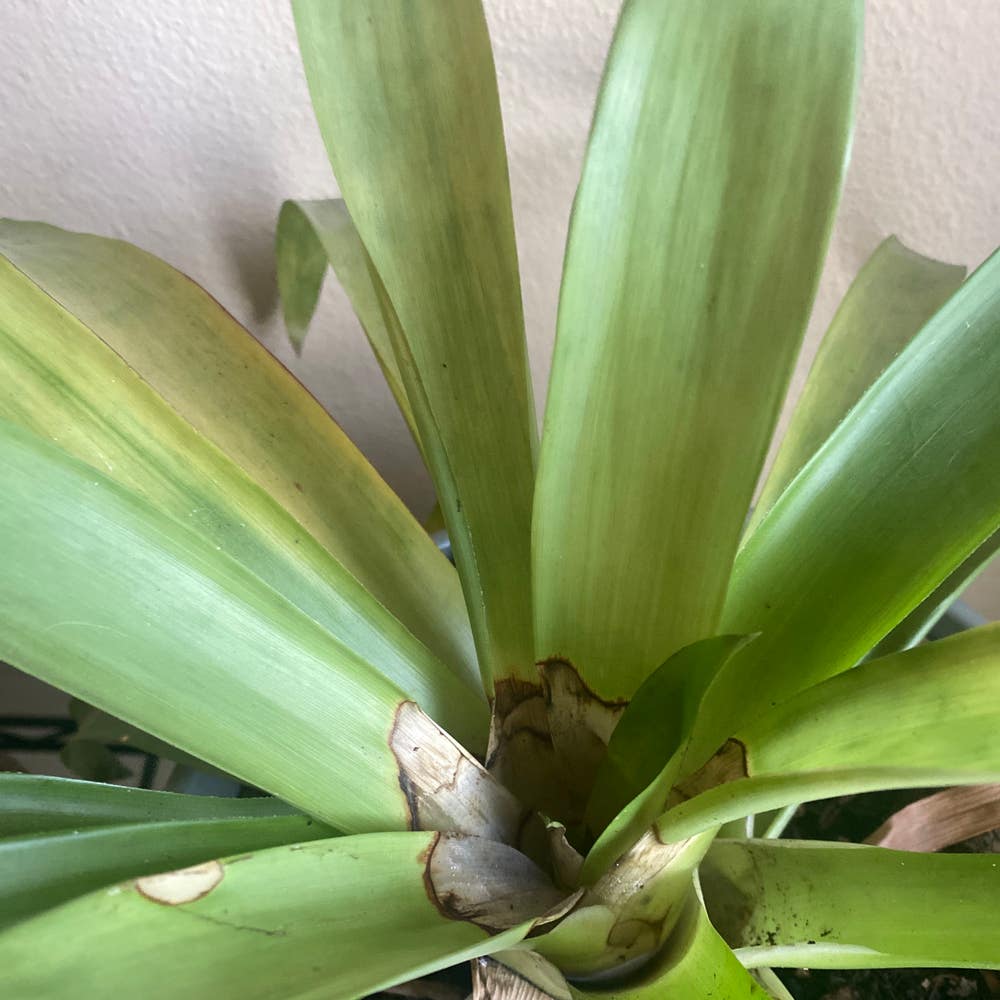
Black Spots on My Neoregelia lilliputiana Leaves
Neoregelia lilliputiana
By the Greg Editorial Team
Apr 06, 2024•4 min read
This article was created with the help of AI so we can cover more plants for you. May contain errors. See one? Report it here.
Banish black spots 🕵️♂️ and keep your Neoregelia thriving with our expert care and prevention tips! 🌿
- Black spots signal distress, often indicating fungal or bacterial infections.
- Fungicides and hygiene help treat and prevent black spots.
- Optimal conditions deter spots: monitor light, humidity, and cleanliness.
Spotting the Trouble: Identifying Black Spots
🕵️ What Do They Look Like?
Black spots on Neoregelia lilliputiana leaves are alarm bells, not fashion statements. These spots range from tiny specks to larger blotches, often encircled by a yellow halo or edged in darkness. The spots might be raised or sunken, and their irregular shapes are like red flags waving for attention. If you spot concentric rings or dark margins, it's time to take action—your plant is not just trying to stand out in the crowd; it's likely in distress.
🌿 Where Do They Hang Out?
These black spots are sneaky, often starting their invasion on the undersides of leaves. If you're not checking the leaf's belly during your plant inspections, you're missing their favorite hideout. But don't be fooled; they'll also show up on the top surfaces, even on new growth. Keep an eye out for these uninvited guests—they're not the kind of spots that stay put. If left unchecked, they can spread like gossip in a small town, leading to larger, more problematic patches.
Playing Detective: Figuring Out the Culprits
🍄 Fungal Foes
Fungal infections are like uninvited guests at a party, leaving behind black spots as calling cards. These spots often have a powdery halo or a crusty texture, sometimes surrounded by a yellowish or reddish halo. If you spot concentric rings or dark margins, you're likely dealing with a fungal fiesta.
🦠 Bacterial Bullies
Bacterial infections are the sneaky intruders, slipping in through wounds and making themselves at home with slimy, water-soaked spots. They might bring along a foul odor, which is a dead giveaway of a bacterial bash. Look for spots with a greasy sheen or a yellow halo—these are signs that bacteria are throwing a black spot speakeasy.
🌿 Environmental Stress Signals
Don't ignore the signs of environmental stress—it's a silent contributor to black spots. Overwatering, excessive light, or heat can create the perfect storm for both fungal and bacterial parties to thrive. Spots that appear more random can be a cry for help, signaling care mistakes that need your attention.
The Battle Plan: Treating and Beating Black Spots
🍄 Fungicide to the Rescue
When black spots invade your Neoregelia lilliputiana, reach for fungicides like a plant doctor reaches for medicine. Choose a protectant fungicide for prevention, coating leaves as if applying sunscreen. If the infection's already there, a systemic fungicide is your inside man, halting the spread. Stick to the label's instructions like they're the only rules for plant survival.
💉 Bacteria Busters
If bacteria are your culprits, it's time to get surgical. Prune the infected areas with the care of a brain surgeon and sterilize your tools like they're going back into the operating room. For those leaning towards nature's remedies, mixtures with baking soda or neem oil can act like a homemade plant tonic. Apply with care, less is more when it comes to chemicals.
🎛 Tweaking the Environment
Adjust your plant's environment like tuning a fine instrument. Light should be Goldilocks-perfect—not too much, not too little. Keep the humidity steady; it's the difference between a black spot breeding ground and a hostile zone for spores. Promote good air circulation—a little breeze goes a long way in keeping fungal foes at bay. Remember, a clean and well-adjusted environment is your best defense.
Keeping the Peace: Prevention Strategies
🕵️ Regular Check-Ups
Routine inspections are like the secret service for your Neoregelia lilliputiana—always on the lookout for black spot threats. It's not about paranoia; it's about preventive vigilance. Make it a habit to scrutinize leaves for early signs of trouble, such as changes in texture or color.
🛡️ Clean and Quarantine
Sanitation is your plant's knight in shining armor. Keep those leaves dust-free and your pruning tools sterilized—it's basic plant hygiene. Introducing new plants? Quarantine them like they're the latest viral sensation—until you're sure they're clean.
🌞 Optimal Living Conditions
Creating the perfect environment for your Neoregelia lilliputiana is like setting the stage for a superstar's performance. Ensure bright, indirect sunlight and maintain a watering routine that keeps the soil moist, not soggy. Good air circulation is non-negotiable; think of it as your plant's personal cooling fan.
⚠️ Safety First
This content is for general information and may contain errors, omissions, or outdated details. It is not medical, veterinary advice, or an endorsement of therapeutic claims.
Always consult a qualified healthcare professional before using any plant as food, medicine, or supplement.
Never eat any plant (or feed one to pets) without confirming its identity with at least two trusted sources.
If you suspect poisoning, call Poison Control (800) 222-1222, the Pet Poison Helpline (800) 213-6680, or your local emergency service immediately.
Spotted an error? Please report it here.
Keep your Neoregelia lilliputiana thriving 🌿 by using Greg to pinpoint the cause of black spots and tailor your plant's care for a spotless future.