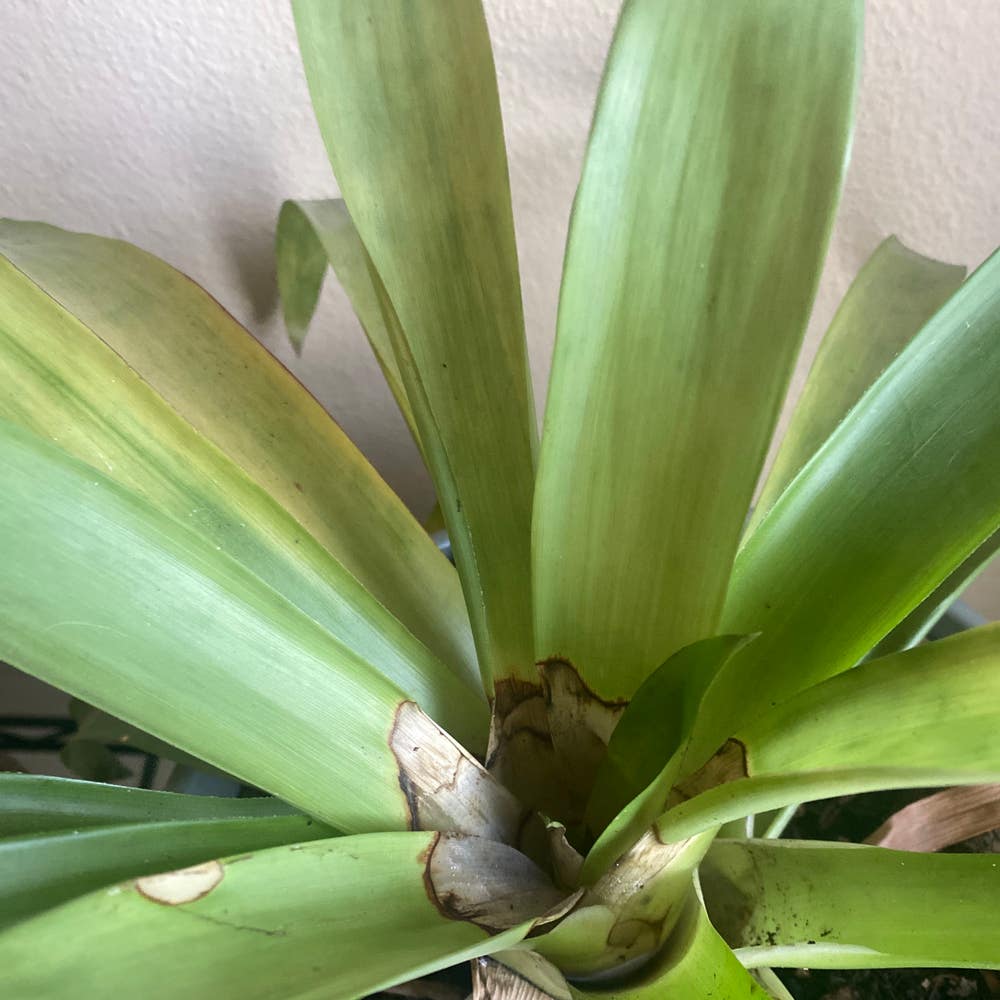
Why Is My Neoregelia lilliputiana Not Doing Well?
Neoregelia lilliputiana
By the Greg Editorial Team
Apr 06, 2024•5 min read
This article was created with the help of AI so we can cover more plants for you. May contain errors. See one? Report it here.
Revive your Neoregelia lilliputiana 🌿 and enjoy a lush, healthy bromeliad with our expert care tips.
- Balance watering by checking the top inch of soil for moisture.
- Bright, indirect light and 60-85°F keep Neoregelia lilliputiana healthy.
- Inspect and treat for pests, mold, and root rot regularly.
Water Woes: Striking the Right Balance for Neoregelia lilliputiana
💧 Over-watering and Under-watering
Yellowing leaves? Over-watering may be the culprit. Your Neoregelia lilliputiana isn't trying to change colors; it's drowning. Conversely, if the tips of the leaves look like they've been through a desert, it's a classic case of under-watering.
To tailor your watering routine, start by feeling the top inch of soil. Dry? Time to water. Damp? Hold off. Your plant's thirst changes with the seasons—water less when it's cooler, more when it's warmer.
🌱 Root Rot: A Silent Killer
Root rot is like that bad roommate who's slowly ruining everything but you haven't noticed yet. If the base of your plant feels mushier than overcooked noodles, it's time to act.
Unearth the problem by gently removing your plant from its pot. Brown and mushy roots are a red flag. To treat root rot, trim the damaged roots and repot in fresh, well-draining soil. Prevent future soggy situations by ensuring your pot has proper drainage holes and by not over-loving with water.
Light and Temperature: The Dynamic Duo of Neoregelia lilliputiana Health
💡 Getting the Light Just Right
Bright, indirect light is the sweet spot for Neoregelia lilliputiana. This lighting condition brings out the best in their variegated leaves without causing the dreaded leaf burn. If your plant's leaves are looking bleached or scorched, it's time to rethink its sunbathing habits.
Move your Neoregelia away from direct sunlight to a location with filtered light. An east or west-facing window is often ideal. Watch for signs of improvement as the leaves regain their vibrant colors.
🌡️ Temperature Troubles
Neoregelia lilliputiana prefers a stable climate, with temperatures ranging from 60 to 85 degrees Fahrenheit. If your plant is wilting or the leaves are discoloring, it might be throwing a silent tantrum over the temperature.
To create a cozy climate, keep your plant away from drafts and sudden temperature changes. Consistency is key here. Think of it as setting the perfect room temperature for a guest that never complains but always notices.
Pests and Pathogens: Uninvited Guests
🐛 Pests: The Usual Suspects
Pests can turn a thriving Neoregelia lilliputiana into a plant on life support. Aphids, spider mites, and scale insects are the usual suspects, each leaving their own calling cards. Aphids excrete a sticky residue, while spider mites weave fine webs on your plant. Scale insects, meanwhile, appear as small bumps on stems and leaves.
Regular inspections are crucial for early detection. Flip those leaves and peek into crevices; if you spot these freeloaders, it's eviction time. A strong jet of water can dislodge many pests, and insecticidal soap is a trusty sidekick for tougher cases. For an eco-friendly approach, introduce natural predators like lady beetles into the mix.
Preventing pest infestations is less about luck and more about diligence. Keep your plant's environment clean—think of it as a tidy fortress that repels invaders. Ensure good airflow and avoid overwatering, as stagnant, moist conditions are a pest's paradise.
🍄 Mold and Fungus: Fuzzy Foes
Mold and fungus are like the uninvited guests who overstay their welcome, thriving in damp and poorly ventilated spaces. White or black spots on leaves are the telltale signs of a fungal shindig. If you spot these, it's time to act fast.
Improving airflow is your first line of defense. Make sure your Neoregelia lilliputiana isn't suffocating in still air. If the problem persists, consider a fungicide—but use it as a last resort. Apply it with precision, ensuring every affected area is treated.
Prevention is your best strategy against these fuzzy foes. Keep the plant area dry and airy, and remove any fallen debris promptly. A clean plant is less likely to suffer from these issues, so keep those leaves spotless and your tools sterilized.
Reviving Your Neoregelia lilliputiana: A Step-by-Step Rescue Plan
🌡️ Conducting a Plant Health Audit
First things first, assess the situation. Your Neoregelia lilliputiana is down but not out. Check for soggy soil, crispy leaves, and any signs of pests. This isn't just a once-over; it's a deep dive into your plant's world.
🗺️ The Recovery Roadmap
🌱 Inspect the Roots
Gently remove your plant from its pot. Healthy roots are firm and white. If they're brown and mushy, it's time for triage.
✂️ Trim and Treat
With sterilized scissors, snip away the rotten roots. Think of it as removing the bad to make way for the good.
🌍 Soil Swap
Ditch the old soil. It could be harboring pathogens. Replace it with a fresh, well-draining mix that's like a reset button for your plant's home.
🌿 Repotting Right
Choose a new pot with drainage holes. It's not just a container; it's a crucial part of your plant's support system.
💧 Water Wisely
Water until it drains out the bottom, then wait. Let the soil dry out before the next watering. It's a hydration holiday.
🌞 Light and Location
Find a spot with bright, indirect light. Your plant isn't just sitting there; it's soaking in life.
📊 Monitor and Adjust
Keep an eye on progress. Adjust care as needed. It's like tuning an instrument to get the perfect pitch.
🐞 Pest Control
If bugs are bugging your plant, show them the door. Use insecticidal soap or introduce natural predators like ladybugs.
🌱 Fertilize with Finesse
Feed your plant with a balanced fertilizer, but don't overdo it. It's about nutritional balance, not a feast.
🌡️ Temperature and Humidity
Keep the climate cozy. Avoid temperature extremes like your plant's comfort depends on it—because it does.
🕵️ Ongoing Vigilance
Stay vigilant. Regular checks are the equivalent of a plant health insurance policy.
Remember, reviving your Neoregelia lilliputiana is a journey. With patience and persistence, you'll see that vibrant health isn't just possible—it's imminent.
⚠️ Safety First
This content is for general information and may contain errors, omissions, or outdated details. It is not medical, veterinary advice, or an endorsement of therapeutic claims.
Always consult a qualified healthcare professional before using any plant as food, medicine, or supplement.
Never eat any plant (or feed one to pets) without confirming its identity with at least two trusted sources.
If you suspect poisoning, call Poison Control (800) 222-1222, the Pet Poison Helpline (800) 213-6680, or your local emergency service immediately.
Spotted an error? Please report it here.
Revive your Neoregelia lilliputiana with custom care reminders from Greg, ensuring it gets just the right amount of water, light, and love. 🌿