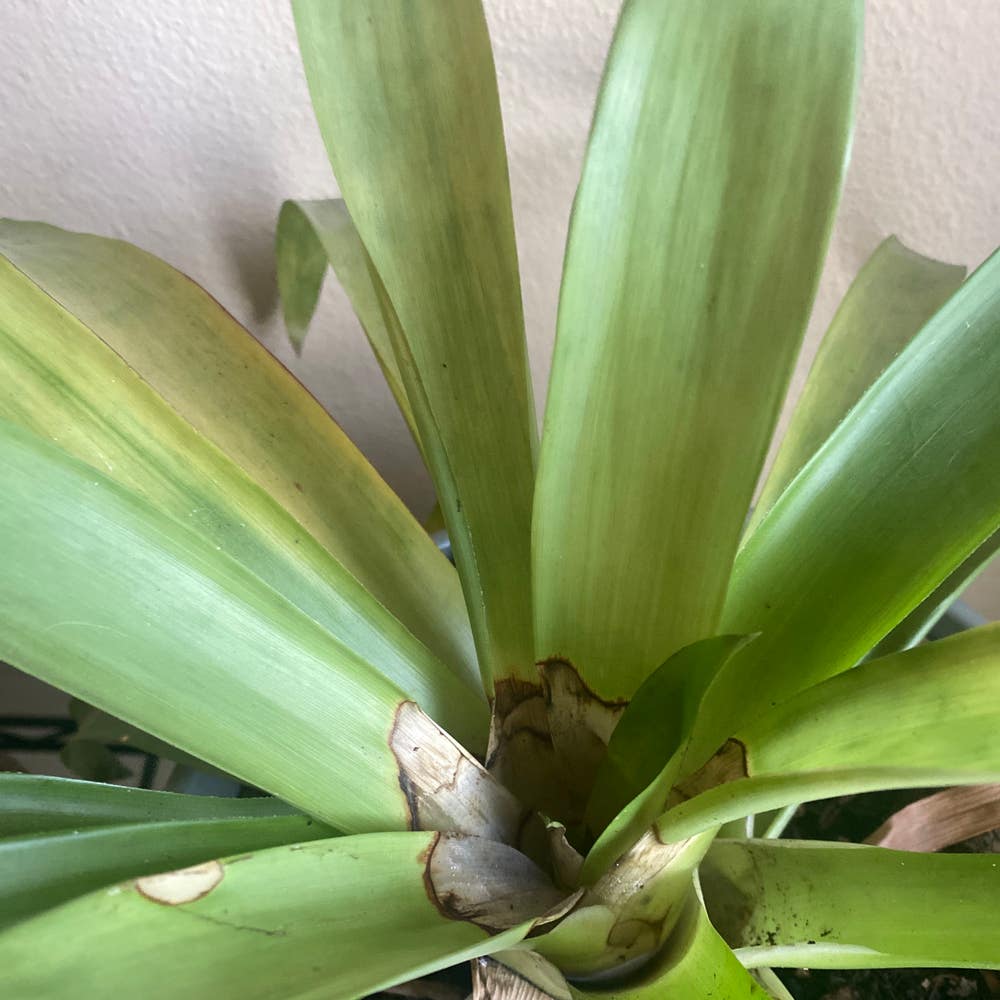
💧 Why Are My Neoregelia lilliputiana Leaves Mushy?
Neoregelia lilliputiana
By the Greg Editorial Team
Apr 06, 2024•5 min read
This article was created with the help of AI so we can cover more plants for you. May contain errors. See one? Report it here.
Prevent mushy Neoregelia leaves 🍂 by pinpointing and fixing the root issues—your plant's life depends on it!
- Overwatering leads to mushy leaves; adjust watering and check soil moisture.
- Proper drainage and pot choice are essential to prevent mushiness.
- Root rot detection and treatment are key to fixing and preventing mushy leaves.
Spotting the Trouble: Signs of Mushy Leaves
👀 Visual Cues: The Look of a Mushy Leaf
Discoloration is your first visual clue. A healthy Neoregelia lilliputiana leaf boasts a vibrant green, but a mushy one might look faded, yellow, or even brown. If the leaves remind you of overripe fruit, that's a bad sign. They might also appear translucent, signaling that they're waterlogged and not just under the weather.
✋ Tactile Clues: The Feel of a Mushy Leaf
The touch test is telling. A mushy leaf will have the unfortunate consistency of a squishy marshmallow or, worse, overcooked vegetables. Healthy leaves are firm, springing back when you give them a gentle poke. If they cave under your fingertips, you've got a problem on your hands.
🚩 Beyond the Surface: Other Symptoms to Watch For
Leaves that drop off with a nudge or stems that feel soft are red flags. An unpleasant odor is a clear indicator that decay has set in. If your plant smells like it's auditioning for a swamp-themed horror flick, it's time to act. And remember, if the entire plant looks like it's lost its will to stand tall, it's not just being dramatic—it's signaling distress.
The Usual Suspects: Identifying Causes of Mushiness
💦 Overwatering Woes
Overwatering is a common misstep that turns Neoregelia lilliputiana leaves into a mushy mess. If the soil feels perpetually wet and your plant's pot is as heavy as a bag of bricks, you're likely drowning your green friend in too much H2O.
🚰 Drainage Dilemmas
Drainage is critical to plant health, yet often overlooked. A pot without proper drainage is like a bathtub with a closed drain, and your plant's roots are not here for a swim. Mix in perlite or coarse sand to prevent your soil from becoming a waterlogged wasteland.
☠️ The Dreaded Root Rot
Below the surface, root rot lurks, turning once-healthy roots into mushy strands of despair. If the roots are dark and the soil smells like last week's leftovers, it's a clear sign of this underground assassin at work. Understanding the link between root health and leaf texture is key to combating this issue.
Turning the Tide: Fixing Mushy Leaves
💧 Fine-Tuning Your Watering Routine
Check the top inch of soil before watering—dry means go, damp means no. It's like checking your phone's battery; don't plug it in if it's already charged. Adjust your watering with the seasons, less in winter, more in summer.
🌡️ Tips for Monitoring Soil Moisture Levels
Invest in a moisture meter for precision, or use the finger test—insert up to the first knuckle. Monitor like a hawk, and remember, your plant's not a fish; it doesn't need to swim.
🏠 Upgrading Your Plant's Living Quarters
Choose a well-draining soil mix, like a cactus mix with added perlite. Repot with this mix and ensure your pot has drainage holes—they're as crucial as a fire exit.
🌱 When to Repot to Prevent Mushiness
Repot when the soil feels perpetually soggy or after any root-trimming surgery. It's like moving your plant from a cramped apartment to a space with better airflow.
🌿 Root Rot Rehab
Snip away the rotten roots with sterilized scissors—think of it as a trim for better health. Repot in fresh, well-draining soil and consider a fungicide if you spot a funky leaf.
🛡️ Preventative Measures to Keep Rot at Bay
Ensure good air circulation and consider using a sterile potting mix. Sterilize your pruning tools after each use, and stay vigilant—like watching the season finale of your favorite show.
Keeping It Firm: Long-Term Prevention Strategies
👁️ Regular Check-ups: Keeping an Eye on Your Plant's Health
Vigilance is your plant's best friend. Like scrolling through your social media feed, make inspecting your Neoregelia lilliputiana a daily ritual. Look for early signs of distress—discoloration, droopiness, or the dreaded mushiness. Catching issues early can save your plant from a world of hurt.
💧 The Balancing Act: Watering vs. Humidity Control
Your plant doesn't want to ride a rollercoaster of hydration highs and lows. Consistency is key. Use a moisture meter to avoid the guesswork; it's like having a plant whisperer in your pocket. And don't forget the humidity—too much and you're in a tropical storm, too little and it's desert dry. Strike that perfect balance with a humidifier or dehumidifier as needed.
🌱 Proactive Potting Practices: When and How to Refresh Your Plant's Environment
Drainage isn't just a good idea; it's the law in the world of Neoregelia lilliputiana. Make sure your potting mix is like that gritty friend who tells it like it is, and your pots should have holes to let excess water escape like a crowd dodging rain. Terra cotta pots? They're the MVP, letting soil breathe and preventing your plant's roots from stewing in moisture. And remember, repotting isn't just a chore—it's a chance for your plant to stretch its legs. Do it every couple of years to keep the environment fresh and invigorating.
⚠️ Safety First
This content is for general information and may contain errors, omissions, or outdated details. It is not medical, veterinary advice, or an endorsement of therapeutic claims.
Always consult a qualified healthcare professional before using any plant as food, medicine, or supplement.
Never eat any plant (or feed one to pets) without confirming its identity with at least two trusted sources.
If you suspect poisoning, call Poison Control (800) 222-1222, the Pet Poison Helpline (800) 213-6680, or your local emergency service immediately.
Spotted an error? Please report it here.
Ensure your Neoregelia lilliputiana's leaves stay resiliently robust 🍃 with Greg's tailored watering reminders, preventing mushiness before it starts.