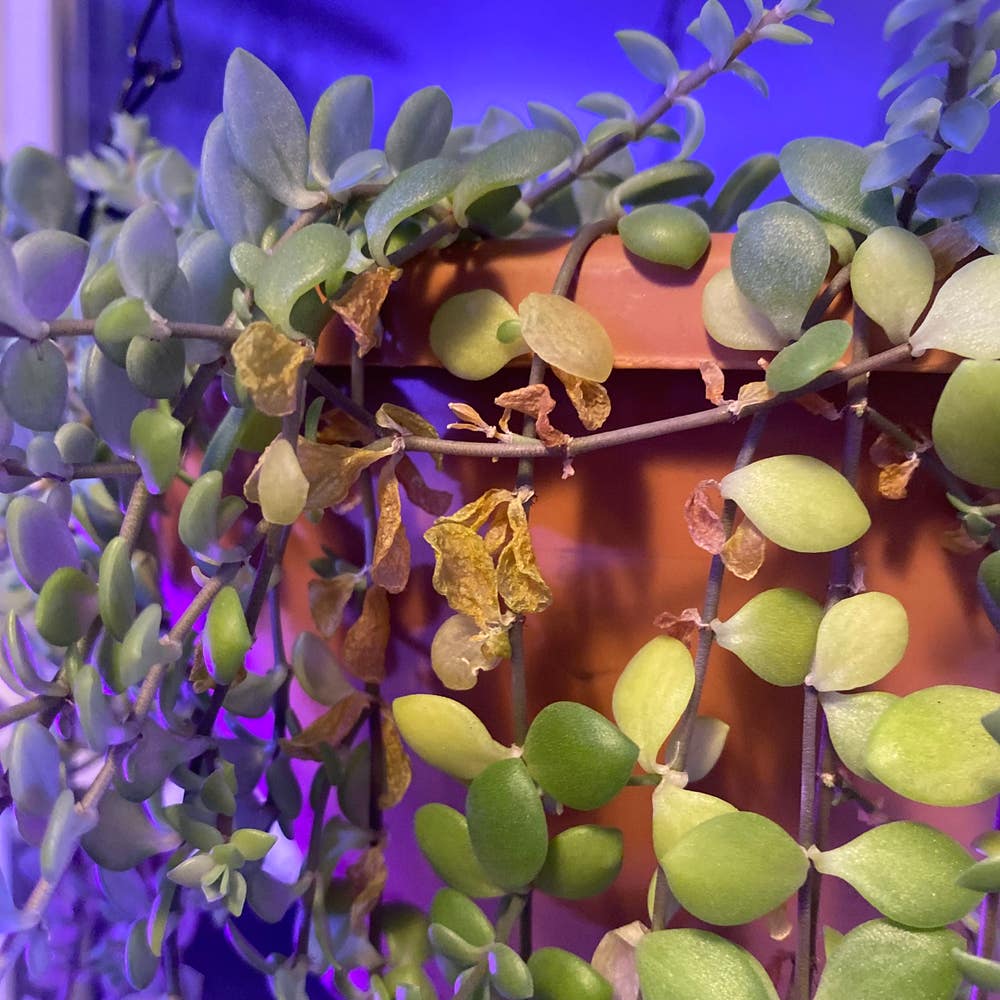
Why Are My Lipstick Plant Leaves Falling Over?
Aeschynanthus radicans
By the Greg Editorial Team
Jun 15, 2024•9 min read
This article was created with the help of AI so we can cover more plants for you. May contain errors. See one? Report it here.
Stop Lipstick Plant leaves from wilting and unlock vibrant, perky foliage with expert care secrets. 🌿✨
- 💧 Consistent watering and well-draining soil prevent leaf droop.
- 🌡️🌿 Bright, indirect light and 65-80°F ideal for healthy leaves.
- ✂️ Prune strategically during growth periods for upright leaves.
Identifying the Reasons Behind Leaf Droop in Lipstick Plants
In the quest to understand why your Lipstick Plant's leaves are more droopy than a teenager on Monday morning, let's dive into the watering conundrum. Overwatering and underwatering are the usual suspects when it comes to leaf drop. It's a delicate dance between too much and too little, and your plant is the ultimate judge.
💧 Watering Woes
Overwatering can turn your plant's roots into a soggy mess, leading to root rot and a cascade of falling leaves. The leaves might first feel spongy before they give up the ghost and drop off. On the other hand, underwatering leaves your plant as parched as a desert, causing leaves to droop in despair.
🌞 Light and Temperature: The Stress Duo
Your Lipstick Plant also has a Goldilocks complex when it comes to light and temperature. Too much light or a scorching temperature can stress out your plant, making leaves droop like they've just run a marathon. Conversely, too little light or a cold draft can also cause leaf drop, as if the leaves are throwing in the towel.
The Balancing Act
To prevent your Lipstick Plant from going all drama queen on you, establish a consistent watering schedule. The soil should feel like a wrung-out sponge—moist but not waterlogged. And when it comes to light and temperature, think cozy but not tropical. Keep it bright, but out of direct sunlight that could fry an egg.
Remember, your plant's environment is its universe. A stable temperature and a watchful eye on humidity levels will keep your Lipstick Plant's leaves perky and in place. Adjust your care routine as soon as you spot any signs of stress, because in the world of plants, prevention is better than cure.

Addressing Water-Related Leaf Drop
💧 Watering Frequency: The Balancing Act
Watering your Lipstick Plant is like walking a tightrope – too much or too little, and you'll find yourself in a leaf-dropping debacle. To keep your plant's leaves from going limp, check the top inch of soil. If it's dry, it's time to water. If it's not, wait it out. Your plant's thirst can vary with the seasons, so adjust your watering schedule like you do your wardrobe – more in the summer, less in the winter.
🌱 Soil Type: The Foundation Matters
Let's talk dirt. Your Lipstick Plant's life depends on it, literally. Use a well-draining potting mix to avoid the dreaded soggy soil syndrome. If your plant's roots are swimming, they're not happy. Ensure your pot has drainage holes to let excess water escape, because root rot is the silent killer of houseplants.
💦 Water Quality: It's Not Just H2O
Tap water is convenient, but your Lipstick Plant might not be a fan of the fluoride and other chemicals it contains. Use distilled water or rainwater to avoid browning leaf tips. And remember, room-temperature water is like a warm hug to your plant's roots – no shocks here, please.
👀 Observation: Your Plant Talks, So Listen
Your plant is chatty in its own way. Droopy leaves? It might be begging for a drink. Mushy roots? It's drowning. Keep an eye out for these signs and be ready to adjust your care routine. It's not just about reacting to problems – it's about preventing them.
💦 Watering Techniques: The Right Touch
Don't just water on a whim or a schedule. Check the soil—if it's dry a couple of inches down, it's time for a drink. But if it feels like a damp sponge, hold off. It's about being responsive, not robotic. Remember, a deep watering promotes strong root growth, but always let the soil dry out slightly between sessions.
🌿 Seasonal Adjustments: Dance with the Seasons
Just as you wouldn't wear a parka in July, your Lipstick Plant doesn't need the same amount of water year-round. In the winter, space out the waterings more as growth slows down. It's a seasonal dance, and you're leading the steps.

Optimizing Light and Temperature for Leaf Health
💡 Light: The Lifeline of Lipstick Plants
Bright, indirect light is the mantra for keeping those leaves perky. Direct sunlight is a no-go; it's the equivalent of a plant sunburn. To avoid the crispy-leaf look, position your Lipstick Plant where it can bask in the glow without the scorch.
🌡️ Temperature: The Comfort Zone
Aim for a cozy 65°F to 80°F range. It's like setting the thermostat for a perfect spring day, every day. Too hot or too cold, and you'll see your plant's performance plummet. Keep it comfortable, and watch it strut its stuff.
💦 Humidity: The Unsung Hero
Lipstick Plants love a bit of a steam room vibe. High humidity keeps them from going limp. No need for a sauna; a simple pebble tray or humidifier will do the trick. Keep the air moist, and those leaves will stay as fresh as dew.
🌱 Seasonal Adjustments: The Dance with the Sun
As the seasons change, so should your plant's spot in your home. Winter may mean cozying up closer to the light, while summer could call for some shade. It's a delicate dance, but get it right, and your plant will thank you with vibrant health.
🌿 Acclimation: The Gradual Introduction
When shifting your Lipstick Plant to a new light environment, think slow and steady. Sudden changes are more shocking than a plot twist in a thriller. Gradually introduce it to new conditions to avoid a dramatic (and potentially tragic) leaf drop.
👀 Monitoring: The Watchful Eye
Keep an eye on those leaves. If they start to look like they're auditioning for a salad—pale and weak—it's time for more light. But if they're turning as brown as a roasted marshmallow, dial it back. It's all about finding that sweet spot.
Remember, your Lipstick Plant isn't high maintenance; it just knows what it likes. Treat it right with the perfect balance of light and temperature, and it'll be the showpiece of your plant collection.

Correcting Nutrient Deficiencies Causing Leaf Drop
Nutrient deficiencies in Lipstick Plants can be as sneaky as a cat burglar, silently causing leaf drop before you know what hit you. Nitrogen, for instance, is a common culprit; without it, leaves can turn as yellow as a lemon and drop faster than a hot potato.
🕵️ Spotting the Signs
Yellowing leaves at the base are your first clue that nitrogen might be playing hooky. If your Lipstick Plant is putting out growth that's as leggy as a supermodel, that's another sign.
🛠️ The Fix Is In
To correct nitrogen deficiencies, you can't go wrong with a balanced fertilizer. Think of it as a multivitamin for your plant – a little boost to get it back on its feet.
🌿 Potassium and Phosphorus
But wait, there's more. Potassium and phosphorus deficiencies also throw leaves into a tizzy. Burnt-looking edges or a purplish hue on stems scream for potassium and phosphorus, respectively.
🌾 Micronutrients Matter
Don't overlook the little guys – micronutrients. Copper and iron deficiencies will have your plant wilting like a sad salad. A hint of copper or a dash of iron might be all you need to perk things up.
💊 The Right Dose
Remember, when it comes to fertilizing, more isn't always merrier. Overdoing it can lead to a nutrient hangover that's as unpleasant for your plant as it is for you after a wild night out. Stick to the recommended dosage and watch your Lipstick Plant strut its stuff again.
🏥 Regular Check-Ups
Keep a vigilant eye on your green buddy. Regular soil and fertilizer checks are the preventative care your Lipstick Plant needs to avoid future droopiness. It's like a check-up, but for plants.
In short, be the plant detective your Lipstick Plant deserves. Identify the missing nutrients, administer the right fix, and watch your plant thrive like it's living its best life.
Combating Pests That Trigger Leaf Drop
🐜 Recognizing the Enemy
Pests are the sneaky saboteurs of plant health. If your Lipstick Plant's leaves are dropping like flies, it's time to play detective. Look for the telltale signs: sticky residue, discolored leaves, or the actual critters themselves, often lurking under leaves. Spider mites, aphids, and scale insects are the usual suspects.
⚔️ The Battle Plan
Once you've identified the pests, it's time to show them the door. Neem oil and insecticidal soap are your go-to weapons, acting as the bouncers of the botanical world. They're effective, yet they won't trash the place like harsh chemicals can.
🐞 Reinforcements
Sometimes, you need to call in the cavalry. Introducing beneficial insects like ladybugs can help keep aphid populations in check. They're like the hitmen of the garden, taking out the pests without any blowback on your plants.
🕵️ Regular Patrols
Prevention is better than cure. Regular inspections are crucial. Make it a habit to check under leaves and near stems for any signs of an insect invasion. A clean plant is a happy plant, so keep those leaves dry and dust-free to avoid attracting the pest party.
🚨 When to Call for Backup
If the situation's out of hand, don't hesitate to consult a local expert. Sometimes you need that tailored strategy to deal with particularly stubborn pests. Remember, knowledge is power—the more you know about your plant's enemies, the better you can protect it.
Pruning and Maintenance to Support Leaf Structure
Pruning isn't just about keeping up appearances; it's a critical step in maintaining the health and posture of your Lipstick Plant. Strategic snips can redirect the plant's energy to the leaves that truly need it, encouraging a more robust and upright growth.
🌿 Strategic Pruning
Timing is key. Prune during active growth periods, typically in spring or summer, to ensure the best recovery for your Lipstick Plant. Identify any brown or damaged leaves and make the cut. Use clean, sharp shears and snip just above a node to promote new branching. But remember, don't go overboard; removing more than 20% of the foliage at once could send your plant into shock.
🛁 Maintenance for Health
A clean plant is a happy plant. Regularly wipe down leaves with a damp cloth to prevent dust buildup, which can interfere with photosynthesis. Post-pruning, be sure to clean up any fallen leaves or debris to keep disease at bay.
🧹 Keep it Clean
Beyond pruning, maintaining a clean environment is crucial. Fallen leaves are a party invitation for pests and diseases, so keep the area around your plant tidy.
✂️ Pruning with Purpose
Don't just prune willy-nilly. Make each cut with the intention of guiding the plant's growth and maintaining its natural shape. And if you're not sure about a particular branch, it's okay to leave it be. Sometimes, less is more.
Remember, wielding pruners is a responsibility. Treat your Lipstick Plant with care, and it will reward you with its vibrant, cascading beauty.
⚠️ Safety First
This content is for general information and may contain errors, omissions, or outdated details. It is not medical, veterinary advice, or an endorsement of therapeutic claims.
Always consult a qualified healthcare professional before using any plant as food, medicine, or supplement.
Never eat any plant (or feed one to pets) without confirming its identity with at least two trusted sources.
If you suspect poisoning, call Poison Control (800) 222-1222, the Pet Poison Helpline (800) 213-6680, or your local emergency service immediately.
Spotted an error? Please report it here.
Ensure your Lipstick Plant's leaves stay upright and thriving 🍃 with Greg's personalized watering schedules and expert tips on soil and light conditions!