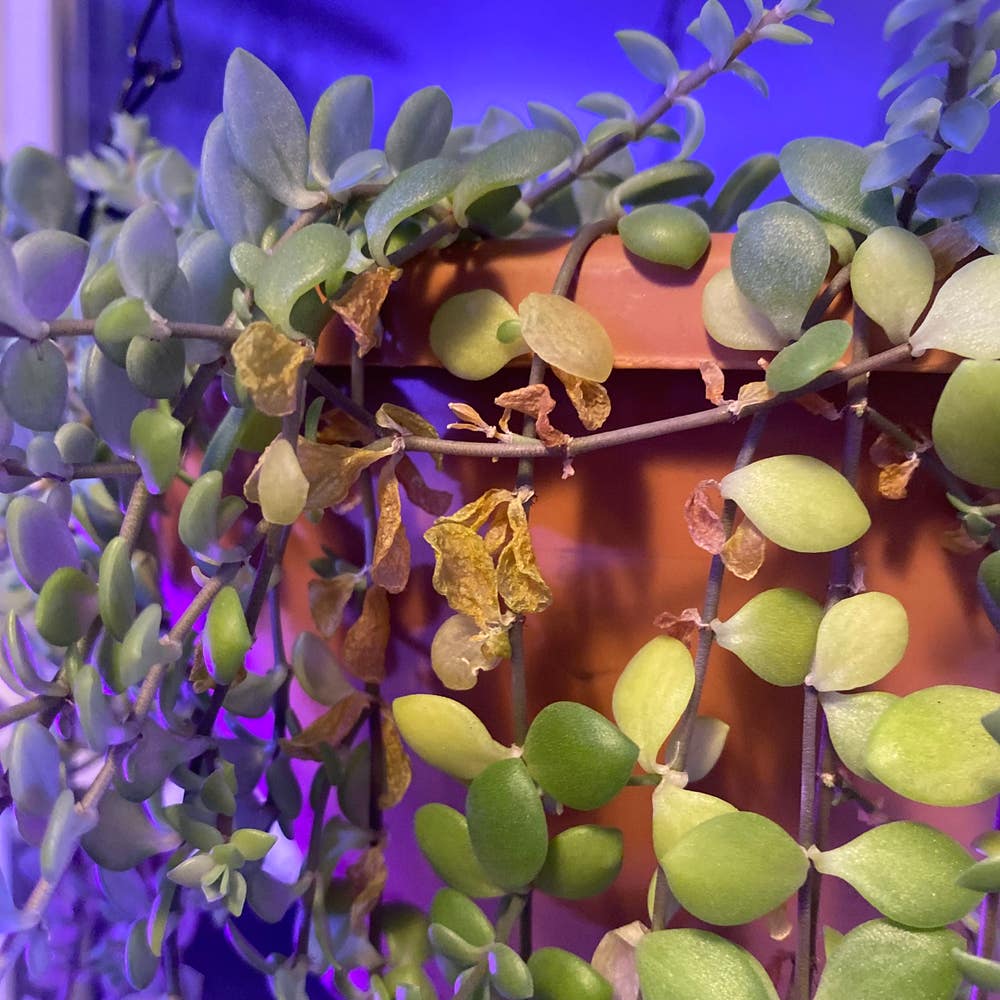
Why Are My Lipstick Plant Leaves Curling?
Aeschynanthus radicans
By the Greg Editorial Team
Jun 15, 2024•7 min read
This article was created with the help of AI so we can cover more plants for you. May contain errors. See one? Report it here.
Unravel the mystery behind your Lipstick Plant's curled leaves and restore its lush allure 🌿.
- Temperature, humidity, light, and watering all impact leaf curling.
- Nutrient deficiencies? Use potassium-rich fertilizer and Epsom salt.
- Prevent pests and diseases with regular inspections and proper care.
Diagnosing the Causes of Leaf Curling
Leaf curling in Lipstick Plants can be like a cryptic message from the plant itself, signaling distress. Temperature fluctuations are notorious for causing leaves to curl. These tropical natives shiver and protest when the mercury dips below 60°F, and their leaves curl into themselves like a defensive posture.
🌿 Impact of Environmental Stressors
Humidity is another piece of the puzzle. Lipstick Plants are not fans of arid environments; they prefer a humidity sweet spot between 40% and 60%. When the air gets too dry, their leaves curl tighter than a roll of quarters. Light exposure, too, is a delicate dance. Direct sunlight is to Lipstick Plant leaves what kryptonite is to Superman—utterly weakening, leading to a crisped, curled state.
💧 Consequences of Improper Watering
When it comes to watering, think of it as a Goldilocks scenario—too much, and you're drowning the roots, causing leaves to curl and droop. Too little, and the leaves become as brittle as a stale cracker, curling in a desperate plea for moisture. Overwatering vs. underwatering—it's a balance that demands attention, with proper drainage being the unsung hero that keeps your plant's feet from getting too wet or too dry.

Addressing Nutrient Deficiencies and Soil Health
💪 Identifying and Correcting Potassium and Magnesium Deficiencies
Potassium is like the plant's personal trainer, keeping it toned and preventing those leaves from slacking and curling. If your Lipstick Plant's leaves are looking more like a crumpled napkin than a lush, flat canvas, it's time to consider a potassium boost. Opt for a potassium-rich fertilizer, but don't go overboard—think of it as a dietary supplement, not an all-you-can-eat buffet.
Magnesium is the unsung hero in the chlorophyll production saga. When leaves start to resemble a zebra with their yellow and green stripes, a magnesium shortage is likely the culprit. A sprinkle of Epsom salt can be the quick fix your plant craves, but always test your soil first. Too much of a good thing can turn into a bad thing real fast.
The Role of Soil Quality in Preventing Leaf Curling
Soil is the Lipstick Plant's home, and just like any home, it needs a solid foundation. Ensuring your plant's abode isn't too acidic or too alkaline is key—aim for that sweet spot, a slightly acidic to neutral pH. This keeps the nutrient doors unlocked and accessible.
Don't forget about soil moisture and aeration. Your plant's roots need to breathe, and they can't do that if they're swimming in water or suffocating in compacted soil. Organic matter can be a game-changer here, improving soil structure and water retention. It's like giving your plant's roots a comfy, breathable bed to sleep in.
Remember, your Lipstick Plant isn't asking for a miracle. It's just asking for a balanced diet and a comfy place to put down roots. Give it that, and those leaves will straighten out before you know it.

Combating Pests and Diseases
🐛 Recognizing and Treating Pests
Spider mites and aphids are the bane of many houseplants, including the Lipstick Plant. These critters are sap-suckers, causing leaves to curl and yellow. Check for fine webs or distorted growth as telltale signs. To treat, blast them with water or apply insecticidal soap. For a more nature-friendly approach, introduce predatory mites or lady beetles to your plant's ecosystem.
Mealybugs are another pest to watch out for. They look like tiny cotton balls and can be removed using a cotton swab dipped in alcohol. Remember, pests love a stressed plant, so keep your green buddy healthy to avoid infestations.
🍄 Managing Fungal Diseases
Fungal diseases can sneak up on you, starting as small spots on leaves. Left unchecked, they can lead to widespread damage. Remove and dispose of any infected leaves to prevent spore spread. Ensure good air circulation and avoid wetting the leaves when watering. If a fungal disease persists, a targeted fungicide might be your last line of defense.
Pro tip: Always disinfect your tools before pruning to avoid spreading any diseases. If you spot a whitish bloom of spores, especially after misting, it's time to act fast. And if you're dealing with a severe case, sometimes it's best to show the plant the door before it affects its neighbors.
🐜 Integrated Pest Management (IPM)
Embrace IPM for a long-term solution. This means monitoring your plants closely, encouraging beneficial insects, and choosing treatments that are gentle on the plant and the environment. Timing is crucial; act swiftly at the first sign of trouble.
Remember: Prevention is better than cure. Keep your plants in tip-top shape to fend off unwanted guests. Regular inspections are your best weapon in this ongoing battle.

Corrective Actions for Leaf Curling
🌡️ Adjusting Care Routines
Environmental conditions are like the weather of your plant's world; they need to be just right. If your Lipstick Plant's leaves are curling, it might be throwing a tantrum over its living situation. Too hot, too cold, too drafty—any of these could be the culprit. Keep the temperature consistent, ideally between 65-80°F (18-27°C). Humidity is another factor; these tropical beauties crave moisture in the air. Aim for a humidity level of about 50-70%.
When it comes to light, think bright but not a sunburn. Indirect sunlight is your plant's best friend. Direct rays can cause leaves to curl up tighter than a roll of quarters. Find a spot that's just right, where the light is bright but filtered, like through a sheer curtain.
🌱 Implementing a Balanced Fertilization Schedule
Fertilizer is your plant's diet plan, and balance is key. A 5-5-5 NPK (nitrogen, phosphorus, potassium) fertilizer can work wonders, but remember, more is not always better. Overfeeding can lead to nutrient burn, making leaves curl up as if they've eaten too much at a buffet. If you've been a bit heavy-handed, give the soil a good flush with water to help your plant detox.
Underwatering and overwatering can both lead to leaf curling. The soil should be like a wrung-out sponge—moist but not dripping. Let the top inch dry out before giving it another drink. And ensure your pot has good drainage; nobody likes wet feet, especially not your Lipstick Plant.
Remember, it's all about finding that sweet spot in care routines. Keep a watchful eye and adjust as needed, and your Lipstick Plant's leaves will uncurl like a flag on a calm day.
Preventive Measures to Maintain Healthy Foliage
🛡️ Proactive Care Tips
Consistency is your plant's best pal. Like clockwork, maintain a watering schedule that's as predictable as morning traffic. Too much H2O? Roots drown. Too little? Leaves curl like a bad perm. Aim for the sweet spot where the top inch of soil feels like a wrung-out sponge—moist but not soggy.
👀 Regular Plant Inspection
Vigilance is key. Treat your plant like it's under 24/7 surveillance. Spot a bug? Evict it with insecticidal soap or neem oil before it throws a house party. Notice a leaf looking off? It might be begging for nutrients. A balanced fertilizer, like a well-rounded diet, keeps your plant from getting hangry.
⏰ Timely Intervention
Act fast, like a plant paramedic. See a leaf starting to curl? Don't wait for it to become a botanical crisis. Adjust the light, tweak the humidity, or change your watering ways. It's easier to prevent a problem than to solve one, and your plant will thank you with perky, uncurled leaves.
🌱 Soil and Light Checks
Get your hands dirty and check that soil. Is it the right mix? Does it hold moisture like a sponge or repel water like a raincoat? Adjust as needed. And light—your plant craves it like a cat craves a sunbeam. Bright, indirect light keeps leaves happy without the sunburn.
🐜 Pest and Disease Prevention
Pests are party crashers. Regular check-ups are your bouncer, keeping these freeloaders at bay. If pests do slip through, show them the door with insecticidal soap or neem oil. Remember, prevention is better than cure, so keep your plant's immune system robust with good care practices, and you'll spend less time playing plant doctor.
⚠️ Safety First
This content is for general information and may contain errors, omissions, or outdated details. It is not medical, veterinary advice, or an endorsement of therapeutic claims.
Always consult a qualified healthcare professional before using any plant as food, medicine, or supplement.
Never eat any plant (or feed one to pets) without confirming its identity with at least two trusted sources.
If you suspect poisoning, call Poison Control (800) 222-1222, the Pet Poison Helpline (800) 213-6680, or your local emergency service immediately.
Spotted an error? Please report it here.
Banish those curly leaves and ensure your Lipstick Plant thrives with Greg's tailored reminders for watering, pest control, and more, keeping your green friend happy and healthy 🌿.