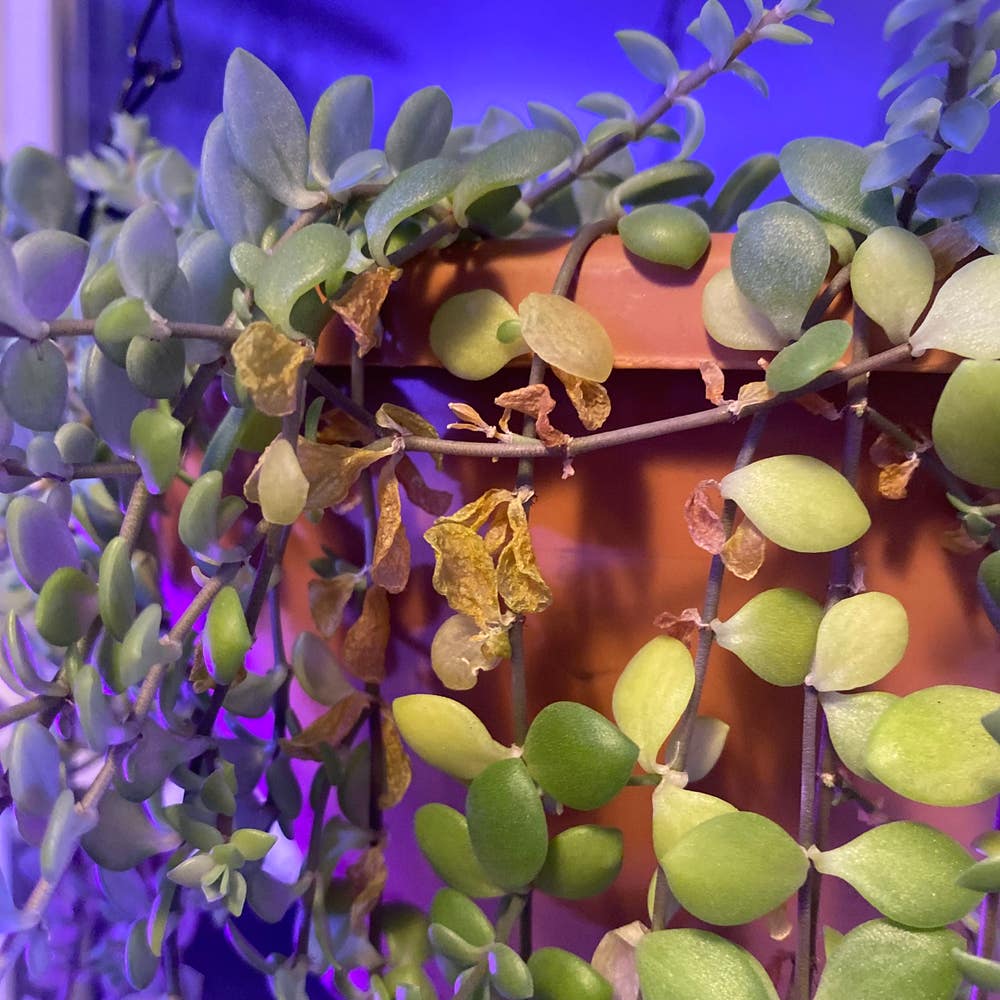
Black Spots on My Lipstick Plant Leaves
Aeschynanthus radicans
By the Greg Editorial Team
Jun 15, 2024•5 min read
This article was created with the help of AI so we can cover more plants for you. May contain errors. See one? Report it here.
Banish black spots on your Lipstick Plant 🌿 with our expert diagnosis and cure guide!
- Fungal, bacterial, or environmental causes lead to black spots.
- Treatment varies: fungicides for fungi, copper-based for bacteria.
- Prevent with proper care: light, humidity, watering, and soil management.
Identifying Black Spots on Leaves
🕵️ Spotting the Culprits
Fungal issues often manifest as black or white spots that can have a powdery or spotty texture. These spots may grow in size and shape, potentially leading to holes in the leaves if left untreated. Fungi thrive in conditions of high humidity and poor air circulation.
Bacterial problems present differently, with water-soaked lesions that usually begin on the lower leaves. These lesions can have a yellow halo and may spread through water droplets or direct contact.
Environmental Factors
Don't overlook the environmental causes; black spots can also be a sign of sunburn or physical damage. If the spots are accompanied by dry, crispy leaf edges, it might be a case of underwatering or low humidity. Conversely, overwatering and poor drainage can create a haven for pathogens.
Visual Diagnosis
To differentiate between these issues, examine the shape, color, and location of the spots. Fungal and bacterial spots can look similar, but fungal spots may have a red or yellow edge. Bacterial spots, on the other hand, tend to be more uniform in color. Environmental stress typically shows a pattern consistent with the stressor, like sunburn spots only on the sun-facing side.
Remember, accurate identification is key. If in doubt, consult a plant health expert.

Treating Infections and Environmental Stress
🦠 Combating Infections
Fungicides are your go-to when you're up against fungal foes. But remember, the label is your playbook—follow it to the letter. For the eco-conscious, neem oil or a simple baking soda solution can be surprisingly effective. It's about finesse, not force.
Pruning away the infected leaves with sterilized shears is like cutting off the enemy's supply lines. Be ruthless in your cleanup and dispose of the fallen leaves like they're biohazards because, well, they are.
Bacterial infections are sneakier, often thriving in overly moist conditions. If you spot them, copper-based bactericides are your heavy artillery. Apply with the regularity of your daily caffeine fix.
🌿 Addressing Environmental Stress
Environmental stress is like the bad office ergonomics for plants. Too much sun? It's like a never-ending Monday meeting. Dial down the heat and aim for that sweet spot of bright, indirect light. Think of it as the plant equivalent of a standing desk.
Humidity can turn your plant's habitat into a tropical nightmare. Keep it comfortable, not clammy. And air circulation? It's the office fan that keeps things fresh and prevents your plant from feeling stuffy.
Remember, your plant's environment should be as stable as a well-balanced spreadsheet. Sudden changes are the equivalent of a surprise audit—no one wants that. Keep conditions consistent to avoid those black spot panic attacks.
Final Touches
Watering is a balancing act. Too much, and you're drowning the roots; too little, and you're parching them. Aim for moist soil that's as well-drained as a good colander. And please, no overhead irrigation—it's the plant equivalent of dumping a water cooler on your coworker.
Lastly, don't let your plant's social life get too crowded. Overpopulation leads to competition, and before you know it, you've got a black spot epidemic. Prune to keep personal space a priority, and always clean your tools—cross-contamination is a no-no.
By tackling both infections and environmental stress, you're not just a plant owner; you're a plant hero.

Preventive Measures for Healthy Leaves
🌅 Integrated Approach to Watering, Lighting, and Air Circulation
Morning rituals matter. Water your Lipstick Plant early to give it a sunbath post-hydration, minimizing fungal allure. Lighting should be the Goldilocks kind—not too harsh, not too dim, just right for your green buddy. Airflow is the plant's equivalent of good breathing room; keep it breezy to ward off the black spot blues.
🌱 Best Practices for Soil and Moisture Management
Soil is the plant's foundation—make it rich but not clingy. A well-draining mix lets roots breathe without drowning in excess love (water). Speaking of moisture, think of your watering can as a precision tool, not a floodgate. Consistency is key; keep the soil's thirst quenched, but don't turn it into a swamp.
✂️ Pruning and Sanitation
Get snippy with purpose. Prune to prevent overcrowding; it's like social distancing for plants. And keep those shears sterilized—no one likes a dirty cut. Post-pruning, don't let the fallen leaves loiter; they're not welcome back at the plant party.
👀 Monitoring and Adjustments
Keep a hawk's eye on your green charge. Signs of distress? Adjust your care routine faster than a plant parent's heart skips at the sight of a new leaf. Remember, vigilance is the guardian of plant health.
🌿 Embracing Organic and Cultural Measures
Go organic when you can—it's like a plant spa treatment. Cultural measures are your secret weapon; clear out debris and give your plants some personal space. It's not just about being neat; it's about breaking the cycle of infection.

Monitoring Plant Recovery
🌱 Recognizing Signs of Recovery
After addressing the black spots on your Lipstick Plant, vigilance is key. Look for new leaves that are spot-free and an overall rejuvenation in the plant's appearance. This indicates your efforts are paying off.
🛠 Ongoing Care Adjustments
Adjustments may still be necessary as your plant recovers. If the black spots diminish, you're on the right track. However, if they persist or new issues arise, it's time to reassess—your plant's giving you feedback, so listen up.
🆘 Seeking Additional Help
When your green thumb isn't enough and the black spots stubbornly stick around, don't hesitate to seek advice from a plant expert or a horticulturist. Sometimes, it takes a village to raise a plant.
⚠️ Safety First
This content is for general information and may contain errors, omissions, or outdated details. It is not medical, veterinary advice, or an endorsement of therapeutic claims.
Always consult a qualified healthcare professional before using any plant as food, medicine, or supplement.
Never eat any plant (or feed one to pets) without confirming its identity with at least two trusted sources.
If you suspect poisoning, call Poison Control (800) 222-1222, the Pet Poison Helpline (800) 213-6680, or your local emergency service immediately.
Spotted an error? Please report it here.
Ensure your lipstick plant leaves are spotless 🌿 with Greg's tailored environment tracking and expert care advice for any pesky black spots.