🦁 Why Is My Lion's Tail Agave Dropping Leaves?
Agave attenuata
By the Greg Editorial Team
Jun 15, 2024•4 min read
This article was created with the help of AI so we can cover more plants for you. May contain errors. See one? Report it here.
- Overwatering and underwatering both lead to leaf drop; know the signs.
- 🌡️ Maintain 50°F-80°F to prevent temperature-related leaf drop.
- 🐞 Regularly inspect for pests like mealybugs and use treatments like neem oil.
Overwatering and Leaf Drop
Overwatering is the silent killer of the Lion's Tail Agave. This succulent's leaves may drop dramatically when given excess water, as their roots are not meant to be waterlogged.
🚱 Immediate Identification
Swollen leaves that feel mushy or display yellowing are tell-tale signs of too much H2O. If leaves start looking more like water balloons than sturdy spikes, it's time to take action.
🚱 Immediate Steps to Take
- Stop watering immediately. Let the soil dry out completely before you even consider the watering can again.
- Check the drainage. Ensure your pot isn't holding a pool party for root rot fungi at the bottom.
- Prune damaged leaves. They're just taking up resources and not coming back to life.
- If the soil feels like a swamp, consider repotting with fresh, dry soil to give your agave a new lease on life.
Remember, the Lion's Tail Agave prefers a drought to a deluge. Keep your watering can on a tight leash and your agave will thank you by keeping its leaves firmly attached.

Underwatering and Leaf Drop
🚰 Recognizing the Thirsty Signs
Wilting leaves and a parched appearance are your Lion's Tail Agave's way of saying, "I need a drink, pronto!" If the leaves are dropping, it's past subtle hints; your plant is downright dehydrated. Look for limp foliage and dry soil as clear indicators. Brown, crispy leaf tips are the plant's version of a distress flare.
🚰 Hydration without the Hangover
When rehydrating, think of it as a spa day for your Agave—gentle and thorough. Soak the soil until it's moist, but skip the flood; you're quenching thirst, not creating a swamp. If the soil is Sahara-like, consider a bottom-watering method to ensure even moisture absorption without overwhelming the plant. Remember, no two plants are alike; check the soil before you water, not just the calendar.

Temperature Stress and Leaf Drop
🌡️ Understanding Temperature Impact
Temperature extremes can wreak havoc on Lion's Tail Agave, leading to leaf drop. Just like humans can get heatstroke or hypothermia, plants can suffer from too much or too little warmth.
🌡️ Optimal Temperature Range
For Lion's Tail Agave, think of Goldilocks: not too hot, not too cold. Aim to keep your spiky friend in temperatures between 50°F and 80°F (10°C and 27°C).
🌡️ Heat Stress Symptoms
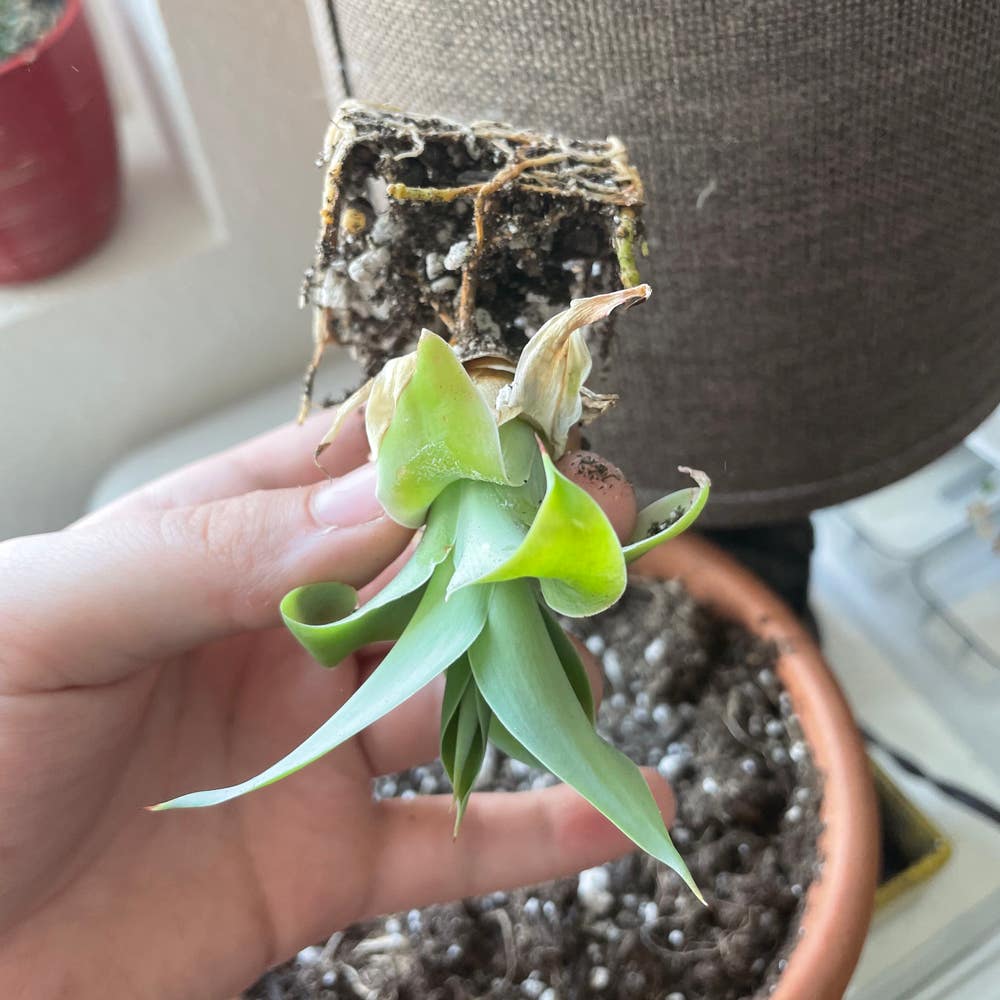
When it's hotter than a desert disco, leaves may curl into a taco fold to conserve moisture. This is the plant's version of raising the white flag.
🌡️ Cold Stress Symptoms
Conversely, a chill can cause leaves to resemble a frozen margarita in texture—brittle and unhappy. Leaf damage from cold can manifest as dark, water-stained spots.
🌡️ Keeping Temperatures Consistent
Avoid placing your Lion's Tail Agave near drafty windows or under air conditioning vents. Consistency is key; sudden changes in temperature can cause the plant to panic and drop leaves.
🌡️ Protecting from Extreme Weather
When the weather outside is frightful, and you're cozy inside, remember your plant can't snuggle under a blanket. Protect it from frost by bringing it indoors or covering it during cold snaps.
🌡️ When the Damage is Done
If your plant has been through the proverbial wringer with temperature stress, don't lose hope. Assess the damage, remove any unsalvageable leaves, and stabilize the environment. Your Lion's Tail Agave is tougher than it looks.

Pest Infestations and Leaf Drop
🐛 Identifying Pest-Related Leaf Drop
Pests can turn a thriving Lion's Tail Agave into a leaf-dropping mess. Mealybugs, spider mites, and the notorious agave snout weevil are often to blame. Look for white cottony substances, tiny webbing, or the telltale signs of weevil damage, such as lesions near the plant's crown.
💪 Effective Treatments
Once you've spotted these freeloaders, it's time for action. Insecticidal soaps and neem oil are your first line of defense—safe yet effective. For a small infestation, you might even play surgeon with tweezers. But if you're dealing with the agave snout weevil, you'll need to up your game—consider beneficial nematodes like Steinernema feltiae.
🚫 Preventive Measures
Prevention is key. Regular inspections can catch pests before they become a full-blown infestation. Keep your Agave strong; a healthy plant is less inviting to pests. If you're in a greenhouse, biological controls like ladybirds can be a smart investment. And don't forget about good old-fashioned cleanliness—keeping the area around your plant debris-free can deter pests from setting up shop.
⚠️ Safety First
This content is for general information and may contain errors, omissions, or outdated details. It is not medical, veterinary advice, or an endorsement of therapeutic claims.
Always consult a qualified healthcare professional before using any plant as food, medicine, or supplement.
Never eat any plant (or feed one to pets) without confirming its identity with at least two trusted sources.
If you suspect poisoning, call Poison Control (800) 222-1222, the Pet Poison Helpline (800) 213-6680, or your local emergency service immediately.
Spotted an error? Please report it here.
Let Greg be your plant's guardian against the extremes, ensuring your Lion's Tail Agave thrives with custom care 🛡️ from watering to pest management.