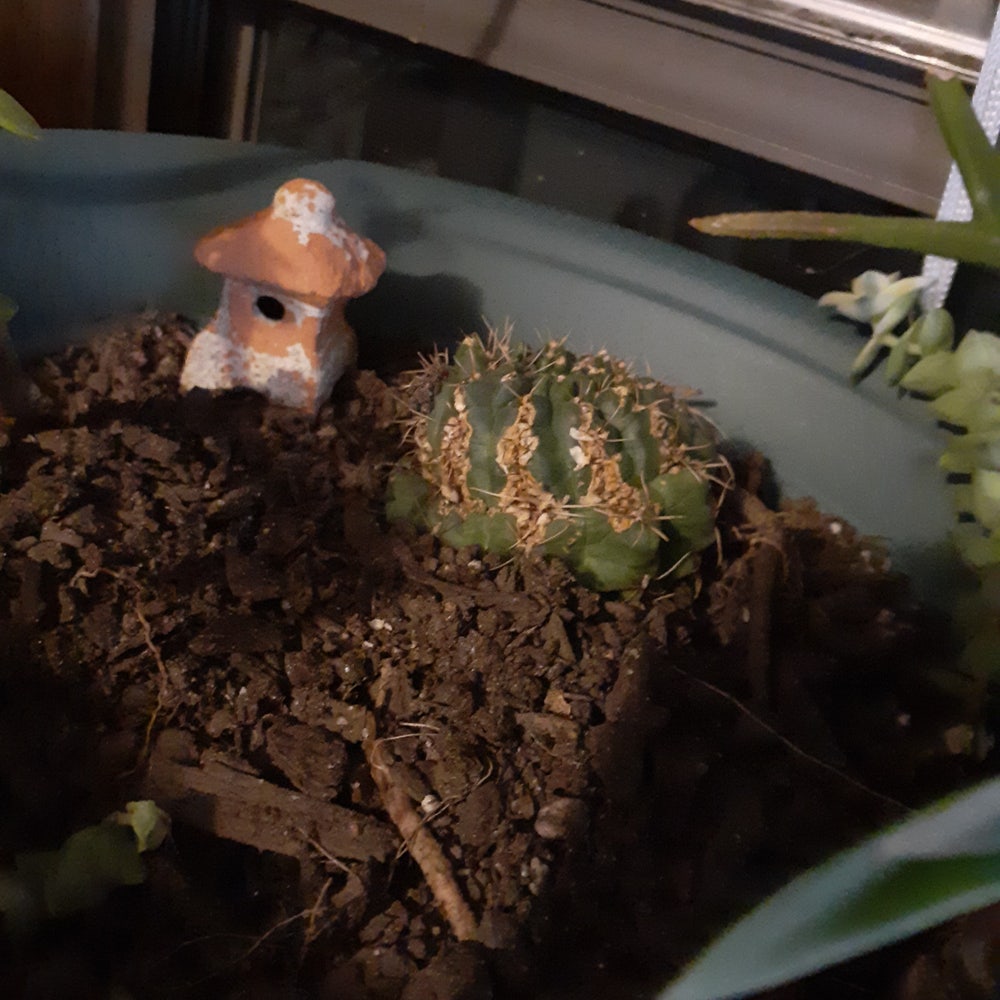
How Often Should I Water My Echinofossulocactus palmillas?
Stenocactus nova 'Palmillas'
By the Greg Editorial Team
Feb 29, 2024•4 min read
This article was created with the help of AI so we can cover more plants for you. May contain errors. See one? Report it here.
Nail your cactus care by mastering the perfect watering schedule for a happy, healthy Echinofossulocactus palmillas 🌵✨.
- Wrinkled skin and brittle spines signal your cactus is thirsty.
- 🌵 Adjust watering with seasons: more in summer, less in winter.
- Use well-draining soil and pots to prevent overwatering and root rot.
When to Water: Reading Your Cactus's Thirst Cues
🌵 Spotting Thirsty Vibes
Identifying signs that your cactus is parched can be as straightforward as checking for wrinkled skin. A cactus that looks deflated is begging for water. Brittle spines and halted growth are also distress signals. If the soil is as dry as a stand-up comedian's wit, it's time to hydrate your spiky friend.
🚱 Too Much Love: Overwatering Warnings
On the flip side, overwatering symptoms are the plant equivalent of a bad hangover. Yellowing leaves are the first clue you've crossed the line, and a mushy base is a full-blown red flag. Root rot is the silent killer here, and if your cactus is puffier than a marshmallow, ease up on the aqua. Remember, cacti are more camel than fish—they store water in their tissues and prefer a drought to a deluge.
The Nitty-Gritty of Watering Frequency
🌱 Seasonal Shifts: Summer Soaks and Winter Wanes
In the summer, your Echinofossulocactus palmillas is in its prime, soaking up the sun and the water. This is the plant's growth period, so it's all systems go for more frequent watering.
Come winter, the cactus slows down. It's not the time for a water party. The cooler temps mean your cactus is conserving energy and water, so you should too. Dial back on the H2O.
🏡 Home Sweet Home: Environmental Factors
Your cactus's environment is like a backstage pass to its watering needs. Bright light? That's your cue to water more. But if your cactus is chilling in the shade, it's sipping slowly, so ease up on the watering.
Humidity plays a role too. High humidity equals less thirst, so water less. Dry air? Crank up the watering (but don't go overboard).
Temperature is another VIP in the watering club. Hotter temps might have your cactus feeling thirstier, while a cool spot means it can go longer between drinks. And if your AC or heater is on blast, remember, they're secretly sapping moisture, so adjust your watering rhythm accordingly.
The Art of Watering Echinofossulocactus Palmillas
💦 Perfecting the Pour: Techniques for Hydration
Watering your Echinofossulocactus palmillas isn't rocket science, but it does require a bit of finesse. Thorough saturation is your goal when you water, mimicking the natural downpours of its desert habitat. Start by pouring water slowly at the base of the plant, ensuring the soil gets a good soak without splashing the spines. Keep going until you see water escaping freely from the drainage holes. This is your cue that the cactus has had its fill.
🕰 The Waiting Game: Letting the Soil Dry
Patience is key after watering – let the soil dry out completely before even thinking about another watering session. Stick your finger into the soil; if it's dry an inch down, your cactus is ready for another drink. If you're not keen on getting dirt under your nails, a chopstick or moisture meter can be your best friend. Just remember, the wait between waterings isn't a punishment for your plant; it's a vital rest period that keeps root rot at bay and ensures your spiky friend stays healthy.
Tools of the Trade: Gear for the Perfect Watering
💧 Choosing the Right Watering Can
Capacity and balance are key when selecting a watering can for your Echinofossulocactus palmillas. For indoor use, a smaller can with a narrow spout allows for precision watering, targeting the soil without splashing the foliage. Outdoor cacti might benefit from a larger, 2-gallon can, ensuring you don't have to refill mid-task. Regardless of size, the design should feel comfortable in your hand and not unwieldy when full.
🌱 Soil and Pots: Setting the Stage for Success
The pot you choose is about more than just looks; it's a vital component in the health of your Echinofossulocactus palmillas. Drainage holes are non-negotiable to prevent waterlogging. Terracotta pots are porous, promoting evaporation and suiting the cactus's preference for a dry environment. Conversely, plastic pots retain moisture longer and might require less frequent watering. Size matters too; a pot that's too large can lead to soggy soil, while one too small can cramp the roots. Aim for a "just right" fit. As for soil, a well-draining mix is essential, allowing water to flow through easily and preventing root rot.
⚠️ Safety First
This content is for general information and may contain errors, omissions, or outdated details. It is not medical, veterinary advice, or an endorsement of therapeutic claims.
Always consult a qualified healthcare professional before using any plant as food, medicine, or supplement.
Never eat any plant (or feed one to pets) without confirming its identity with at least two trusted sources.
If you suspect poisoning, call Poison Control (800) 222-1222, the Pet Poison Helpline (800) 213-6680, or your local emergency service immediately.
Spotted an error? Please report it here.
Discover the perfect watering rhythm for your Echinofossulocactus palmillas with Greg's 🌵 tailored reminders, ensuring it never goes thirsty or drowns in excess.