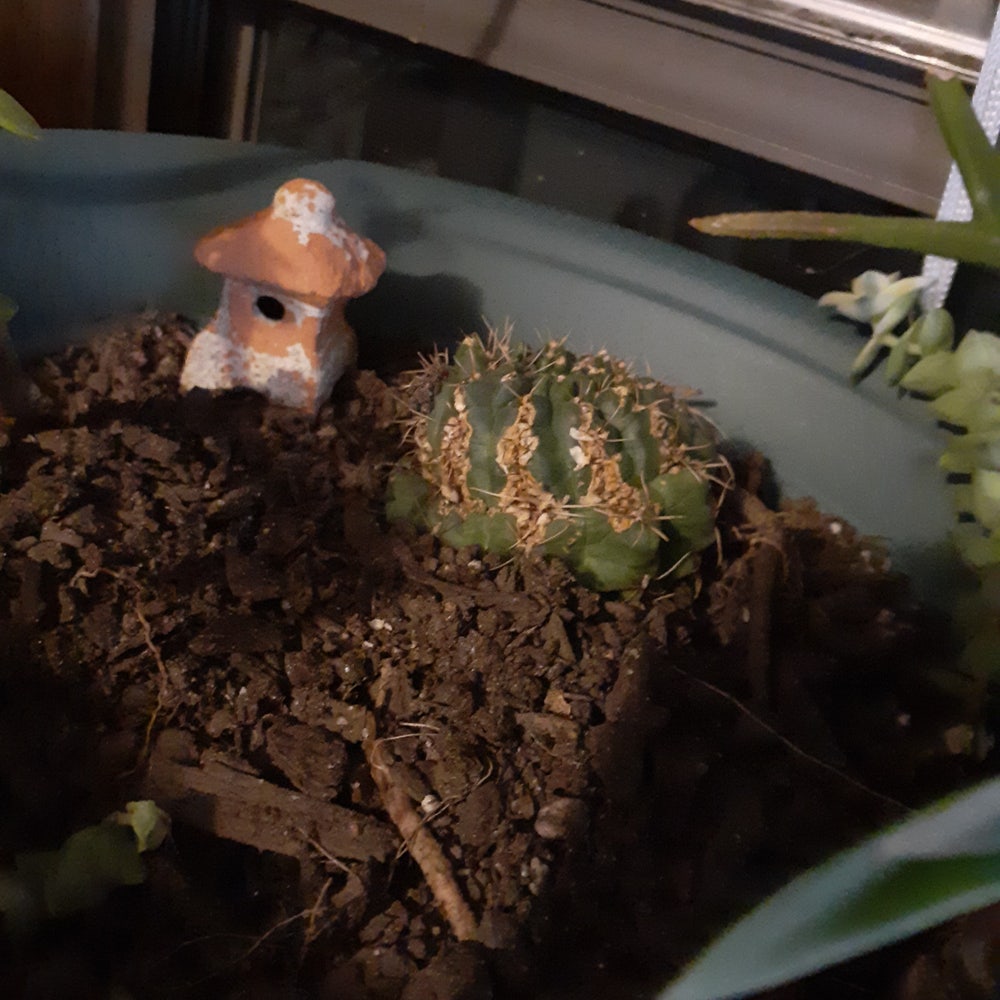
Brown Spots On Echinofossulocactus Palmillas Leaves
Stenocactus nova 'Palmillas'
By the Greg Editorial Team
Feb 29, 2024•3 min read
This article was created with the help of AI so we can cover more plants for you. May contain errors. See one? Report it here.
Banish brown spots on your cactus 🌵 with expert tips for perfect plant health and spot-free leaves!
- Overwatering and poor drainage cause brown spots; adjust watering and soil.
- Sunburn vs. Shade: Find the right light balance to prevent crispy spots.
- Fungal/Bacterial infections: Improve air circulation and reduce humidity.
Spotting the Trouble: Identifying Brown Spots
🍂 What Do They Look Like?
Brown spots on Echinofossulocactus palmillas leaves can be a real buzzkill. They range from tan to dark brown, and you might find them looking either parched or as if they've taken a dip in a pool. Size-wise, think from speck to splotch. The shape? Could be as random as your playlist on shuffle or as perfect as a circle. If there's a yellow ring around the spot, that's your plant waving a flag for help.
📍 Where Are They Located?
Location, location, location—it's not just for real estate. On your cactus leaves, brown spots could be hogging the limelight at the center, lurking at the edges, or playing hide and seek on the underside. If they're throwing a party, it's likely at the leaf tips or bases. And don't be fooled; not every mark is a sign of the apocalypse. Consistency is your sidekick here. Look for a pattern—repetition is a telltale sign that your plant is sending an SOS.
Playing Detective: Uncovering the Causes
In our quest to demystify those pesky brown spots on Echinofossulocactus palmillas leaves, let's channel our inner Sherlock.
💧 Too Much Water or Not Enough Drainage?
Overwatering is the equivalent of giving your cactus a never-ending bath. It's a surefire way to invite brown, mushy spots to take up residence, particularly on the leaf undersides. Drainage is your plant's lifeline; without it, you're basically asking for root rot and a fungal free-for-all.
🌞 Sunburned or Just Too Sunny?
Cacti love the sun, but too much can lead to the leaf equivalent of a nasty sunburn. Look for dry, crispy spots, usually on the areas most exposed to light. These are silent screams for some shade.
🦠 Unwanted Guests: Fungal and Bacterial Culprits
Fungi and bacteria are like the uninvited guests who crash your party and refuse to leave. If you spot a pattern of tiny brown circles or a dusting that looks suspiciously like powder, it's time to evict these party poopers. They thrive in the moist, shadowy nooks of your plant, so improving air circulation and reducing humidity are key moves in this game of plant chess.
Turning the Tide: Treatment and Prevention Strategies
💧 Water Wisely
Adjusting your watering habits can be a game-changer for Echinofossulocactus palmillas. Only water when the soil feels dry to the touch, and ensure the pot has drainage holes to prevent water from pooling.
- Consistency is key. Stick to a schedule that allows the soil to dry out slightly between waterings. If the leaves droop, check the soil before reaching for the watering can.
🌥️ Shady Solutions
Finding the right amount of sunlight for your cactus is crucial. Bright, indirect light is the sweet spot, shielding it from the harshness of direct sun which can lead to sunburn.
- Consider using a shade cloth during the intense summer months to protect your plant. It's like sunglasses for your cactus, filtering out the excess while letting in the good stuff.
🧹 Clean and Quarantine
Air circulation can't be overstated; it's the invisible hero in the fight against fungal and bacterial foes. Prune to prevent overcrowding and keep the air moving.
Humidity control is also vital. Use a hygrometer to monitor moisture levels, and adjust with a dehumidifier or humidifier as needed. It's like managing the climate for a mini ecosystem.
Hygiene is plant care 101. Clean your tools, rotate crops if applicable, and water at the base to prevent moisture from throwing a party on the leaves.
⚠️ Safety First
This content is for general information and may contain errors, omissions, or outdated details. It is not medical, veterinary advice, or an endorsement of therapeutic claims.
Always consult a qualified healthcare professional before using any plant as food, medicine, or supplement.
Never eat any plant (or feed one to pets) without confirming its identity with at least two trusted sources.
If you suspect poisoning, call Poison Control (800) 222-1222, the Pet Poison Helpline (800) 213-6680, or your local emergency service immediately.
Spotted an error? Please report it here.
Keep your Echinofossulocactus palmillas spot-free 🤎 with Greg's personalized care reminders that help you nail the right watering, sunlight, and humidity balance from the tips in this article!