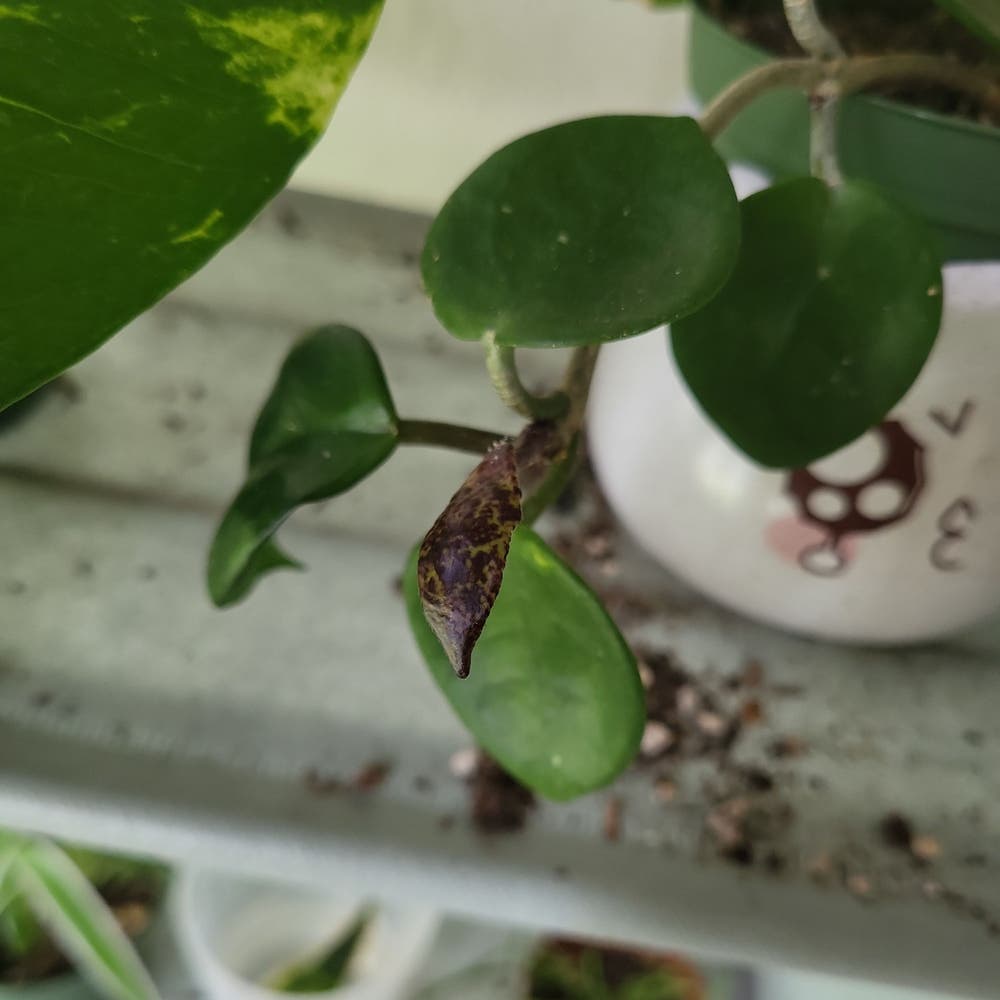
💧 What Do I Do About Chelsea Hoya Root Rot?
Hoya carnosa 'Chelsea'
By the Greg Editorial Team
Jun 18, 2024•5 min read
This article was created with the help of AI so we can cover more plants for you. May contain errors. See one? Report it here.
Rescue your Chelsea Hoya from root rot 🚑 with these lifesaving signs, treatments, and prevention tips! 🌿
- 🌱 Identify root rot by yellow leaves, wilting, and odor.
- ✂️ Remove rotten roots and repot with well-draining soil.
- 💧 Adjust watering habits using moisture meters or finger test.
Spotting the Red Flags: Symptoms and Diagnosis of Root Rot
🚩 Visual Symptoms
When your Chelsea Hoya starts looking more like a wilted salad than a vibrant plant, take note. Yellowing leaves, wilting, and a smell that's less fresh soil and more rotten eggs are your plant waving a white flag. These symptoms scream root rot louder than a horror movie scream queen.
🕵️ Root Inspection
Time to play plant detective. Gently lift your Chelsea Hoya from its pot like it's a newborn. Healthy roots are the Arnold Schwarzeneggers of the plant world—firm and white. Rotten roots, however, will have the consistency of overcooked noodles and a color that's more mud puddle than pearly white. If they smell like last week's forgotten leftovers, it's time for a root intervention.

The Rescue Mission: Treating Chelsea Hoya Root Rot
🏥 Surgical Precision
When your Chelsea Hoya screams 'root rot', it's time for some surgical precision. First, yank the plant out and give the roots a good once-over. Healthy roots are firm and resilient, not mushy or stringy. Snip the rotten ones right at the stem with sterilized scissors; no mercy for the dead weight. If the stem's also taken a hit, keep cutting until you hit the sap—white or clear, that's your sign of life.
After the amputation, dunk the stem in a 3% hydrogen peroxide solution. This isn't a spa bath—it's a disinfectant dip to ward off further rot. Let the plant air-dry; this is the ICU phase where it's all about preventing infections.
🌱 Fresh Start
Now, for a fresh start. Forget your old soil; it's probably a mucky mess. Go for a well-draining mix, something that feels like the VIP lounge for roots—airy, loose, and yet, holds just enough moisture. Think all-purpose potting soil with a twist of perlite or coarse sand.
Repotting is like moving day for your Hoya. Be gentle, but don't coddle it. If the root ball's stubborn, a chopstick can coax it out, or you might have to break the pot. It's a small price for salvation. Once nestled in its new abode, resist the urge to water like you're filling a pool. Just enough to settle the soil—think of it as a toast to its new home, not a drowning ceremony.

Water Wisely: Adjusting Your Watering Habits
💧 Finding the Balance
Tailoring your watering habits to the needs of your Chelsea Hoya is crucial. During cooler months, reduce the frequency as evaporation slows down. For larger pots, remember they retain moisture longer, so water less often. The goal is to keep the soil moist, not soggy or bone-dry.
🛠 Tools of the Trade
A moisture meter can be your best friend in avoiding overwatering. If you're old school, the finger test works too—dry at the second knuckle means it's time to water. If you've overdone it, let the soil dry out before watering again. And for tech enthusiasts, consider a smart watering app to keep track of your Hoya's hydration needs.

Home Sweet Home: Soil and Pot Essentials
🌱 The Perfect Mix
Selecting the right potting mix for your Chelsea Hoya is like choosing the best coffee blend – it needs to be just to your taste. Well-draining is the buzzword here. A mix that's too heavy is a no-go; your Hoya's roots might as well be wearing cement shoes. Go for a blend that's the life of the party – airy, light, and with a dash of organic matter to keep things interesting. Think orchid bark for breathability, coir for moisture management, and perlite for that airy lift. And don't forget the worm castings – they're like the secret seasoning that makes everything better.
🚰 Drainage is Key
When it comes to pots, think Swiss cheese – the more holes, the merrier. Your Chelsea Hoya's roots despise a soggy bottom as much as a poorly baked pie crust. Ensure your pot has adequate drainage to let excess water escape, because root rot is the party crasher you didn't invite. If you're using a decorative pot without holes, consider it a fancy raincoat over a practical one – it looks good, but it's not keeping anyone dry. Stick a well-drained pot inside it, and you're golden.
Keeping the Menace at Bay: Prevention Strategies
💫 Environmental Harmony
Creating the ideal home environment is crucial for preventing root rot in your Chelsea Hoya. Ensure your plant has ample ventilation and isn't crammed in with other plants like sardines in a tin. This isn't just about aesthetics; it's about giving each plant its own personal space to breathe and thrive, reducing the risk of disease spread.
🕵️♂️ Vigilance and Cleanliness
Regular inspections are like the neighborhood watch for your plants. Get down and dirty with your Chelsea Hoya, checking for early signs of distress. Keep your gardening tools as clean as your dinnerware to avoid introducing any nasty pathogens. It's not just about being tidy; it's about being a proactive plant parent. Remember, a clean plant space is like a fortress against pests and diseases.
⚠️ Safety First
This content is for general information and may contain errors, omissions, or outdated details. It is not medical, veterinary advice, or an endorsement of therapeutic claims.
Always consult a qualified healthcare professional before using any plant as food, medicine, or supplement.
Never eat any plant (or feed one to pets) without confirming its identity with at least two trusted sources.
If you suspect poisoning, call Poison Control (800) 222-1222, the Pet Poison Helpline (800) 213-6680, or your local emergency service immediately.
Spotted an error? Please report it here.
Ensure your Chelsea Hoya thrives after root rot 🌱 by using Greg to monitor moisture levels and schedule precise waterings, preventing future soggy soil mishaps.