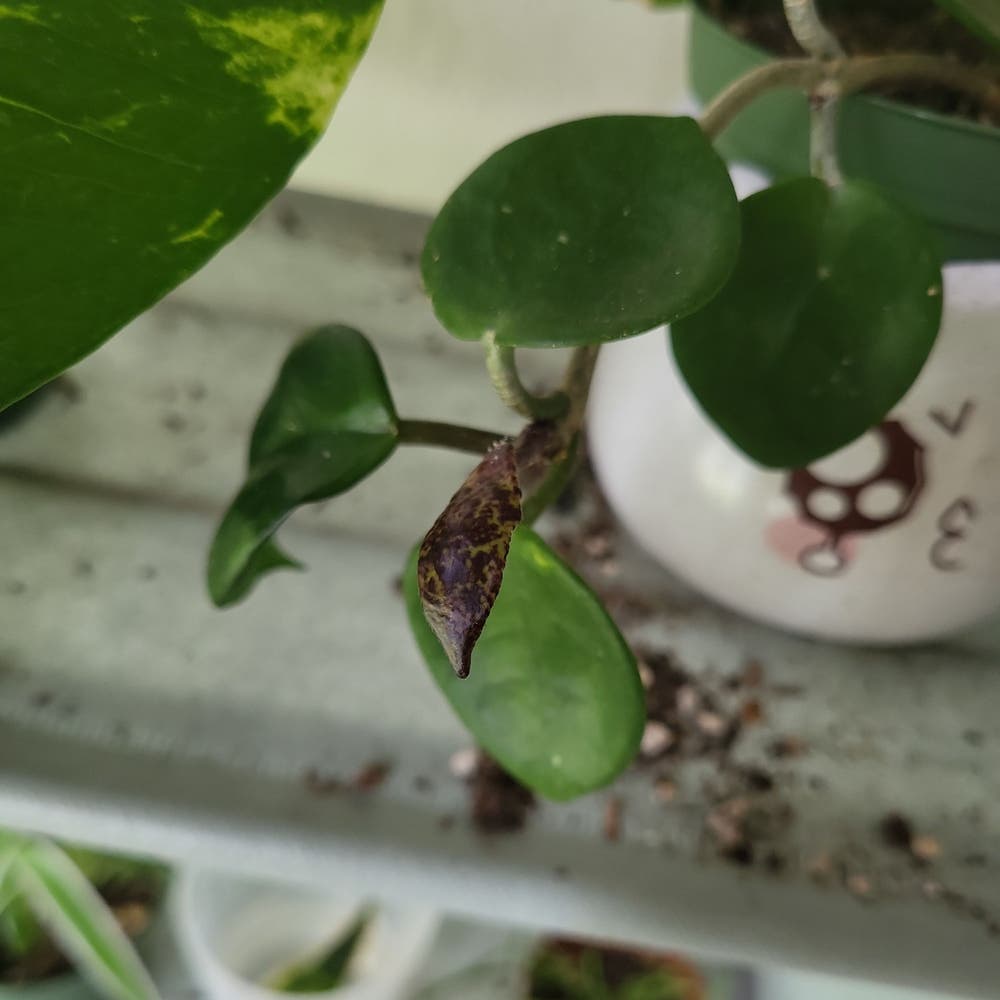
🍂 Why Are My Chelsea Hoya Leaves Dropping?
Hoya carnosa 'Chelsea'
By the Greg Editorial Team
Jun 18, 2024•4 min read
This article was created with the help of AI so we can cover more plants for you. May contain errors. See one? Report it here.
Prevent the heartbreak of leaf drop 🍂 in your Chelsea Hoya with these proven care strategies.
- Over/underwatering causes leaf drop; check soil moisture to adjust watering.
- Protect from cold drafts and stabilize temperatures for a happy Chelsea Hoya.
- Prevent pests with inspections and treatments like insecticidal soap or neem oil.
Spot the Signs: When Your Chelsea Hoya is Unhappy
🍂 Recognizing Leaf Drop Symptoms
Leaf drop in your Chelsea Hoya can feel like a silent scream for help. Early signs include leaves that detach with the slightest touch or those that yellow and wither without warning. Normal plant behavior might include the occasional leaf falling, but a shower of leaves is a red flag.
🩺 Assessing Plant Health
Before you play the blame game, give your Hoya a quick health check-up. Inspect the roots for signs of rot or overcrowding—these are distress signals. Ensure the leaves are plump and firm, not puckered or limp. If the roots are poking out or the soil feels like last week's coffee grounds, it's time to take action.

The Usual Suspects: Pinpointing the Culprits Behind Leaf Drop
💧 Too Much Love: Overwatering Woes
Overwatering can turn your Chelsea Hoya's roots into a swampy mess. If your plant's soil feels more like a wet sponge than a moist cake, it's time to back off the watering can. Root rot could be crashing the party, and nobody wants that uninvited guest.
🏜️ Thirsty Roots: The Perils of Underwatering
On the flip side, underwatering leaves your plant gasping for a drink. When the soil is as dry as a stand-up comic's wit, your Hoya's leaves might start dropping like flies. Hydration is key, but don't go from desert to deluge in one go.
❄️ Feeling the Chill: Temperature and Drafts
Chelsea Hoyas aren't fans of the cold shoulder. If your plant's leaves are dropping faster than temperatures in a cold snap, it might be time to move it away from drafty windows. Consistent warmth is the comfort food for these tropical souls.
🐜 Unwanted Guests: Pest Infestations
Pests are like that one relative who overstays their welcome. Mealybugs, spider mites, and scale insects can all cause your Hoya to shed leaves in despair. Regular inspections and a spritz of insecticidal soap or neem oil can show these party crashers the door.

First Aid for Your Chelsea Hoya: Immediate Actions to Stop Leaf Drop
💧 Adjusting Your Watering Technique
Finding the watering sweet spot for your Chelsea Hoya is like defusing a bomb – one wrong move and boom, leaf drop city. Here's how to keep your green buddy from going kaboom:
- Check the soil moisture with your finger about 2 inches deep. If it's dry, it's time to water.
- Soak the soil thoroughly until water runs out of the drainage holes, then stop. No more, no less.
- Let the soil dry out between waterings, but don't turn your Hoya into a desert dweller.
- Reduce watering frequency during winter – your plant's on a diet and doesn't need much.
🏡 Creating a Cozy Environment
Your Chelsea Hoya's comfort is key to stopping leaf drop. Here's how to make it feel at home:
- Stabilize temperatures between 65-85℉. Avoid placing your plant near drafty windows or doors.
- Boost humidity levels above 60 percent. Use a pebble tray, group plants together, or get a humidifier to up the moisture ante.
- Ensure bright, indirect light for at least 6 hours a day. If your Hoya's not getting its sun-kissed glow, consider a grow light.
- Prune responsibly in early spring. Keep those vines in check with clean, sharp shears – no hacking allowed.
Remember, your Chelsea Hoya isn't just a plant; it's a living barometer for its environment. Keep the conditions just right, and you'll have a happy, leafy companion.

Long-Term Care: Preventing Future Leaf Drop Episodes
💧 Mastering the Art of Watering
Watering your Chelsea Hoya shouldn't feel like a tightrope walk. To avoid the over-underwatering seesaw, consistency is your new best friend. Use the soak and dry method: water thoroughly when the top inch of soil feels dry, then let it be until the next check-in.
Invest in a moisture meter if you're the tech-savvy type, or trust the good ol' finger test. Remember, your plant's thirst varies with the seasons—more in the grow-happy summer, less in the winter snooze-fest.
🐜 Pest-Proofing Your Plant
Pests are the party crashers of the plant world. Regular inspections are your bouncer, keeping those freeloaders at bay. Look under leaves, along stems, and don't forget those sneaky crevices.
If you spot trouble, neem oil or insecticidal soap is your plant's knight in shining armor. For preventative care, a humid environment can be as unwelcoming to pests as a cold shoulder. But remember, too much humidity can invite other issues, so balance is key.
Lastly, isolation is not just for sick days. New plants should be quarantined before joining the rest. It's like checking for a cold before visiting grandma—common sense.
⚠️ Safety First
This content is for general information and may contain errors, omissions, or outdated details. It is not medical, veterinary advice, or an endorsement of therapeutic claims.
Always consult a qualified healthcare professional before using any plant as food, medicine, or supplement.
Never eat any plant (or feed one to pets) without confirming its identity with at least two trusted sources.
If you suspect poisoning, call Poison Control (800) 222-1222, the Pet Poison Helpline (800) 213-6680, or your local emergency service immediately.
Spotted an error? Please report it here.
Prevent your Chelsea Hoya from shedding tears (or leaves!) by letting Greg balance 🌿 your plant care routine with personalized watering and environment tips.