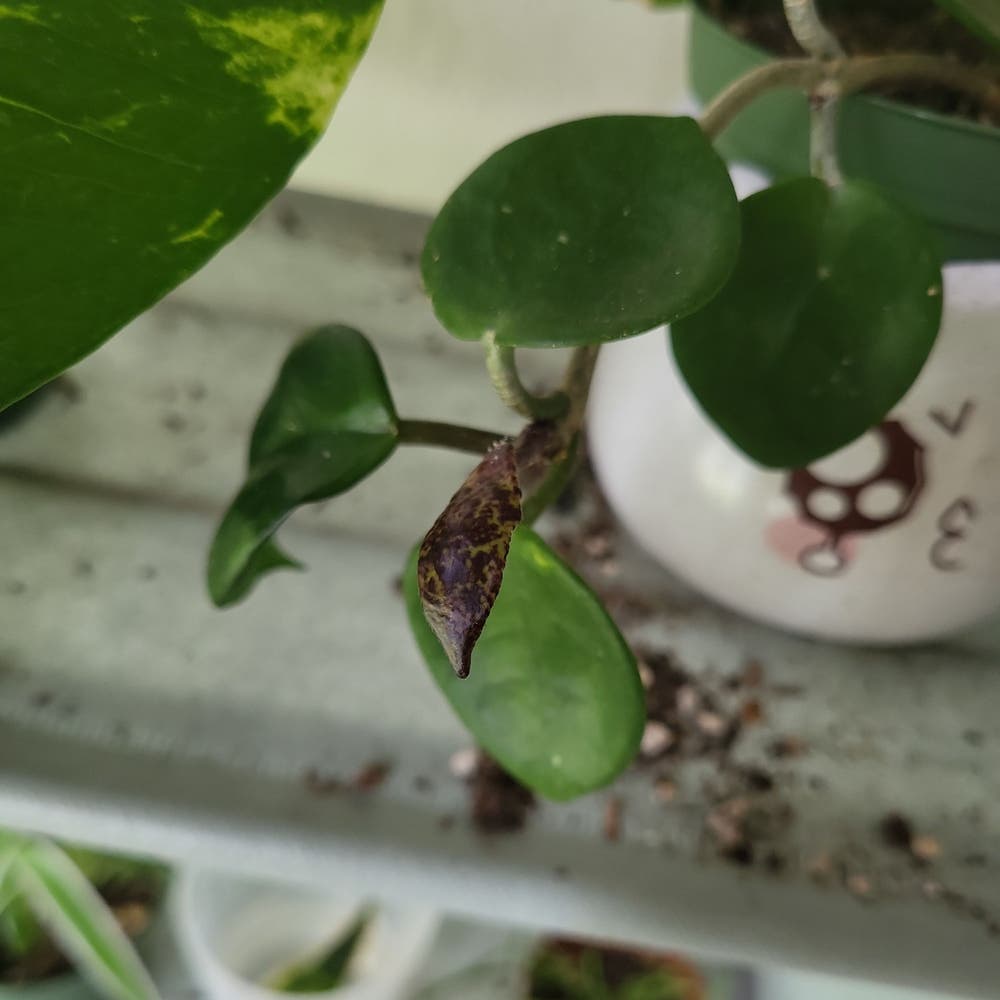
How Can You Tell If A Chelsea Hoya Is Dying?
Hoya carnosa 'Chelsea'
By the Greg Editorial Team
Jun 18, 2024•4 min read
This article was created with the help of AI so we can cover more plants for you. May contain errors. See one? Report it here.
Revive your wilting Chelsea Hoya 🌿 with life-saving care tips that tackle every distress signal!
- Yellow leaves and mushy stems? Over-watering alert! Let soil dry first.
- Pale, leggy growth means insufficient light. Aim for bright, indirect sunlight.
- Drafts or temperature swings? Keep Chelsea Hoya in a stable, cozy spot.
Water Woes: Over and Under-Watering
🚰 Over-watering Symptoms and Fixes
Yellowing leaves and mushy stems are your Chelsea Hoya's cry for help. It's drowning in your kindness!
To fix this, let the soil dry. Check the moisture by poking your finger an inch deep. If it's damp, resist the urge to water. For a plant that's been over-loved with water, consider repotting with fresh, well-draining soil to prevent root rot.
🏜️ Under-watering Symptoms and Fixes
Drooping leaves and a parched appearance signal your Hoya is thirstier than a marathon runner.
The remedy? Water deeply, but don't turn your pot into a swimming pool. Wait until the top inch of soil feels like a dry martini before offering a drink. Consistency is key—schedule watering sessions when the soil is just right, avoiding the extremes of a desert or a deluge.

Light and Temperature: Finding the Sweet Spot
💡 Light Issues: Too Much or Too Little
Pale leaves and leggy growth are your Chelsea Hoya's way of saying it's starved for the spotlight. To get those leaves lush again, relocate your plant to a place where it can bask in bright, indirect sunlight for about 6 hours a day.
Avoid the drama of a sunburnt Hoya by keeping it away from the harsh midday sun. Think of it as a VIP area where the light is just right—indirect yet abundant. Remember to rotate your plant occasionally to ensure all sides get equal exposure and avoid a one-sided growth spurt.
🌡️ Temperature Fluctuations
When your Chelsea Hoya's leaves start looking discolored, it's not trying out a new aesthetic—it's likely uncomfortable with the temperature. Keep the thermostat steady, aiming for a cozy 65-85℉ range to avoid those temperature tantrums.
Sudden temperature changes can make your Hoya act like it's in a bad reality show—dramatic and wilting. Stabilize the environment by steering clear of drafty windows and doors, especially during the colder months. And don't forget, a stable humidity level is like a good friend—it keeps your Hoya from feeling down.

Attack of the Pests and Diseases
🐜 Pests: Unwanted Guests
Mealybugs and spider mites are the usual suspects when your Chelsea Hoya starts looking under the weather. These pests are tiny but mighty, with mealybugs resembling tiny cotton swabs and spider mites creating fine webbing. If you spot these signs, it's time to take action.
Alcohol swabs can send mealybugs packing, while insecticidal soap can show spider mites the door. Remember, it's a battle of persistence; multiple applications may be necessary. And don't forget to isolate the affected plant to prevent a full-blown pest party.
🦠 Diseases: Mold, Fungus, and Root Rot
Mold and fungal diseases like root rot are stealthy invaders, often going unnoticed until they've done significant damage. Yellowing leaves, a musty smell, or a white powdery residue are distress flares signaling it's time for a rescue mission.
Improving air circulation and employing fungicides can be effective countermeasures. Keep the foliage dry and clean up plant debris to prevent these fungal foes from gaining a foothold. If root rot has set in, it may be time for some surgical intervention—trim away the affected roots and repot in fresh, well-draining soil.

Environmental Stress: Avoiding Leaf Scorch and Drafts
🌞 Leaf Scorch: When the Sun is Too Strong
Brown patches on leaves are a distress signal from your Chelsea Hoya, crying out against the sun's overzealous rays. It's a sunburn, plant-style.
Solutions: Protecting your plant from harsh rays
Relocate your Hoya to a medium, indirect sunlight haven, or use sheer curtains to diffuse that intense solar spotlight. If moving the plant isn't an option, consider a shade cloth as a personal sun umbrella for your leafy friend.
💨 Drafts and Sudden Changes
Wilted leaves and a general look of plant malaise can be the result of your Hoya getting hit with the one-two punch of drafts and temperature swings.
Solutions: Stabilizing your Hoya's environment
Keep your plant out of the draft's way—no gusty windows or sneaky vents. Find a spot with a consistent, cozy temperature, and your Hoya will thank you by not looking like it's been through a leafy wringer.
⚠️ Safety First
This content is for general information and may contain errors, omissions, or outdated details. It is not medical, veterinary advice, or an endorsement of therapeutic claims.
Always consult a qualified healthcare professional before using any plant as food, medicine, or supplement.
Never eat any plant (or feed one to pets) without confirming its identity with at least two trusted sources.
If you suspect poisoning, call Poison Control (800) 222-1222, the Pet Poison Helpline (800) 213-6680, or your local emergency service immediately.
Spotted an error? Please report it here.
Spot the signs of a struggling Chelsea Hoya and bounce back 🌿 with Greg's custom care reminders for watering, lighting, and temperature control.