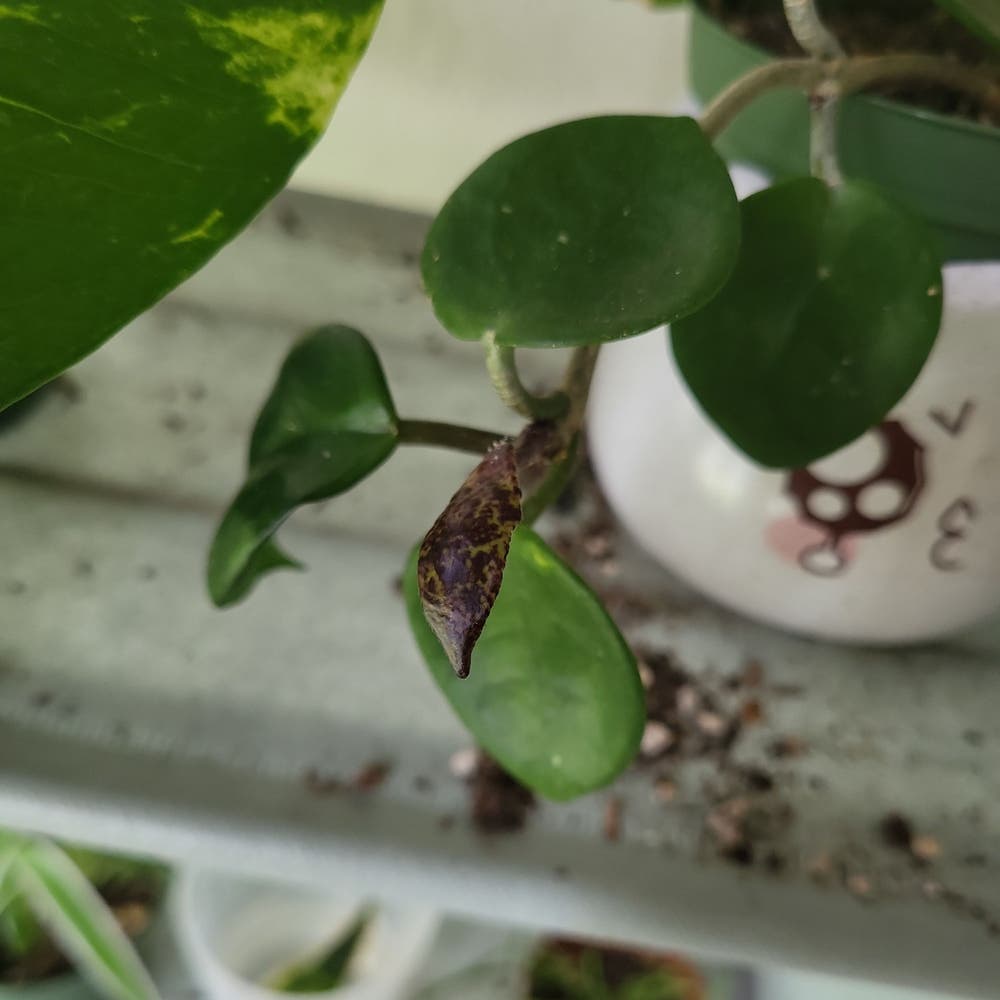
Why Are My Chelsea Hoya Leaves Mushy?
Hoya carnosa 'Chelsea'
By the Greg Editorial Team
Jun 18, 2024•4 min read
This article was created with the help of AI so we can cover more plants for you. May contain errors. See one? Report it here.
Rescue your Chelsea Hoya from mushiness 🍂 with life-saving tips for perfect plant health!
- 🚫 Brown spots and mushy leaves signal overwatering or root rot.
- 🌱 Immediate action: Stop watering, improve light, and inspect roots.
- 🌟 Prevent future issues with well-draining soil and correct watering.
Spotting the Trouble: Signs Your Chelsea Hoya is Too Wet
🚰 Overwatering Symptoms
Brown spots on your Chelsea Hoya's leaves are like red flags waving at a bullfight—they mean trouble. If the leaves are more mushy than a wet sponge, you've likely been a tad too generous with the watering can. Winter is a chill time for your Hoya, so ease up on the H2O.
🌊 Root Rot Recognition
When roots get as mushy as overcooked noodles, it's a cry for help. Discoloration is another bad omen. If you're seeing these signs, it's time for a watering schedule intervention and a soil drainage makeover. Remember, roots need to breathe, not swim.

First Aid for Your Waterlogged Hoya
🚰 Immediate Steps to Take
If your Chelsea Hoya's leaves have gone from firm and fabulous to mushy and miserable, it's time to spring into action. First, stop watering—your plant isn't on a quest to become an aquatic species. Move your Hoya to a bright spot with indirect light, away from any soggy nightmares it might have had.
🌱 Soil and Root TLC
🕵️♂️ Checking the Soil
Before you play plant surgeon, let's talk dirt. If the soil feels like a wet sponge, it's a no-go. Your Hoya's roots aren't meant to take a swim. Replace the soggy soil with a well-draining mix, and make sure your pot has drainage holes that aren't just for show.
🕵️♂️ Inspecting the Roots
Now, gently coax your Hoya out of its pot and inspect the roots. Healthy roots should be firm and white, not giving you shades of brown or a squishy handshake. If they resemble overcooked noodles, snip the affected parts with sterile scissors. No time for second thoughts—this is a rescue mission.
🧼 Disinfecting and Repotting
After the bad roots are history, give the good ones a quick dip in a 3% hydrogen peroxide solution to disinfect. Let the roots air out and heal—think of it as a spa moment for your plant. Once they're dry, repot your Hoya in its new, cushy, well-draining home.
Remember, your Chelsea Hoya's life doesn't have to end in a mushy tragedy. With these steps, you're on your way to scripting a comeback story worthy of a standing ovation.

Banishing the Fungus Among Us
🍄 Identifying Fungal Culprits
Fungal infections in Chelsea Hoya plants are the sneaky saboteurs of your green oasis. Brown spots with a colorful halo are the calling cards of these unwelcome guests. High humidity and stagnant air are their VIP passes. If your Hoya's leaves are throwing a brown-spot bash, it's time to crash it.
🦠 Fungus-Fighting Strategies
When fungi crash your plant party, it's time for some DIY bouncers. A mix of baking soda and soap can show mild fungi the door. For the stubborn party-crashers, copper fungicides are your muscle. But always, read the label—you don't want any surprises. Remember, over-fertilizing is like an all-you-can-eat buffet for fungi, so keep that in check. Spot those brown spots early and show them who's boss.

The Balancing Act: Watering Your Chelsea Hoya Right
💧 Perfecting Your Watering Technique
Watering your Chelsea Hoya isn't rocket science, but it does require a bit of finesse. To prevent future mushiness, water only when the top inch of soil feels dry to the touch—think of it as the plant's thirst indicator. When you do water, drench the soil until you see water escape through the drainage holes, then stop. It's a simple soak-and-dry method that mimics natural rainfall, keeping your Hoya's roots happily hydrated without waterlogging them.
🚰 The Role of Proper Drainage
Drainage holes are non-negotiable; they're your plant's lifeline. A pot without them is like a boat without a bilge pump—eventually, things will get swampy. To ensure your soil isn't holding onto water like a sponge, mix in some perlite, coarse sand, or wood chips. These amendments improve aeration and allow excess water to flow through, preventing your Hoya's roots from sitting in moisture like a forgotten bath toy. Remember, well-draining soil isn't just a preference for your Chelsea Hoya; it's a survival essential.
⚠️ Safety First
This content is for general information and may contain errors, omissions, or outdated details. It is not medical, veterinary advice, or an endorsement of therapeutic claims.
Always consult a qualified healthcare professional before using any plant as food, medicine, or supplement.
Never eat any plant (or feed one to pets) without confirming its identity with at least two trusted sources.
If you suspect poisoning, call Poison Control (800) 222-1222, the Pet Poison Helpline (800) 213-6680, or your local emergency service immediately.
Spotted an error? Please report it here.
Prevent mushy leaves and root rot in your Chelsea Hoya by relying on Greg's precise watering schedule 🚿 to ensure just the right amount of moisture.