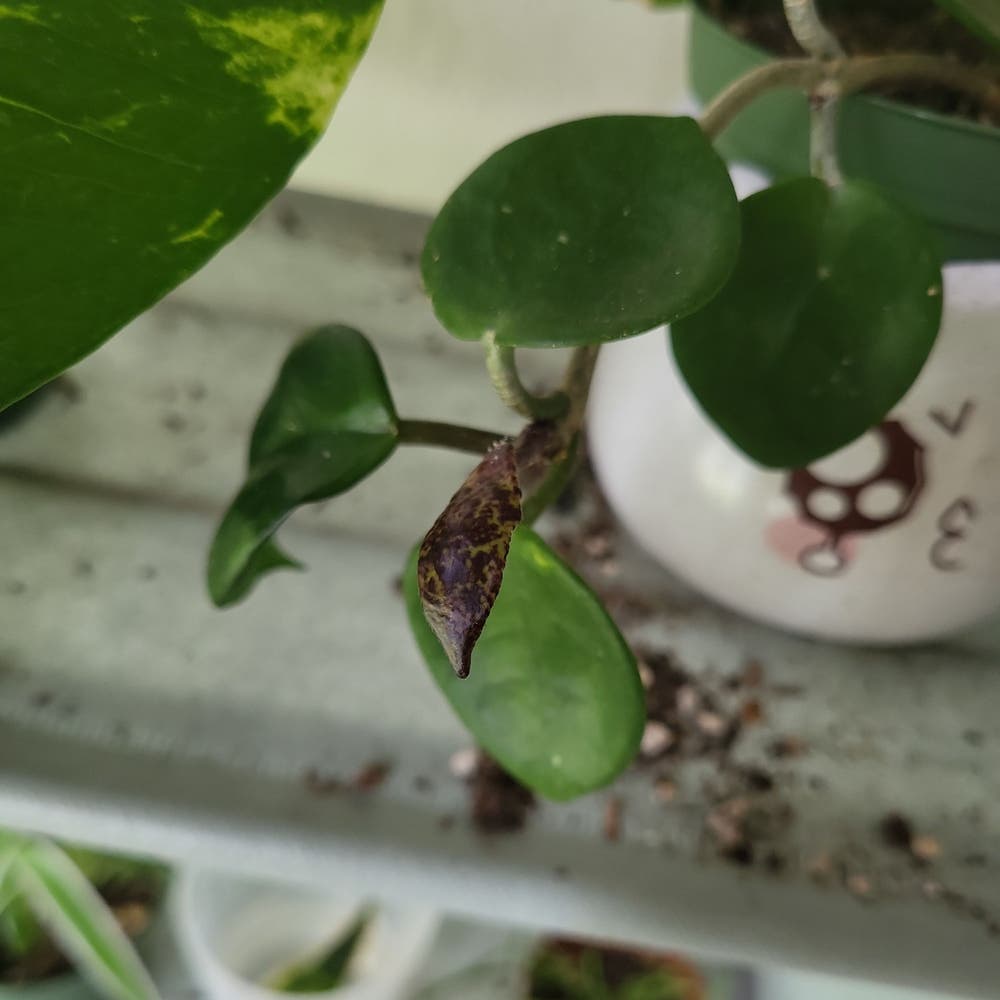
Why Are There Brown Spots on My Chelsea Hoya Leaves?
Hoya carnosa 'Chelsea'
By the Greg Editorial Team
Jun 18, 2024•4 min read
This article was created with the help of AI so we can cover more plants for you. May contain errors. See one? Report it here.
Banish brown spots 🍂 and restore your Chelsea Hoya's glory with these expert care tips.
- Brown spots can signal over/underwatering, humidity issues, or infections.
- Prune and sanitize to treat and prevent further leaf damage.
- 🚿💧 Consistent watering and humidity are key to prevention.
Spotting the Trouble: Identifying Brown Spots on Chelsea Hoya
🕵️ Signs and Symptoms
Brown spots on your Chelsea Hoya can be as mysterious as a whodunit novel. To spot the villain, check for discoloration, leaf puffiness, or tiny black dots. These are your red flags. Sunburn spots are like a bad tan, crispy and bleached, often on the top leaves. Overwatering, however, leaves soft, dark spots, lurking underneath. Fungal infections? They're crafty, with spots sporting yellow halos or concentric rings.
🕵️ Common Culprits
The usual suspects in the case of brown spots include overwatering, underwatering, and humidity issues. Overwatering is like that friend who loves too much—it suffocates with kindness, leading to soft, dark spots. Underwatering is the neglectful one, leaving the leaves crispy. Too much humidity is the overly affectionate aunt, fostering fungal and bacterial infections. And let's not forget pests—they're the secret agents leaving a trail of destruction.

First Aid for Your Hoya: Treating Brown Spots
🌱 Immediate Steps
When brown spots invade your Chelsea Hoya, it's time to channel your inner plant doctor. Inspect the leaves closely. Squishy spots often mean overwatering, while crispy ones could be a cry for hydration. If you find any leaves that are beyond saving, snip them off with sterilized scissors to prevent further damage.
💧 Adjusting Your Watering Game
Your Hoya's thirst isn't consistent; it changes with the seasons. Water only when the top inch of soil feels dry to the touch. If it's damp, hold off. Remember, your Hoya's roots need to breathe, not swim. Use well-draining soil to avoid waterlogging, which is like a wet blanket for your plant's roots.
🌿 Humidity and Your Hoya
Hoyas are like Goldilocks when it comes to humidity—they want it just right. Aim for 50-60% humidity, which you can measure with a hygrometer. Too dry? Use a humidifier or a pebble tray. Too moist? Improve ventilation and avoid overwatering. It's all about creating that perfect microclimate.
🦠 Dealing with Infections
Spots with a yellow halo scream fungal or bacterial party, and you're not invited. Isolate the plant to stop the spread. Remove affected leaves and consider a fungicide or bactericide, but only as a last resort. Prevention is better than cure, so keep the air flowing and the foliage dry to avoid future outbreaks.

Cutting Out the Rot: Pruning and Maintenance
🌱 When to Snip
Pruning your Chelsea Hoya isn't just about aesthetics; it's critical care. Snip off leaves with brown spots, as they can be harbingers of disease. Use a sharp, sterilized pair of shears to make clean cuts, ideally at a 45-degree angle to avoid water accumulation and promote healing. Remember, it's not just about cutting away the bad; it's about encouraging the good.
🧼 Keeping It Clean
After pruning, cleanliness is your plant's best friend. Sanitize your shears with rubbing alcohol before moving on to another plant to prevent the dreaded cross-contamination. Clear away all debris from the soil surface to deny diseases a place to party. Think of it as giving your plant a clean room, free from the clutter that invites pests and diseases to settle in.

Keeping the Spots at Bay: Prevention Strategies
💧 Watering Wisdom
Consistency is your Hoya's best friend when it comes to watering. Establish a routine that suits your plant's needs, adjusting for seasonal changes. Use the finger test or a moisture meter to ensure the soil is neither a swamp nor a desert. Remember, the goal is moist, not soggy or bone-dry.
💦 Humidity Harmony
Your Chelsea Hoya doesn't need a tropical storm for ambiance. Aim for 50-60% humidity—the sweet spot. Use a hygrometer to monitor levels. If it's too dry, a pebble tray or humidifier can help; too damp, and a dehumidifier or increased air circulation might be necessary. Avoid creating a sauna for spores.
🧼 Plant Hygiene Habits
Keep it clean to keep the brown spots away. Sanitation is key: use clean pots and sterile potting media. Isolate new or infected plants to prevent the spread of pests and pathogens. And don't be afraid to remove severely infected plants—it's tough love for the greater good of your Hoya collection.
⚠️ Safety First
This content is for general information and may contain errors, omissions, or outdated details. It is not medical, veterinary advice, or an endorsement of therapeutic claims.
Always consult a qualified healthcare professional before using any plant as food, medicine, or supplement.
Never eat any plant (or feed one to pets) without confirming its identity with at least two trusted sources.
If you suspect poisoning, call Poison Control (800) 222-1222, the Pet Poison Helpline (800) 213-6680, or your local emergency service immediately.
Spotted an error? Please report it here.
Keep your Chelsea Hoya's leaves spot-free 🍂 by adjusting your care with Greg's personalized watering and humidity monitoring for plant perfection!