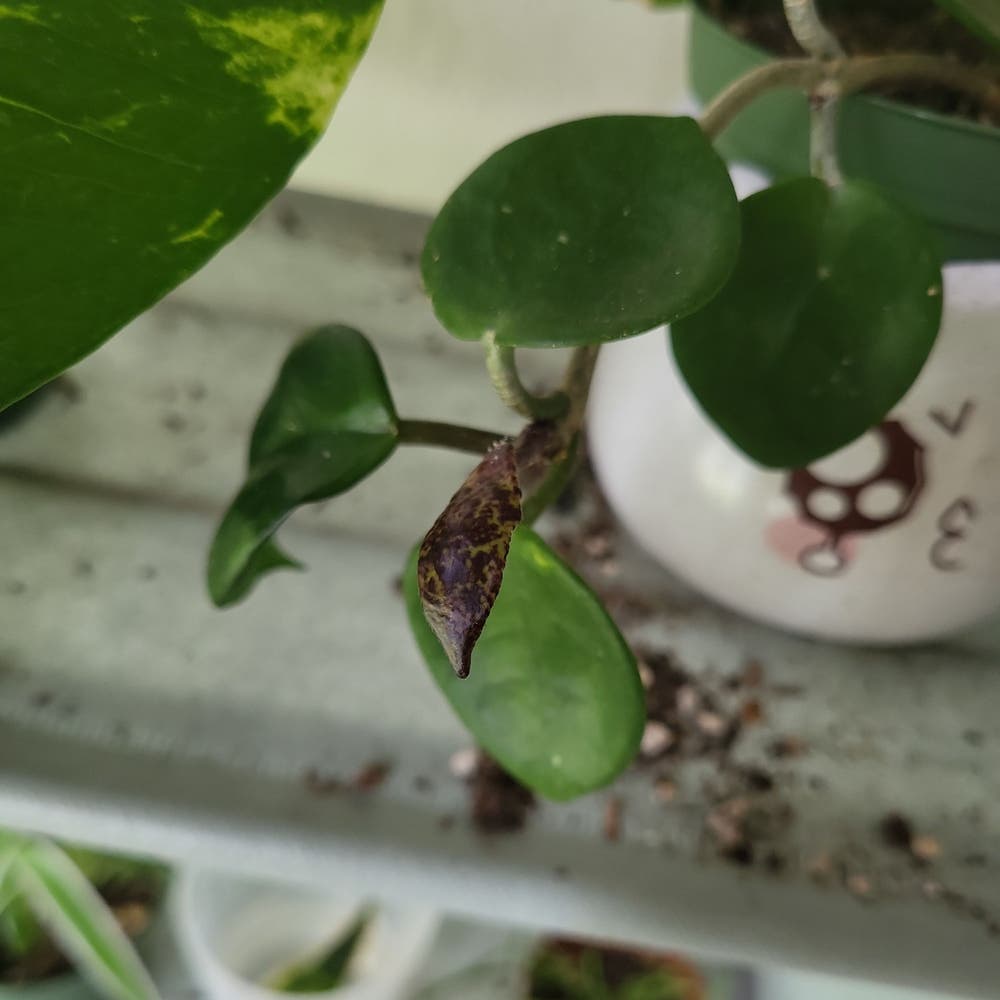
Why Are My Chelsea Hoya Leaves Falling Over?
Hoya carnosa 'Chelsea'
By the Greg Editorial Team
Jun 18, 2024•6 min read
This article was created with the help of AI so we can cover more plants for you. May contain errors. See one? Report it here.
Solve the droop mystery 🕵️♂️ of your Chelsea Hoya for lush, upright growth! 🌿
- Over/underwatering causes droopiness, adjust watering for healthy Chelsea Hoya leaves.
- 🌡️💧 Maintain 65-85℉ and >60% humidity to prevent leaf drop.
- 🕵️♂️ Regular inspections prevent pests/diseases, ensuring upright, vibrant leaves.
Spotting the Trouble Signs
🚩 Recognizing Symptoms of Distress
When your Chelsea Hoya's leaves start to sag, it's waving a red flag. Leaves that once reached for the sky now flop over, signaling distress. Discoloration, puffiness, and the appearance of small black dots are your cues for action. Don't dawdle; droopy leaves can escalate from a hiccup to a full-blown plant crisis.
🕵️ Linking Symptoms to Potential Causes
Leaf drop in your Chelsea Hoya is like a silent scream for help. It could be crying out against overwatering or gasping from underwatering. Low humidity might be drying out its spirit, while a lack of nutrients leaves it malnourished. Brown spots? They're not just blemishes; they're SOS signals. And if your plant's leaves are curling up, it's probably not just trying to get cozy. It's a clear sign of environmental stress—too much water, not enough humidity, or it's shivering from temperature swings.

Water Woes: Walking the Fine Line
💧 Overwatering: The Silent Killer
Your Chelsea Hoya might be drowning in affection if you're too generous with water. Overwatering leads to root rot, which causes leaves to fall over as if they've given up on life. Brown spots on leaves are a cry for help, signaling too much moisture.
To save an overwatered Chelsea Hoya, let the soil dry out. Cut back on the H2O, especially during the winter when your plant's thirst is not as great. If the soil feels like a wet sponge, it's time to intervene.
💧 The Thirsty Plant: Underwatering's Toll
Conversely, underwatering leaves your Chelsea Hoya parched, with leaves drooping like they're too tired to stand up. Look for wrinkled leaves or a general appearance of limpness. These are desperate signs for hydration.
Reviving a dehydrated Chelsea Hoya involves introducing a more responsive watering routine. Ensure the soil is thoroughly moistened, allowing your plant to rehydrate and regain its perkiness. Remember, consistency is key—water when the soil is nearly dry, not when the plant has already started to wilt.

Creating a Leaf-Friendly Environment
🛡️ Shielding from Environmental Stress
Chelsea Hoyas are like Goldilocks—they want everything just right. Temperature and humidity are the invisible threads that hold up those lush leaves. Keep your plant in a spot that's cozy but not hot, with a humidity level that makes a tropical rainforest nod in approval. To prevent leaf droop, maintain a steady temperature between 65-85℉ and bump up the humidity over 60 percent if you can. Use a humidifier or a pebble tray with water to achieve this.
Drafts and direct sunlight are the nemeses of the Chelsea Hoya. Avoid placing your plant near drafty windows or under the harsh glare of the sun. Think of it as protecting your plant from a bad sunburn or an unexpected chill.
🏡 The Right Home: Pot and Soil Selection
Choosing the right pot and soil for your Chelsea Hoya isn't rocket science, but it's close. The pot needs to have drainage holes—non-negotiable. Waterlogged roots are a one-way ticket to droopy leaf city. As for soil, think of a mix that's more freewheeling hippie than uptight banker. It should be nutrient-rich and loose, allowing water to flow through like a gossip in a small town.
If your soil is clumping like old oatmeal, it's time for an intervention. Mix in some cactus soil, perlite, wood chips, or coarse sand to improve drainage. Remember, a happy Chelsea Hoya is one that's standing tall, not slumping over like it's had a rough night.

The Invisible Foes: Pests and Diseases
🛡️ Battling Bugs and Infections
- Identifying pests and diseases that cause leaves to fall over.
- Effective treatments to get your Chelsea Hoya back in shape.
🕵️ Identifying Common Pests
Your Chelsea Hoya might be under siege by sap-sucking pests like aphids, mealybugs, or spider mites. These critters are the ninjas of the plant world, often going unnoticed until the damage is done. Look out for telltale signs: sticky residue, cottony substances, or tiny webbing between the leaves.
🦟 Treating Pest Infestations
Once you've spotted these uninvited guests, it's time for action. Insecticidal soap or neem oil can be your first line of defense. Apply with vigilance, targeting the undersides of leaves where pests love to hide. For a more natural approach, release the hounds – introduce beneficial insects like ladybugs or lacewings to turn the tide in your favor.
🩺 Recognizing Plant Diseases
Diseases can be stealthy, manifesting as yellowing leaves, brown spots, or an overall wilted appearance. Fungal and bacterial infections don't mess around – they can swiftly escalate from a small issue to a full-blown crisis.
💊 Disease Management
If you suspect a disease, isolate your plant to prevent a domino effect. Trim away affected areas with sterilized scissors. For fungal foes, consider a fungicide, but remember, the best offense is a good defense. Ensure your plant's environment isn't a petri dish for pathogens by regulating humidity and airflow.
🚫 Preventative Measures
Keep a regular inspection schedule. Catching pests and diseases early can mean the difference between a quick fix and a plant funeral. And don't forget about cleanliness; keeping your plant's area tidy is like setting a curfew – it keeps trouble at bay.
Proactive Measures: Keeping Your Plant Happy
💧 The Balancing Act: Watering and Feeding
Watering your Chelsea Hoya isn't about sticking to a rigid schedule. It's about tuning into your plant's needs like a good DJ reads the room. Too much water and you're drowning the vibe, too little and the party's over before it starts. Stick your finger in the soil up to the second knuckle; if it's dry, it's time to water.
Fertilization is the plant's diet. Use a balanced fertilizer, but don't go overboard. Think of it as nutrition, not a buffet. Overfeeding leads to the equivalent of a plant food coma, underfeeding to a growling green belly.
👩⚕️ Regular Check-ups: Monitoring and Maintenance
Regular inspections of your Chelsea Hoya are like a plant's version of a health check-up. Keep your eyes peeled for any signs of distress. Yellow leaves? Might be time to adjust the watering or lighting.
Quick interventions are key. Notice a pest making itself at home? Show it the door before it invites friends. Spot a droopy leaf? Assess the soil moisture and lighting. Keep those interventions swift and your Hoya will thank you with upright, perky leaves.
⚠️ Safety First
This content is for general information and may contain errors, omissions, or outdated details. It is not medical, veterinary advice, or an endorsement of therapeutic claims.
Always consult a qualified healthcare professional before using any plant as food, medicine, or supplement.
Never eat any plant (or feed one to pets) without confirming its identity with at least two trusted sources.
If you suspect poisoning, call Poison Control (800) 222-1222, the Pet Poison Helpline (800) 213-6680, or your local emergency service immediately.
Spotted an error? Please report it here.
Keep your Chelsea Hoya thriving 🌿 with Greg's personalized care reminders, ensuring you strike the perfect balance of moisture and environment to prevent those leaves from falling over.