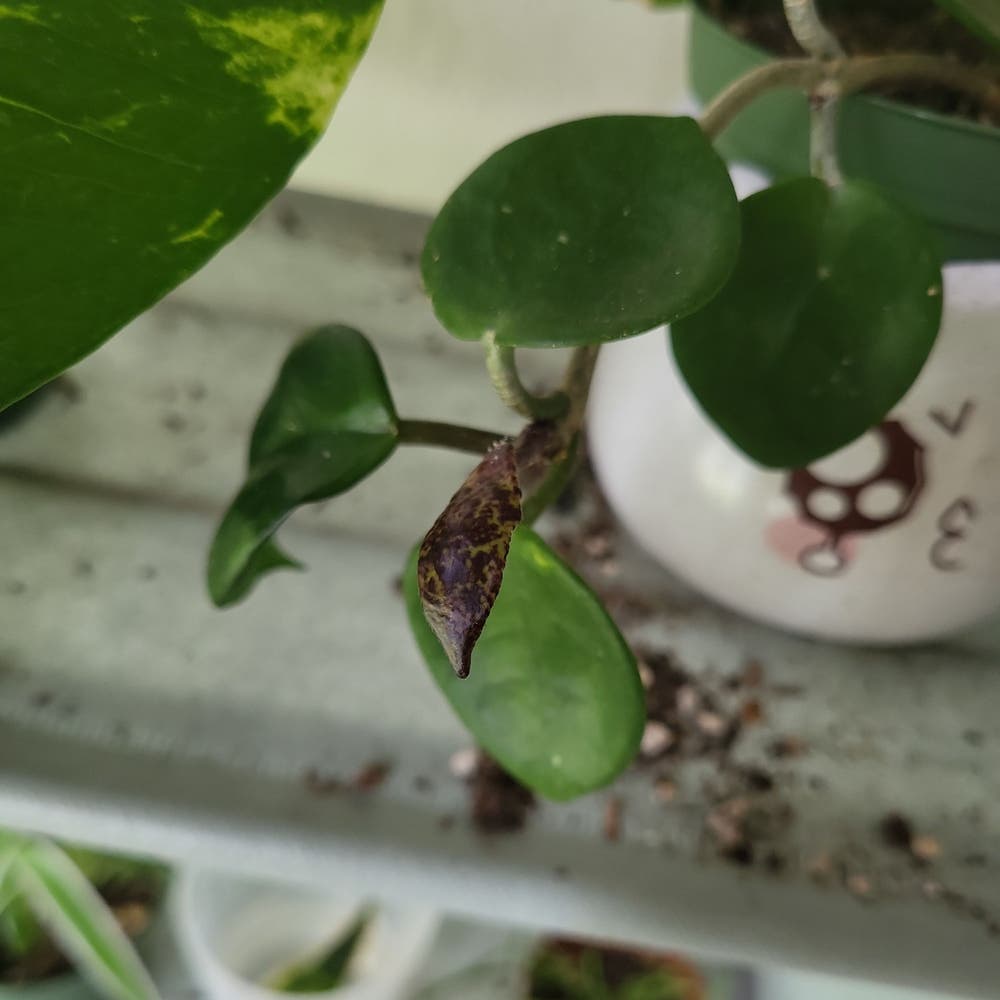
Why Are There Black Spots on My Chelsea Hoya Leaves?
Hoya carnosa 'Chelsea'
By the Greg Editorial Team
Jun 18, 2024•4 min read
This article was created with the help of AI so we can cover more plants for you. May contain errors. See one? Report it here.
Solve the mystery of black spots on your Hoya 🌿 and keep your plant thriving with expert tips!
- Overwatering and poor soil lead to fungal black spots on Hoya leaves.
- Humidity and airflow are key to preventing bacterial black spots.
- Avoid direct sunlight to prevent sunburn-induced black spots.
Spotting the Trouble: Recognizing Black Spots on Your Hoya
🕵️ Visual Symptoms of Black Spots
Black spots on your Chelsea Hoya can sneak up like uninvited guests at a party. Initial signs are small, dark blemishes on the leaves. They might seem harmless at first, but without intervention, these spots can expand, merge, and form larger lesions. Progression is key; a spot's growth signals the need for a closer look and immediate action.
Where Black Spots Strike
These pesky spots are not picky about their real estate. They often appear on the upper surfaces of leaves, but don't ignore the undersides. While they may favor mature leaves, young foliage isn't immune. Common locations include leaf margins and areas near the veins, but they can really pop up anywhere. Keep an eye out for any changes in your Hoya's leafscape.

The Usual Suspects: Pinpointing the Causes of Black Spots
🍄 Fungal Foes: The Overwatering Connection
Overwatering is like sending an open invitation to fungal parties on your Hoya leaves. These fungi, such as Cylindrocladium spathiphylli, throw down roots in the soggy soil, leading to those dreaded black spots.
🦠 Bacterial Battles: Humidity and Airflow Issues
Humidity might be great for your skin, but it's a bacterial bonanza on your Hoya. Poor air circulation just adds fuel to the fire, creating the perfect storm for bacterial leaf spot to flourish.
☀️ Sunburn Scars: When Light Becomes Too Much
Think of sunburn on your Hoya like a bad beach day—too much sun and you're left with unsightly marks. These spots are the plant's equivalent of a peeling sunburn, often accompanied by crispy leaf tips.

Playing Detective: How to Diagnose Your Hoya's Black Spots
🔍 Assessing Watering Habits
Overwatering is often the prime suspect when black spots appear on your Chelsea Hoya. To crack this case, start with the finger test. Insert your finger into the soil up to the second knuckle. If the soil feels wet, hold off on the H2O. Next, weigh your pot. A lighter pot signals dry soil, while a heavier one suggests it's still waterlogged. Remember, your Hoya's thirst varies with the seasons; water less in cooler months when evaporation takes a holiday.
🌿 Checking Environmental Factors
Humidity and airflow are like the yin and yang of plant health. Too much humidity without a breeze, and you're inviting bacterial leaf spot to the party. Air circulation is key—ensure your Hoya isn't suffocating in still air. Think of it as setting up a dance floor; your plant needs room to boogie. Use a humidifier or a pebble tray to keep the moisture just right, mimicking a tropical paradise. And don't forget about light exposure; your Hoya craves the spotlight but can get sunburned if it's too intense. Keep an eye out for spots on the top leaves, as they might be crying out for some shade.

The Recovery Plan: Treating and Preventing Black Spots
💧 Adjusting Watering and Soil Practices
Watering your Chelsea Hoya is like a delicate dance—too much, and you're stepping on its toes, leading to black spots. To prevent this fungal faux pas, water only when the top inch of soil is dry. Embrace well-draining soil to keep those roots breathing easy, not drowning.
🌬 Modifying the Environment
Stagnant air is a fungi's playground. Introduce a gentle breeze with a fan or crack a window to keep the air moving. Humidity is another accomplice in black spot crime, so keep it in check with a dehumidifier or by placing your Hoya in less humid rooms. Remember, your plant's environment should feel like a relaxed lounge, not a steamy tropical rainforest.
☂️ Safeguarding from the Sun
Your Hoya's leaves can get sunburnt, just like you. Protect them from harsh direct sunlight by providing bright, indirect light. Think of it as setting up a parasol for your plant—shielding it from a sunbathing disaster. If you're moving your Hoya to a brighter spot, do it gradually to avoid shocking it with a sudden tan.
⚠️ Safety First
This content is for general information and may contain errors, omissions, or outdated details. It is not medical, veterinary advice, or an endorsement of therapeutic claims.
Always consult a qualified healthcare professional before using any plant as food, medicine, or supplement.
Never eat any plant (or feed one to pets) without confirming its identity with at least two trusted sources.
If you suspect poisoning, call Poison Control (800) 222-1222, the Pet Poison Helpline (800) 213-6680, or your local emergency service immediately.
Spotted an error? Please report it here.
Prevent those pesky black spots on your Chelsea Hoya by letting Greg craft a custom watering plan 💧 that keeps your plant healthy and spot-free!