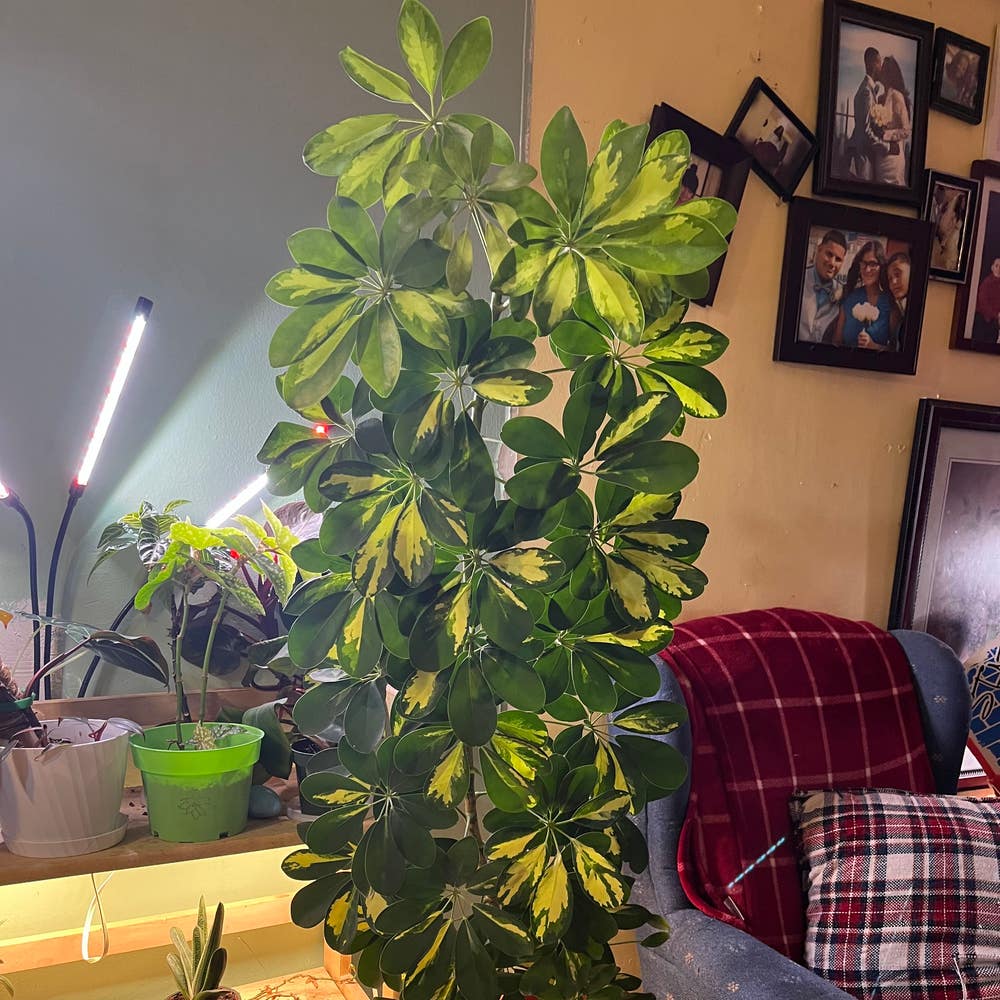
Variegated Dwarf Umbrella Tree Yellow Leaves
Heptapleurum arboricola 'Variegata'
By the Greg Editorial Team
Jun 18, 2024•4 min read
This article was created with the help of AI so we can cover more plants for you. May contain errors. See one? Report it here.
Banish yellow leaves 🍂 and restore your Dwarf Umbrella Tree's vibrancy with expert care secrets! 🌟
- Over/underwatering causes yellow leaves, check soil moisture before watering.
- Adjust light and rotate plant for even exposure and to prevent yellowing.
- Nutrient balance is key, use correct fertilizer and monitor for deficiencies.
Pinpointing the Culprits Behind Yellow Leaves
💧 Overwatering and Root Rot
Yellowing leaves on your Variegated Dwarf Umbrella Tree could be a distress signal for overwatering. Soggy soil, a wet sponge feel, or a plant that's more droopy than a Monday morning are giveaways. Root rot may follow, turning roots into mush and leaves into yellow flags of surrender.
🚑 Steps to Rescue an Overwatered Plant
- Check the soil: if it clings to your fingers, it's too wet.
- Hold off on watering until the top inch is dry.
- If root rot is suspected, repot with fresh, well-draining soil.
💦 Underwatering Woes
Conversely, leaves that are crispy like autumn foliage or curling inwards are screaming for water. If the soil is drier than a stand-up comedian's wit, it's time to quench your plant's thirst.
💧 Finding the Watering Sweet Spot
- Water when the top 1-2 inches of soil are dry.
- Ensure the plant dries out between watering sessions.
☀️ Light: Finding the Balance
Your plant's leaves might be telling you it's craving more light or begging for some shade. Yellow leaves can mean too much sun, while a lackluster appearance might indicate a need for more rays.
🌱 Adjusting Your Plant's Position for Perfect Lighting
- Move your plant closer to or further from the light source based on its feedback.
- Rotate the plant regularly for even light exposure.
🍽️ Nutrient Know-How
Yellow leaves can also be a cry for nutrients. A pale look between the veins may indicate iron deficiency, while overall yellowing could be a nitrogen plea.
🌿 Choosing the Right Fertilizer to Green Up Your Leaves
- Select a balanced fertilizer suitable for your Dwarf Umbrella Tree.
- Avoid over-fertilization to prevent fertilizer burn.

Turning Over a New Leaf: Remedial Steps
💧 Watering Wisdom
Watering your Variegated Dwarf Umbrella Tree isn't a set-it-and-forget-it deal. Listen to your plant's needs; the soil should be your guide. Check the topsoil – if it's dry to the touch, it's time to water. But remember, it's a fine line between quenched and drowned.
- Use your finger or a soil moisture meter to test the soil's moisture level before watering.
- Bottom watering can encourage roots to grow downward, seeking moisture and promoting healthy growth.
🌞 Light It Up Right
Your plant's not a sun worshipper, nor is it a fan of the dark. Moderation is key. Too much light and the leaves might throw a fit; too little, and they'll sulk. Aim for bright, indirect light – think of it as the plant's happy place.
- Rotate your plant regularly to ensure even light distribution and prevent leaning.
- Gradually introduce changes in lighting to avoid shocking your green buddy.
🍽️ Feeding Your Foliage
Fertilizer is like vitamins for your plant – too much and you'll do more harm than good. Stick to the recommended dosage and frequency to avoid the dreaded fertilizer burn.
- Opt for a balanced, water-soluble fertilizer and apply it during the growing season for best results.
- Observe your plant after feeding. If the tips of the leaves start browning, you might need to flush the soil to remove excess salts.

Preventing Yellow Leaves Proactively
🌱 Routine Care Rituals
Consistency in care is the backbone of preventing yellow leaves. Regular monitoring and slight adjustments based on your plant's appearance can ward off the dreaded yellowing.
Rotate your Variegated Dwarf Umbrella Tree to ensure even light exposure and growth. Observe the plant's response to your care; it's like a silent conversation where the plant's condition speaks volumes.
🏡 The Right Foundation: Soil and Pot
Soil selection is critical; opt for a mix rich in organic matter that offers excellent drainage. This prevents waterlogging, a common cause of yellow leaves.
When it comes to pots, choose one with adequate drainage holes. Repot your plant when it outgrows its current home, ideally in spring or early summer. Jumping up only one pot size at a time prevents overwhelming the roots.
Regularly check the soil's moisture level before watering—think of it as taking your plant's pulse. Adjust your watering frequency with the changing seasons, less in winter, more in summer.
Lastly, keep an eye out for pests. They're like unwanted guests at a party, and catching them early is key to maintaining your plant's health.

⚠️ Safety First
This content is for general information and may contain errors, omissions, or outdated details. It is not medical, veterinary advice, or an endorsement of therapeutic claims.
Always consult a qualified healthcare professional before using any plant as food, medicine, or supplement.
Never eat any plant (or feed one to pets) without confirming its identity with at least two trusted sources.
If you suspect poisoning, call Poison Control (800) 222-1222, the Pet Poison Helpline (800) 213-6680, or your local emergency service immediately.
Spotted an error? Please report it here.
Banish yellow leaves and keep your dwarf umbrella tree thriving 🌿 with Greg's moisture monitoring for perfectly timed watering.