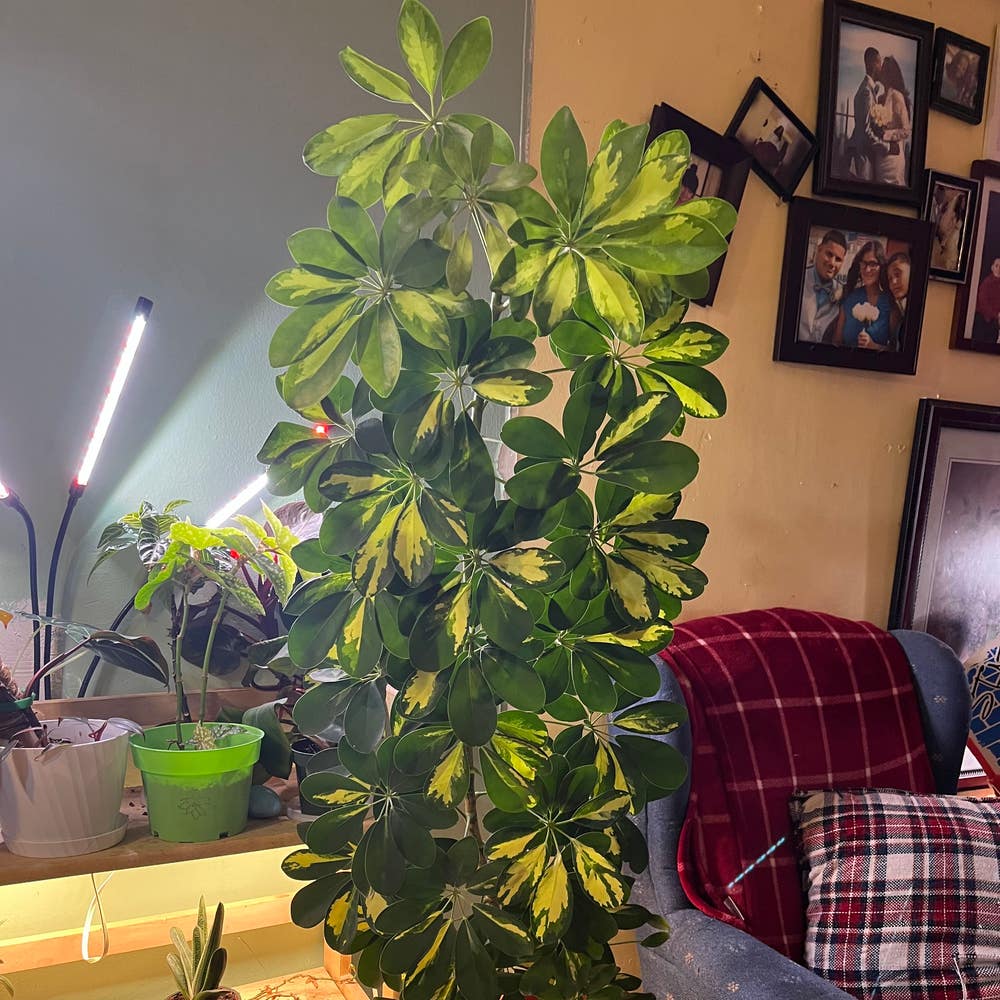
Light Requirements For My Variegated Dwarf Umbrella Tree
Heptapleurum arboricola 'Variegata'
By the Greg Editorial Team
Jun 18, 2024•4 min read
This article was created with the help of AI so we can cover more plants for you. May contain errors. See one? Report it here.
Master indoor and outdoor lighting for a thriving Variegated Dwarf Umbrella Tree 🌞🏡🌿.
- 🌤️ Balance sunlight and shade outdoors to prevent sunburn and ensure thriving.
- 🏡 North or south-facing windows are best indoors, depending on hemisphere.
- 💡 Artificial lighting should mimic natural light, with full spectrum for health and flowering.
Soaking Up the Sun: Outdoor Light Perfection
🌞 Finding the Sweet Spot: Balancing Sun and Shade
The Variegated Dwarf Umbrella Tree craves sunlight but not a sunburn. Morning light is your friend, gentle and nurturing. As the day heats up, your plant's need for shade does too. Aim for a spot that basks in the morning sun yet slips into the comfort of afternoon shade. It's a delicate dance between light and shadow, ensuring those variegated leaves keep their vibrant patterns without crisping at the edges.
🛡️ Shielding from the Scorch: Protecting Your Plant Outdoors
When the sun's at its peak, think of shade cloth as sunscreen for your leafy pal. It's a simple fix to diffuse harsh rays and keep your plant from wilting. If your garden's a sauna come midday, strategic planting can create natural sunblocks—tall plants or structures that cast a protective shadow. And remember, rotating your plant ensures all sides get equal light love, preventing a lopsided tan. Keep an eye out for signs of distress like faded or crispy leaves, and be ready to shuffle your plant to a cooler locale if needed.

Basking Indoors: Making the Most of Your Home's Light
🌿 Window Wisdom: Best Indoor Spots for Your Tree
Location, location, location—it's not just for real estate. Your Variegated Dwarf Umbrella Tree craves a spot where it can soak up the sun without getting a sunburn. North-facing windows are the sweet spot in the southern hemisphere, while south-facing ones win in the north. But don't just plop your plant down and forget it; observe how light plays in your space throughout the day. Is the light in your home more of a gentle caress or a full-on bear hug? Adjust accordingly.
💡 When Nature Isn't Enough: The Lowdown on Artificial Lighting
Sometimes your home's windows just won't cut it. Enter artificial lighting—the next best thing to the sun's rays. But don't go for the nuclear option; your plant doesn't need a tanning bed. Instead, opt for a light that's Goldilocks-approved: not too harsh, not too dim. And remember, consistency is key. Mimic the sun's schedule to keep your green buddy in rhythm.
💡 Grow Lights: A Bright Idea for Your Indoor Plant?
If your plant's leaves are screaming for more light, it might be time to consider a grow light. These nifty gadgets are like a caffeine shot for your plant—energizing and invigorating. But don't just grab any old light; look for one that says "full spectrum." It's like serving up a well-balanced meal for your plant. And who doesn't love a good meal?

Light and Life: Encouraging Your Tree to Flourish
💡 How Light Influences Leaf Variegation and Health
Variegated Dwarf Umbrella Trees are visual stunners, with leaves that look like they've been dipped in paint. Light is the maestro here, conducting the symphony of colors on each leaf. Too little light, and the variegation can fade, leaving you with a less-than-lustrous display. Too much, and you risk bleaching the delicate patterns.
Bright, indirect light is the sweet spot for these plants. It encourages the variegation to pop without putting the plant under stress. Remember, the white or lighter parts of the leaf have no chlorophyll; they're the divas that need protection from harsh sunlight.
💡 Does Light Affect Flowering? A Quick Dive
When it comes to flowers, light is like the opening act that sets the stage. Intensity and duration are the VIP tickets to the show. If your Variegated Dwarf Umbrella Tree isn't blooming, it might be pleading for more light. But don't just crank up the lumens; aim for that dappled sunlight effect.
Red wavelengths are the secret admirers that whisper sweet nothings to encourage blooming. If you're using artificial lights, make sure they're hitting the right notes in the spectrum. And if you do get flowers, celebrate! Snap a picture, share a cutting, and bask in the glory of your green-thumbed success.

⚠️ Safety First
This content is for general information and may contain errors, omissions, or outdated details. It is not medical, veterinary advice, or an endorsement of therapeutic claims.
Always consult a qualified healthcare professional before using any plant as food, medicine, or supplement.
Never eat any plant (or feed one to pets) without confirming its identity with at least two trusted sources.
If you suspect poisoning, call Poison Control (800) 222-1222, the Pet Poison Helpline (800) 213-6680, or your local emergency service immediately.
Spotted an error? Please report it here.
Nurture your Variegated Dwarf Umbrella Tree's variegation and health by using Greg to identify 📍 the perfect light balance indoors or out, ensuring a thriving, photogenic plant.