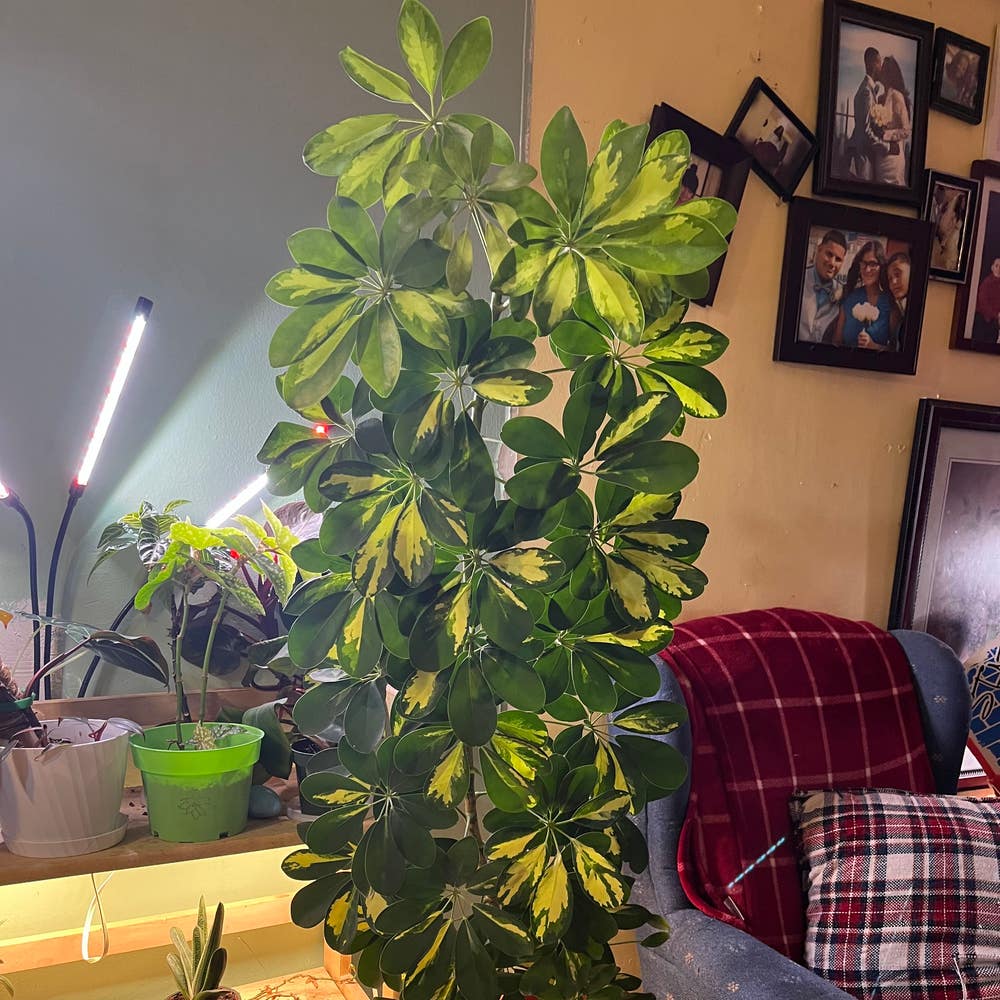
💧 Why Are My Variegated Dwarf Umbrella Tree Leaves Mushy?
Heptapleurum arboricola 'Variegata'
By the Greg Editorial Team
Jun 18, 2024•3 min read
This article was created with the help of AI so we can cover more plants for you. May contain errors. See one? Report it here.
Prevent mushy mayhem 🍂 in your Dwarf Umbrella Tree with these essential plant-saving tips!
- Overwatering and root rot lead to mushy leaves and stems.
- Dry out overwatered soil and repot with well-draining mix if needed.
- Prevent fungi with balanced humidity, airflow, and proper watering.
Pinpointing the Culprits Behind Mushy Leaves
💧 Overwatering Woes
Yellowing leaves that droop or fall off are waving red flags at you—it's overwatering alert time. The soil should feel like a nurturing bed, not a wet sponge. If your plant's stem has gone from firm to mushy, you've been too generous with the H2O.
🚢 The Dreaded Root Rot
Root rot is like a sinking ship for your plant. If the roots are mushy and the leaves follow suit, it's time to act fast. A musty smell and overcooked pasta-like roots are the SOS signals of root rot, signaling a dire need for intervention.
🍄 Fungal Foes
Fungi are the uninvited guests at the plant party, turning leaves mushy. Powdery mildew or leaf spots? That's the fungi's calling card. Keep the soil on the drier side, and ensure your pot's drainage makes a colander jealous to keep these party crashers at bay.

Turning the Tide on Mushy Leaves
🌊 Rescuing Overwatered Soil
If your Variegated Dwarf Umbrella Tree's soil feels like a swamp, take action. First, stop watering and let the soil dry out. This may take several days, but patience is key. If the soil is still soggy, consider gently removing the plant to air out the roots.
🌱 Root Rot Reversal
When roots resemble overcooked noodles, it's time for surgery. With sterilized shears, snip off the mushy parts. Think of it as removing the bad apples to save the bunch. If the damage is extensive, repot in fresh, well-draining soil and ensure your pot has drainage holes. It's like giving your plant a new lease on life.
🍄 Fungus Among Us: Treatment Tactics
Fungi are no fun for your foliage. If you spot a fungal fiesta, reach for fungicides, but read the labels like you would a contract—details matter. For a softer touch, try home remedies like a cinnamon dusting. And remember, prevention is better than cure; keep those leaves dry to avoid uninvited guests.

Keeping Leaves Firm and Healthy
💧 Mastering the Art of Watering
Watering your Variegated Dwarf Umbrella Tree is a delicate dance. To promote healthy leaves, establish a routine that caters to the plant's needs. Water when the top inch of soil feels dry, encouraging deep root growth and preventing waterlogged soil that can lead to mushiness.
Tools and Techniques for Accurate Moisture Assessment
Invest in a soil moisture meter or use the tried-and-true finger test. If the soil is dry two inches down, it's time to water. Remember, your plant's thirst varies with the seasons—more in summer, less in winter.
Soil and Drainage Mastery
Choosing the right soil mix is critical for your plant's health. Opt for a blend that drains well yet retains the necessary moisture. Components like perlite or coarse sand can improve the soil's texture, preventing excess water retention.
The Role of Pot Choice
Your pot choice is not just about aesthetics; it's about function. Ensure your container has adequate drainage holes to let excess water escape. This simple step is a strong defense against overwatering and root rot.
Climate Control for Indoor Jungles
Humidity and airflow are the yin and yang of your indoor jungle. They need to be balanced to keep fungi at bay. Too much moisture in the air can invite unwanted fungal guests, while too little can stress your plant.
Recognizing the Signs of an Unfavorable Indoor Climate
Keep an eye out for warning signals like droopy leaves or a sudden outbreak of pests. These can indicate that your indoor climate isn't quite right for your Variegated Dwarf Umbrella Tree. Adjust humidity and airflow accordingly to maintain a healthy environment.

⚠️ Safety First
This content is for general information and may contain errors, omissions, or outdated details. It is not medical, veterinary advice, or an endorsement of therapeutic claims.
Always consult a qualified healthcare professional before using any plant as food, medicine, or supplement.
Never eat any plant (or feed one to pets) without confirming its identity with at least two trusted sources.
If you suspect poisoning, call Poison Control (800) 222-1222, the Pet Poison Helpline (800) 213-6680, or your local emergency service immediately.
Spotted an error? Please report it here.
Avoid the mushy leaf blues by letting Greg tailor a watering plan 🚿 for your dwarf umbrella tree, and tap into our community for extra troubleshooting support!