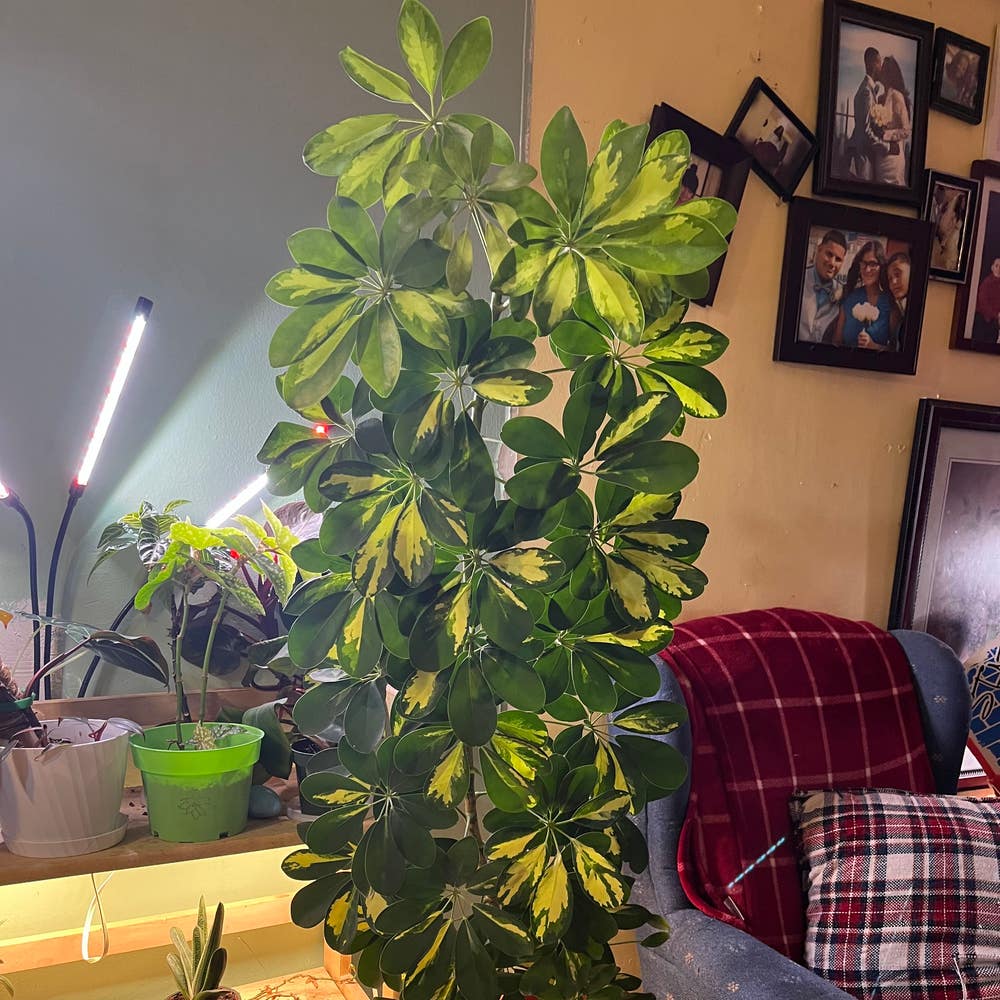
🐛 What To Do About Bugs on My Variegated Dwarf Umbrella Tree?
Heptapleurum arboricola 'Variegata'
By the Greg Editorial Team
Jun 18, 2024•5 min read
This article was created with the help of AI so we can cover more plants for you. May contain errors. See one? Report it here.
Protect your leafy friend 🌿 from bug bullies with expert pest-fighting tactics!
- 🕷️ Webbing and sticky leaves signal spider mites and scale insects.
- 💦 Water spray, neem oil, and alcohol effectively combat common pests.
- 🌱 Regular inspections and natural predators keep your plant pest-free.
Spotting the Invaders: Signs of Pest Infestation
🐛 Telltale Trouble: What to Watch for on Your Variegated Dwarf Umbrella Tree
Discoloration and drooping leaves are waving red flags at you. If you spot these, it's time to play detective. Tiny holes in the foliage? That's nature's version of a distress signal. And if you see webbing that's more creepy than crawly, you've got spider mites throwing a house party.
🕵️ Sticky Situations: Understanding Residue and Damage as Red Flags
Sticky leaves aren't a new plant feature; they're a billboard for aphids or scale insects. These pests leave behind a sugary substance called honeydew, which can lead to a nasty case of sooty mold. If you notice a black sooty film on your plant, it's time to get your hands dirty. And remember, a sudden loss of plant vigor is like your plant ghosting you – something's definitely wrong.

The Usual Suspects: Common Pests Unveiled
🕷️ Spider Mites
Spot the Web: Identifying Spider Mite Hideouts
Spider mites are tiny terrors that can turn your plant's leaves into a speckled mess. Look for fine webbing and a dusted appearance on foliage.
Fight Back: Effective Spider Mite Smackdown Strategies
To evict these pests, start with a water spray to knock them off. For tougher cases, neem oil or insecticidal soap are your allies. Remember, regular pesticides might not cut it.
🦠 Scale Insects
Scale Telltales: How to Spot These Sneaky Pests
Scale insects are masters of disguise, blending in with your plant's stems and underside of leaves. Watch for immobile bumps that seem like part of the plant itself.
Shell Shock: Best Ways to Bid Scale Goodbye
Manual removal with a soft brush can dislodge these pests. For the stubborn ones, dabbing with rubbing alcohol on a cotton swab works wonders. Preventative sprays keep future invasions at bay.
🦟 Fungus Gnats and Fruit Flies
Fungus Gnat Frenzy: Spotting the Swarm
These pests love moist soil. If you notice tiny fliers or larvae, it's time for action. Yellow sticky traps can catch adults, while letting the soil dry out discourages larvae.
Fly Away: How to Keep Gnats and Fruit Flies at Bay
A layer of sand on the soil surface can prevent larvae from emerging. Regularly check for overwatering to keep these pests from crashing your plant party.
🐛 Mealybugs
Mealybug Mayhem: Recognizing the Cottony Chaos
Mealybugs leave behind a cottony residue as they feast on your plant's sap. Spotting these white fluffs early is crucial.
Mealybug Meltdown: Winning the War Against White Fluff
Wipe down infested areas with a damp cloth to remove mealybugs. For a more aggressive approach, insecticidal soap or neem oil will help you gain the upper hand in this fluffy fight.

Other Unwelcome Guests
🦟 Aphids
Aphids are the clingy types, latching onto new growth and sucking the life out of your Variegated Dwarf Umbrella Tree. They leave behind a sticky mess called honeydew. A strong blast of water can often dislodge these pests, but for stubborn cases, insecticidal soap or neem oil will do the trick.
🦋 Whiteflies
Whiteflies are the tiny vampires of the plant world, draining your plant's vigor. You'll notice a puff of white when you shake the leaves—that's them. To combat these pests, introduce beneficial insects like ladybugs, or use yellow sticky traps to catch them in the act.
🐜 Thrips
Thrips are the stealthy ones, often going unnoticed until the damage is done. They leave behind silvery trails on leaves. These guys require a keen eye and a ready spray bottle of insecticidal soap or neem oil to show them the exit.
Quick-Fire Tips
- Quarantine new plants to prevent pest spread.
- Use reflective mulches outdoors to deter whiteflies.
- Introduce natural predators such as ladybugs or lacewings.
- Regularly inspect your plant for early signs of trouble, like distorted leaves or sticky residues.
- If you spot pests, act fast with targeted treatments like insecticidal soaps or neem oil.

Integrated Defense: Building a Pest-Resistant Sanctuary
🏰 Fortify Your Foliage
Healthy plants are your first line of defense. Like a bodybuilder flexing against adversity, a robust Variegated Dwarf Umbrella Tree is less appealing to pests. Ensure sunlight and airflow are ample—think of them as the moat and walls of your plant's fortress. Regular feeding and pruning are akin to strength training; they keep your plant fit and less likely to succumb to pest pressure.
👩⚕️ Early Detection: Regular Check-Ups
Stay vigilant with regular inspections. Catching pests early is like spotting a typo before hitting send—an easy fix rather than a full rewrite. Keep an eye out for the early signs of trouble; it's the equivalent of a security system for your plant's health. If you do spot an invader, act swiftly. Early intervention can often mean the difference between a minor annoyance and a full-blown infestation.
🌿 Organic Armory: Safe, Natural Weapons
When it comes to combat, go organic. Neem oil and insecticidal soaps are your eco-friendly knights in shining armor, banishing pests without leaving toxic residue. Think of them as the bouncers of the garden world—tough on troublemakers but kind to the environment. And don't forget about the good guys: beneficial insects like ladybugs and lacewings are nature's hit squad against aphids and mites. Encourage these allies by avoiding broad-spectrum pesticides and planting flora that attracts them.
⚠️ Safety First
This content is for general information and may contain errors, omissions, or outdated details. It is not medical, veterinary advice, or an endorsement of therapeutic claims.
Always consult a qualified healthcare professional before using any plant as food, medicine, or supplement.
Never eat any plant (or feed one to pets) without confirming its identity with at least two trusted sources.
If you suspect poisoning, call Poison Control (800) 222-1222, the Pet Poison Helpline (800) 213-6680, or your local emergency service immediately.
Spotted an error? Please report it here.
Spot early pest signs and shield your variegated dwarf umbrella tree with custom care 🛡️ from Greg, including reminders and expert community tips for a bug-free plant paradise.