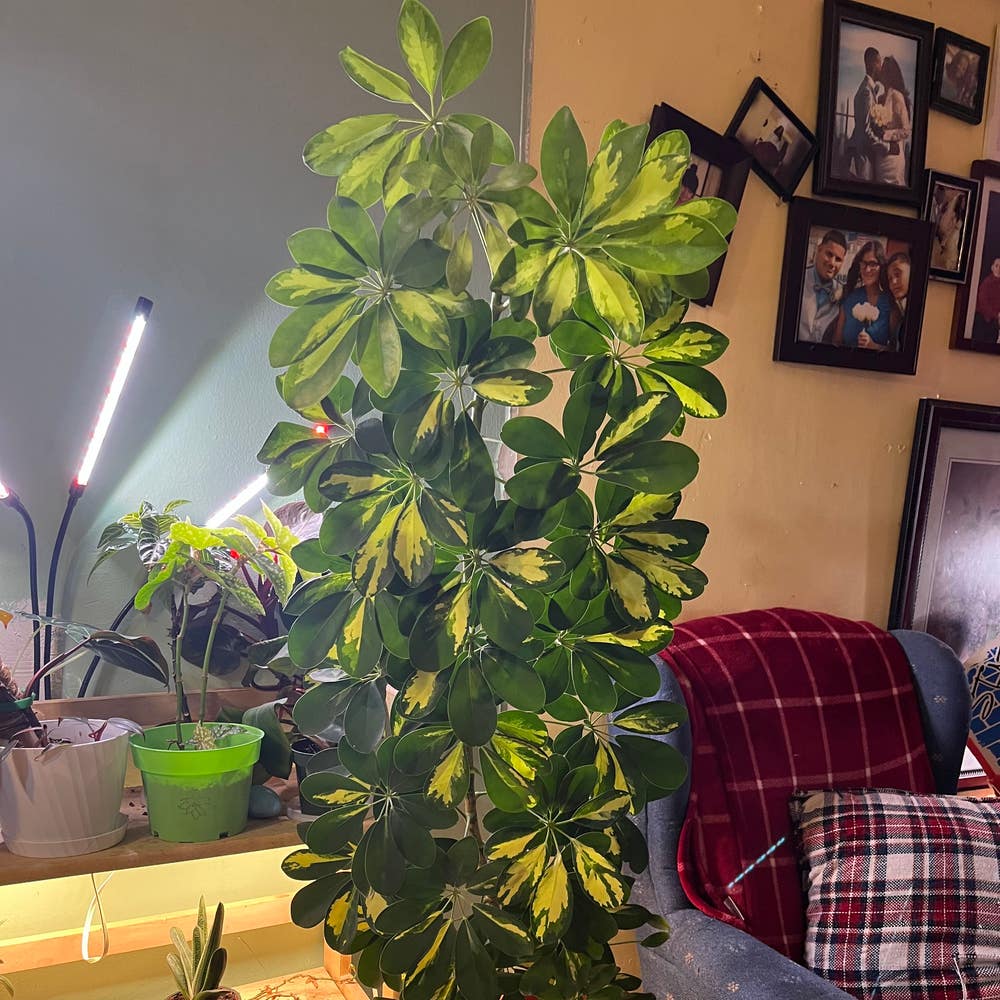
🌞 Does My Variegated Dwarf Umbrella Tree Need Direct Sunlight?
Heptapleurum arboricola 'Variegata'
By the Greg Editorial Team
Jun 18, 2024•4 min read
This article was created with the help of AI so we can cover more plants for you. May contain errors. See one? Report it here.
Learn how to strike the perfect sun balance 🌞🌿 for your Variegated Dwarf Umbrella Tree's best health.
- Thrives in bright, indirect sunlight, but direct sun can cause damage.
- Window orientation matters for optimal light; adjust with seasons.
- Use sheer curtains or relocate to prevent sunburn and distress.
Sunlight and the Variegated Dwarf Umbrella Tree: A Love-Hate Relationship?
🌞 Does It Crave the Sun?
Bright, indirect sunlight is the sweet spot for the Variegated Dwarf Umbrella Tree. It's a bit like a celebrity that basks in the glow of the spotlight but wilts under the harsh glare of paparazzi flashes.
🚨 Signs of Too Much Sun
Keep an eye out for leaf discoloration, wilting, or the appearance of brown spots. These are distress signals akin to an SOS, indicating your plant is on the receiving end of too much solar affection.
🌡 Can It Handle the Heat?
This plant has a moderate tolerance for direct sunlight but think of it as a guest at a beach party rather than a sunbathing enthusiast. A little goes a long way; too much direct exposure can lead to the botanical equivalent of a nasty sunburn.

Window Wisdom: Placing Your Plant for Prime Light
🌞 Direction Dictates Sunlight
Orientation is crucial when placing your Variegated Dwarf Umbrella Tree near a window. In the Northern Hemisphere, south-facing windows are like sun lounges, offering a day-long buffet of bright light. East-facing windows provide a milder morning feast, while west-facing ones dish out an intense afternoon tea. North-facing windows? They're the snack bars, serving up consistent but lighter fare.
🌍 Hemisphere Hints
Your global address flips the care script. If you're basking in the Southern Hemisphere, north-facing windows are your plant's best friend, offering the most sunlight. No matter where you are, remember: the sun's path changes with the seasons, so your plant's placement should too. Keep it close to the window in winter's weak sun, but pull it back when summer turns up the heat.

Seasonal Sun Shifts: Adapting to Changes
🌞 Summer Strategies
As the summer sun intensifies, your Variegated Dwarf Umbrella Tree's relationship with light enters a delicate phase. Adjusting care is crucial to prevent the leaves from becoming the botanical equivalent of a sunburnt tourist.
Dial Down the Directness
Move the plant away from windows where the midday sun is strongest. Think of it as giving your plant some stylish sunglasses—protection is key.
Hydration Hike
With the heat on the rise, your plant's thirst will too. Increase watering frequency, but don't overdo it—overwatering is the silent killer of houseplants.
❄️ Winter Workarounds
Winter's weak rays mean your plant might start to feel a bit gloomy. It's time to give it a light boost without overcompensating.
Window-Side Warmth
Shift your plant closer to the light source. A window that catches the gentle morning sun can be an ideal spot, offering a natural warmth without the harshness.
Artificial Assistance
If your home is more cave than conservatory during the dark months, consider a grow light. It's like giving your plant a vitamin D supplement—a little can go a long way.
Remember, your plant doesn't need a tan, just a comfortable glow. Keep an eye out for signs of discontent, and you'll navigate the seasonal light dance like a pro.

Shielding Your Shrub: Protective Measures Against Direct Sunlight
🌞 Sheer Genius: Using Curtains and Blinds
Sheer curtains aren't just for daytime TV dramas; they're plant protectors. They diffuse sunlight, safeguarding your Variegated Dwarf Umbrella Tree from the harshness of direct rays. Blinds are equally heroic, offering a customizable shield that can be adjusted throughout the day to keep your green buddy in the sweet spot of light.
🏡 Relocation, Relocation, Relocation
Sometimes, it's all about location. If your plant's leaves are throwing a fit—crisping at the tips or losing their variegation—it's time to move. Find a spot with medium, indirect sunlight; think of it as the plant equivalent of a shady nook in a bustling city. If you can't move the plant, remember: sheer curtains are your new best friend, softening the sun's glare like a pair of oversized sunglasses.
⚠️ Safety First
This content is for general information and may contain errors, omissions, or outdated details. It is not medical, veterinary advice, or an endorsement of therapeutic claims.
Always consult a qualified healthcare professional before using any plant as food, medicine, or supplement.
Never eat any plant (or feed one to pets) without confirming its identity with at least two trusted sources.
If you suspect poisoning, call Poison Control (800) 222-1222, the Pet Poison Helpline (800) 213-6680, or your local emergency service immediately.
Spotted an error? Please report it here.
Keep your Variegated Dwarf Umbrella Tree vibrant and thriving 🌿 by letting Greg measure your light levels and tailor a care plan that shields it from too much sun.