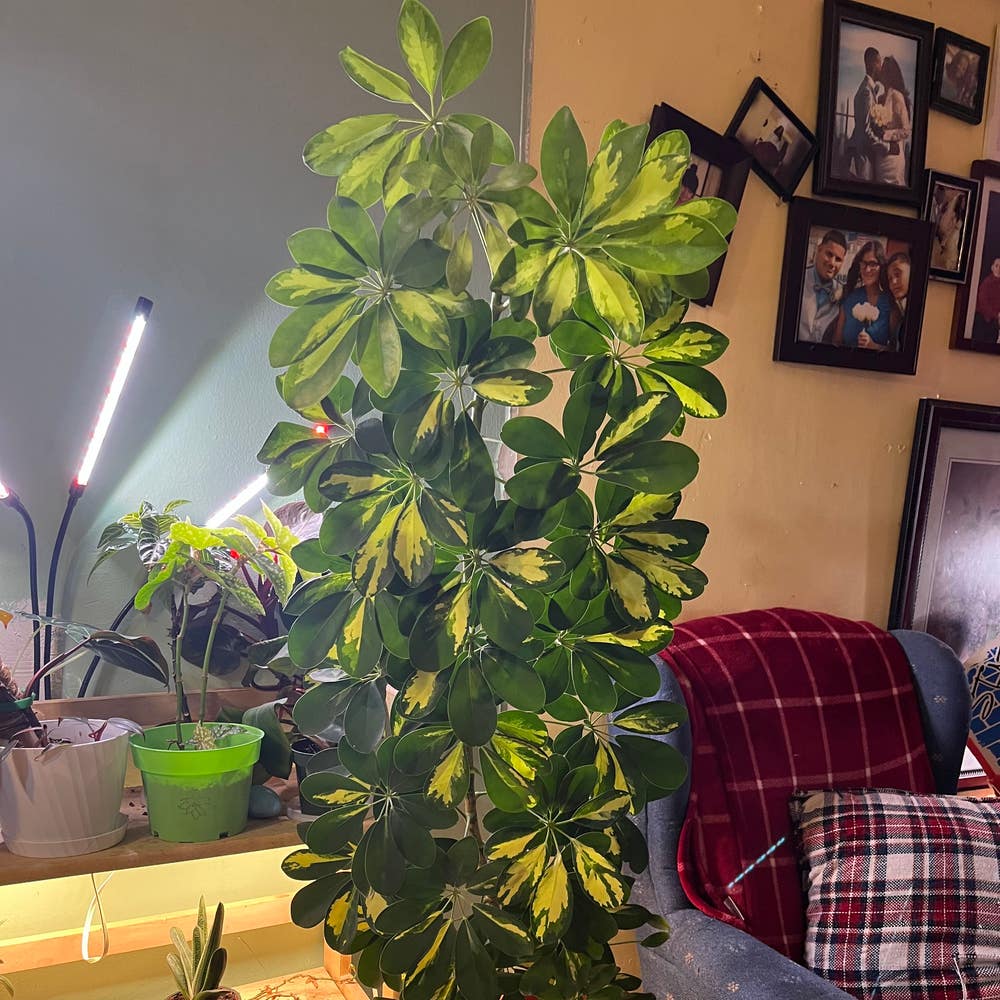
How Do I Propagate My Variegated Dwarf Umbrella Tree?
Heptapleurum arboricola 'Variegata'
By the Greg Editorial Team
Jun 18, 2024•4 min read
This article was created with the help of AI so we can cover more plants for you. May contain errors. See one? Report it here.
Propagate your Dwarf Umbrella Tree 🌱 effortlessly with top stem cutting and air layering tips!
- 🌱 Choose healthy stems with leaf nodes and use rooting hormone.
- 💧 Water consistently, keeping soil moist but not saturated.
- 🌡️ Maintain 65-75°F and bright, indirect sunlight for best growth.
Choosing Your Propagation Adventure
🌱 Stem Cuttings
Selecting Your Champion
Choose healthy stems that are vibrant and free from pests and diseases. Look for stems with several leaf nodes, as these are the hotspots for root growth.
Prepping Your Stem Cutting
Sterilize your tools first. Aim for cuttings about 4-6 inches long. Strip the lower leaves to prevent rot, leaving a couple at the top for photosynthesis. Dip the cut end into rooting hormone to kickstart root development.
Rooting Your Cutting
The soil vs. water debate is real. Plant your cutting in well-draining soil or suspend it in water, changing it weekly. Patience is key; roots take time to form.
✂️ Air Layering
Finding the Right Branch
Opt for a robust branch with a diameter that looks like it can stand alone once cut. Make sure it's healthy and free from damage.
The Air Layering Process
Sterilize your tools. Make two parallel cuts around the branch and peel away the bark. Wrap the area with moist sphagnum moss and secure it with plastic to create a humid environment.
When to Separate
Watch for roots peeking out from the moss. Once they're white and firm, it's time to cut the branch off and pot it independently. Keep the faith—this takes a few months.

The Root of the Matter: Caring for New Cuttings and Layers
💡 Environment Essentials
Light is your cuttings' lifeblood; it fuels their growth. Aim for a spot that basks in bright, indirect sunlight. Too much direct exposure, and you're on a one-way trip to Crispy Leaf City. Temperature should be steady, think comfy room temp, around 65-75°F (18-24°C).
🚰 Watering Wisdom
Balance is the name of the game when it comes to watering. Your cuttings crave consistency—keep the soil moist, but not a swamp. Check the topsoil; if it's dry to the touch, it's time for a drink.
🛠 Troubleshooting Tips
Spotting Problems Early
Yellow leaves or stunted growth? These are your cuttings' cry for help. Light, water, or nutrient issues are usually the culprits.
Quick Fixes for Common Propagation Woes
If growth is at a snail's pace, reassess your light situation. Bright, indirect light is what you're after. For the over-enthusiastic waterers, ease up. Soggy soil is a no-go. And if you're dealing with mold or algae, it's time to dial down the humidity and clean up your act.

Transition Time: From Propagation to Potting
🌱 The Big Move
Knowing when roots are ready is crucial. For water-propagated cuttings, roots should be a few inches long; for soil, give them a few weeks to become the strong silent type. Choose a pot that's the Goldilocks of containers—not too big, not too small—and ensure it has a drainage hole to prevent your plant's roots from drowning in excess water. A well-draining soil mix is your best friend here, rich in organic matter, and just slightly acidic, though your Dwarf Umbrella Tree isn't going to throw a fit over pH levels.
🌿 Aftercare for Thriving Plants
In the first few weeks, your plant is settling into its new digs. Water it like it's a delicate pastry—too much and it's a soggy mess, too little and it's dry and disappointing. Aim for moist, but not wet. Hold off on the fertilizer; let the roots recover from the move before hitting them with the nutrient buffet. Long-term success hinges on gradual acclimation. Introduce your plant to its new light and temperature conditions slowly, avoiding the shock of a sudden change. It's like acclimating to a cold pool—one toe at a time. Keep an eye out for growth or stress signals, and respond with the care of a plant whisperer.

⚠️ Safety First
This content is for general information and may contain errors, omissions, or outdated details. It is not medical, veterinary advice, or an endorsement of therapeutic claims.
Always consult a qualified healthcare professional before using any plant as food, medicine, or supplement.
Never eat any plant (or feed one to pets) without confirming its identity with at least two trusted sources.
If you suspect poisoning, call Poison Control (800) 222-1222, the Pet Poison Helpline (800) 213-6680, or your local emergency service immediately.
Spotted an error? Please report it here.
Successfully propagate your variegated dwarf umbrella tree using these expert tips, and count on Greg 🌿 to guide you through each step with personalized care reminders for your new green companions!