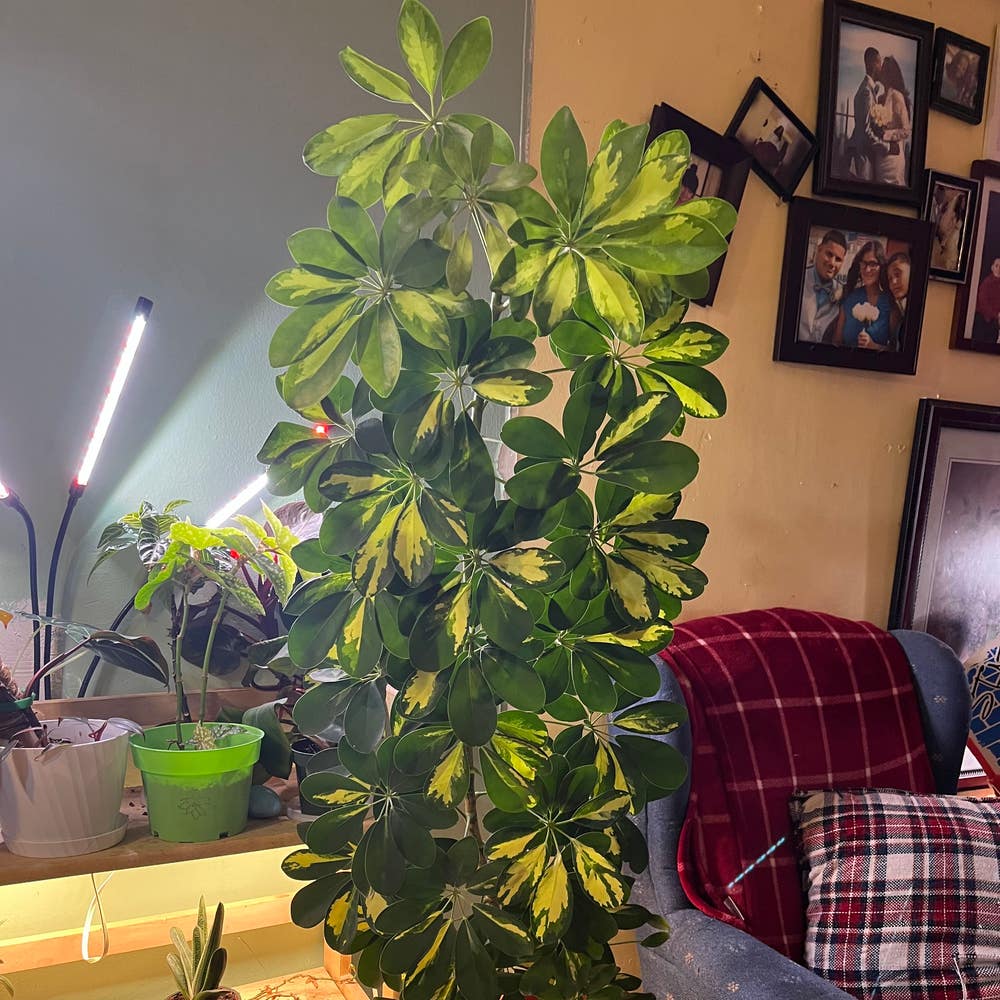
How Do I Cure Variegated Dwarf Umbrella Tree Root Rot?
Heptapleurum arboricola 'Variegata'
By the Greg Editorial Team
Jun 18, 2024•4 min read
This article was created with the help of AI so we can cover more plants for you. May contain errors. See one? Report it here.
Rescue your beloved 🌳 from root rot's grip with life-saving care tips that ensure lasting plant health! 🛡️
- Yellow leaves and foul odor? Could signal root rot.
- Trim mushy roots, repot in well-draining soil to aid recovery.
- Monitor and adapt care to prevent future root rot issues.
Spotting the Red Flags: Early Detection of Root Rot
🚨 Visual Symptoms to Watch For
Yellowing leaves and wilting are not just aesthetic issues; they're distress signals from your Variegated Dwarf Umbrella Tree indicating potential root rot. If your plant's leaves are more lemon-colored than lush, it's time to pay attention.
A foul odor from the soil is your plant's version of a smoke alarm. Don't ignore it. This stench is a clear indication that something is amiss in the root department.
🕵️♂️ Root Inspection 101
To check your plant's roots for rot, gently remove it from its pot and brush away the soil. Healthy roots should be firm and white. If they're brown and mushy, you've got a problem.
Understanding root discoloration and texture changes is crucial. Dark, soft roots are a telltale sign of rot and require immediate action. Remember, healthy roots are the backbone of a thriving plant.

First Response: Immediate Actions to Combat Root Rot
💦 Drying Out and Aeration Tactics
Overwatering is like giving your plant's roots a bath they never asked for. Stop watering immediately and let the soil dry out. It's time to give those roots some breathing room.
Steps to Dry Out Overwatered Soil
- Cease all watering to halt additional moisture intake.
- If possible, increase air circulation around the plant with a fan to speed up drying.
Removing the Plant
Gently remove your plant from its pot, like you're disarming a fragile relic. Shake off excess soil without roughing up the roots too much.
🪒 Pruning for Plant Health
It's surgery time, but for plants. Trim away mushy, brown roots with sterilized scissors—think of it as cutting away the bad influences in your plant's life.
Sterilization Techniques
Before and after playing plant surgeon, sterilize your tools with alcohol or a bleach solution. It's like giving your tools a bath in hand sanitizer after they've been on the subway.
🌱 Repotting in Fresh Soil
Once the roots have aired out, repot your plant in a well-draining soil mix. This isn't just a new home; it's a fortress against future waterlogging.

Soil and Water: The Dynamic Duo in Root Rot Prevention
💧 Soil Selection and Treatment
Choosing the right soil mix is crucial for the health of your Variegated Dwarf Umbrella Tree. Opt for a well-draining blend that allows roots to breathe, avoiding waterlogging. Perlite or sand can be mixed in to increase aeration.
🍄 Fungicidal Treatments
Fungicides are your plant's shield against root rot. Use neem oil or biological fungicides to keep the soil healthy. Rotate these treatments to prevent fungi from building resistance, much like updating your antivirus software.
💦 Watering Wisdom
Tailoring Your Routine
Your Variegated Dwarf Umbrella Tree's watering needs are unique. Adjust your routine to ensure the soil's moisture is just right—neither a desert nor a swamp. Deep watering followed by a drying period mimics natural rainfall, promoting robust root health.
📏 Monitoring Tools
Invest in a moisture meter. It's like a plant's thirst indicator, guiding you on when to water and when to hold back. For those who love gadgets, a self-watering pot can be a game-changer, maintaining optimal moisture levels effortlessly.

Ongoing Vigilance: Long-Term Prevention Strategies
🌱 Routine Root and Soil Checks
Regular inspections are your plant's health insurance. Like a car's oil check, they keep things running smoothly. Examine the roots and soil every few weeks, looking for firm, white roots and loose, crumbly soil. Spot any mushy or discolored roots? It's a red flag.
Monitor the soil's moisture level. If it's consistently soggy, you're overdoing the H2O. Keep an eye on the drainage, too. Water should exit stage left, not pool center stage.
🌍 Adapting Care to Environmental Changes
Seasons change, and so should your plant care. Less water in winter, more shade in summer. It's about adapting, not sticking to a rigid script. Rotate your plant for even sun exposure, and tweak your watering routine as the plant grows.
Assess your plant's environment regularly. Is the room too humid, or is the air drier than a stand-up comedian's wit? Adjust accordingly. Remember, your plant's comfort zone isn't static—it's as dynamic as your own.
⚠️ Safety First
This content is for general information and may contain errors, omissions, or outdated details. It is not medical, veterinary advice, or an endorsement of therapeutic claims.
Always consult a qualified healthcare professional before using any plant as food, medicine, or supplement.
Never eat any plant (or feed one to pets) without confirming its identity with at least two trusted sources.
If you suspect poisoning, call Poison Control (800) 222-1222, the Pet Poison Helpline (800) 213-6680, or your local emergency service immediately.
Spotted an error? Please report it here.
Prevent root rot 🌱 in your variegated dwarf umbrella tree by letting Greg monitor your soil's moisture for perfectly timed watering!