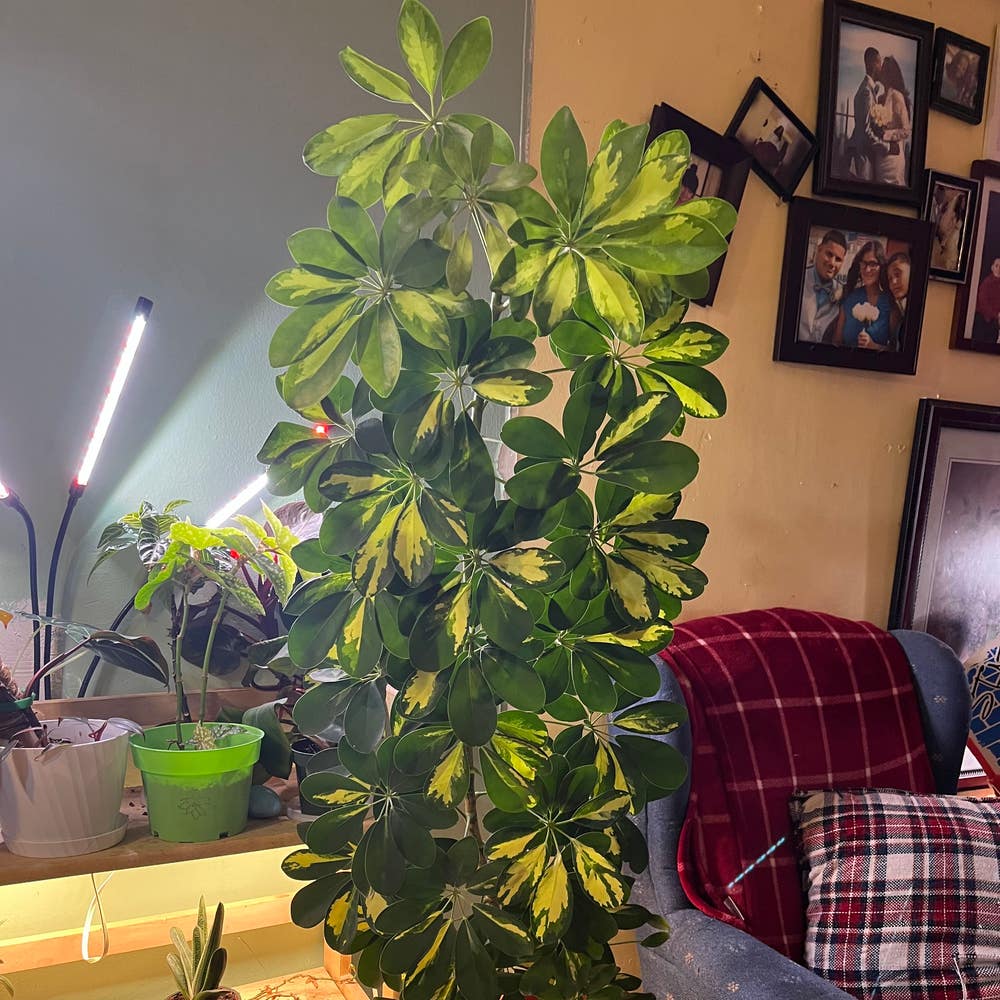
💧 How Much Should I Water My Variegated Dwarf Umbrella Tree?
Heptapleurum arboricola 'Variegata'
By the Greg Editorial Team
Jun 18, 2024•4 min read
This article was created with the help of AI so we can cover more plants for you. May contain errors. See one? Report it here.
Nurture your variegated dwarf umbrella tree 🌿 to lush perfection with our savvy watering guide.
- 🌱 Check soil moisture with finger test or meter to gauge watering needs.
- 🌞❄️ Seasonal adjustments are key—more water in summer, less in winter.
- 🌡️💧 Balance humidity and temperature to perfect your watering routine.
When to Water: Timing is Everything
💧 Recognizing Thirsty Plants
Your variegated dwarf umbrella tree isn't shy about showing its thirst. When the top 2 inches of soil feel as dry as a neglected houseplant's humor, it's time to water. The finger test is your go-to move here—ditch the guesswork and dive in with a digit.
💦 The Finger Test and Other Soil Moisture Tricks
For those who prefer gadgets over guesswork, a moisture meter can be your plant's best friend. No more second-guessing; if the meter reads dry, grab your watering can. It's like a plant's version of a thirst trap, and you're here to quench it.
🌦 Seasonal Watering Shifts
As the seasons change, so does your plant's drink order. Summer sips mean upping the hydration to support growth. Think of it as your plant's own little growth party. When winter rolls in, it's time to slow down—your plant's sipping on hibernation juice now.
☀️ Summer Sips and Winter Waits
In the heat of summer, your plant's thirst is as real as the sweat on your brow—water more frequently. Come winter, it's all about the waiting game. Water less often as your plant conserves moisture and energy, like a bear in a cave, but with leaves.

How to Water: Techniques for a Happy Plant
💧 The Right Way to Drench Your Dwarf Umbrella Tree
Watering your variegated dwarf umbrella tree isn't just a chore; it's an art form. Here's how to do it without turning your plant into an aquatic exhibit:
- Check the soil moisture with your finger. If the top inch is dry, it's showtime.
- Use lukewarm water. Cold water is a shock to the system; hot water is a no-go.
- Water evenly around the plant until you see it escape through the drainage holes.
- Wait. Let the excess water drain completely. No plant enjoys wet feet.
- Repeat the moisture test before the next watering. Consistency is key, but so is adaptation.
🚱 The Perils of Over and Underwatering
Yellow leaves? Your plant's waving a caution flag. Overwatering might be the culprit. Crispy tips? That's a cry for hydration. Here's how to strike a balance:
- To rescue an overwatered plant, ease up on the H2O. Let the soil dry out a bit between waterings.
- If underwatered, don't flood the pot in a panic. Gradually increase watering frequency.
- Always ensure the pot has good drainage. Without it, you're sailing towards root rot.
- Observe your plant's response after adjustments. It's a living barometer of your watering wisdom.

The Perfect Home: Soil and Pot Considerations
🌱 Choosing the Right Potting Mix
Well-draining soil isn't just a preference; it's a necessity for the variegated dwarf umbrella tree. This type of soil ensures that water reaches the roots without leaving them soaked, which could lead to root rot. A mix that strikes a balance between retaining moisture and allowing excess water to escape is like a life jacket for your plant's roots—it keeps them afloat but not submerged.
🌿 Pots with Personality and Practicality
The pot you choose is more than a decorative piece; it's a functional home for your plant. Drainage holes are the non-negotiable feature here; they let the excess water say goodbye, preventing the dreaded soggy soil scenario. Terracotta pots are the breathable yoga pants for plants, allowing air and moisture to pass through easily, while plastic pots are like raincoats, keeping the moisture in. Remember, size matters—too big, and the soil stays damp; too snug, and your plant's roots might feel cramped.

The Environment Factor: Humidity and Temperature
🌡️ Warmth and Water: Balancing Act
In the dance of watering, temperature takes the lead. Warmth accelerates moisture loss, nudging you to water more frequently. Conversely, cooler temps slow down the sipping, allowing for longer pauses between waterings.
💧 Humidity's Hidden Influence
Humidity sneaks up on you, silently shaping your plant's hydration needs. High humidity means the air's already doing some of the heavy lifting, so you can ease up on the watering. Low humidity? Crank up the water supply, but don't drown the poor thing in your enthusiasm. Keep a hygrometer handy to measure and manage this sneaky variable.
⚠️ Safety First
This content is for general information and may contain errors, omissions, or outdated details. It is not medical, veterinary advice, or an endorsement of therapeutic claims.
Always consult a qualified healthcare professional before using any plant as food, medicine, or supplement.
Never eat any plant (or feed one to pets) without confirming its identity with at least two trusted sources.
If you suspect poisoning, call Poison Control (800) 222-1222, the Pet Poison Helpline (800) 213-6680, or your local emergency service immediately.
Spotted an error? Please report it here.
Keep your variegated dwarf umbrella tree thriving 🌿 with Greg's custom reminders and environmental monitoring, ensuring just the right amount of water year-round.