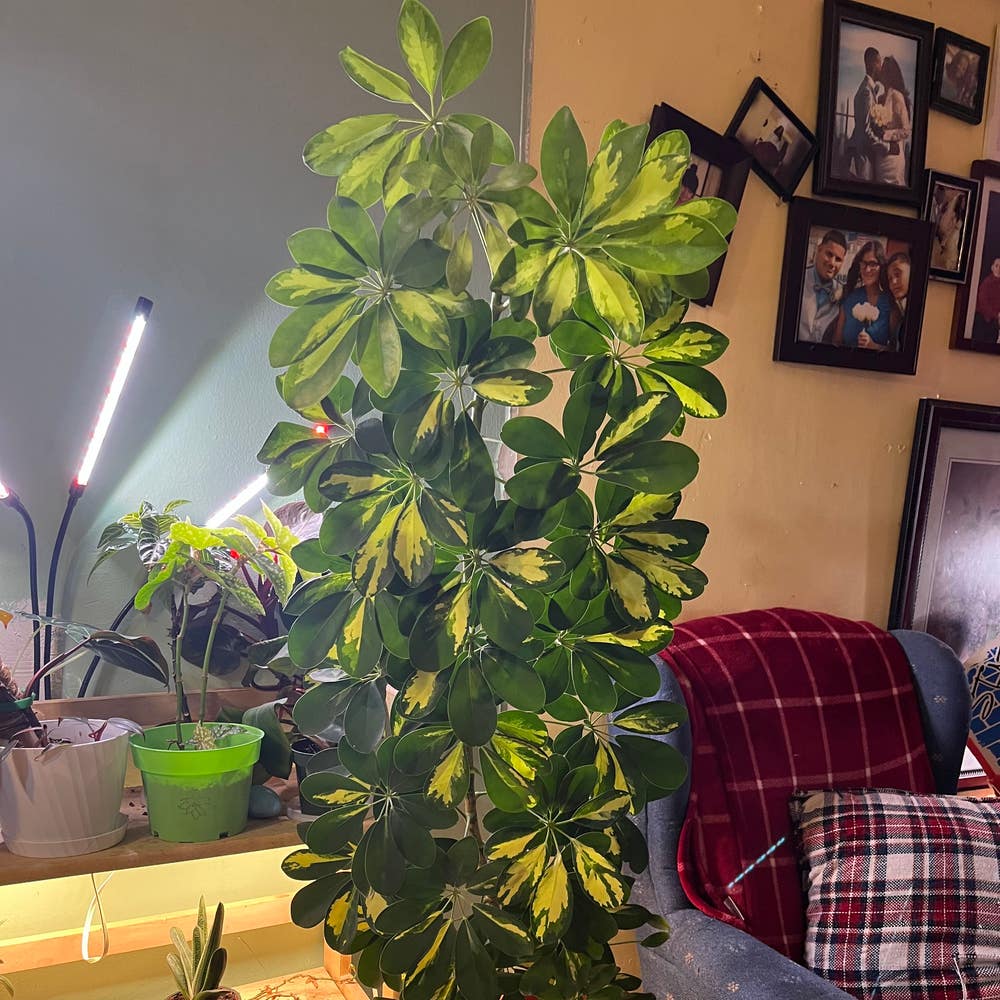
Choosing Fertilizer For My Variegated Dwarf Umbrella Tree
Heptapleurum arboricola 'Variegata'
By the Greg Editorial Team
Jun 18, 2024•4 min read
This article was created with the help of AI so we can cover more plants for you. May contain errors. See one? Report it here.
Elevate your plant's health and beauty with the ideal fertilizer pick for your Umbrella Tree 🌿💚.
- N, P, K are key nutrients for variegation and health.
- Organic vs. Synthetic: Steady health vs. immediate results.
- Watch for over-fertilization signs like yellowing leaves and brown tips.
Picking the Perfect Fertilizer
💡 Nutrient Ratios for Variegation and Growth
Nitrogen, phosphorus, and potassium are the trifecta of plant nutrition. Nitrogen is key for lush, green leaves, essential for the Variegated Dwarf Umbrella Tree's vibrant appearance. Phosphorus supports strong root development, while potassium bolsters overall plant health. A balanced NPK ratio, like 10-10-10, is a good starting point. But don't overlook micronutrients; they're crucial too.
🍽️ Organic vs. Synthetic: Pros and Cons
Organic fertilizers are a marathon, not a sprint. They feed your plant and enrich the soil over time. Expect a slow but steady improvement in your plant's health. Synthetic fertilizers, however, are the quick fix—fast-acting and potent. They're great if you're after immediate results but can easily lead to over-fertilization. Remember, moderation is key.
🚰 Slow-Release vs. Liquid Fertilizers
Slow-release granules are the low-maintenance option, providing a steady supply of nutrients. They're ideal if you prefer to fertilize less frequently. Liquid fertilizers are the high-speed alternative, giving your plant a rapid nutrient boost. They require careful measurement to avoid excess, which can harm your plant. Choose based on your plant care routine and how hands-on you want to be.

Timing is Everything: When to Fertilize
💡 Understanding Growth Cycles
The Variegated Dwarf Umbrella Tree's growth cycles dictate the fertilization schedule. Spring and summer are prime times for growth, necessitating more frequent feeding. As the plant shifts into flowering mode, it's a signal to adjust your fertilization approach to support this energy-intensive phase.
📅 Seasonal Fertilization Strategies
Spring jumpstarts the growth spurt, calling for a nutrient boost. Come summer, maintain the momentum with regular feedings. As autumn rolls in, taper off; your plant is prepping for winter dormancy. Winter is a rest period—think of it as the plant's hibernation—so hold off on the fertilizer. This seasonal ebb and flow ensures your Variegated Dwarf Umbrella Tree gets exactly what it needs when it needs it.

Applying Fertilizer Like a Pro
💧 Mixing and Dilution Best Practices
Dilution is your safeguard against the dreaded nutrient burn. Follow the manufacturer's instructions to a T, or err on the side of caution by diluting a tad more. Think of it as making a cocktail for your plant – the right mix is crucial. Overpowering the drink with too much liquor, or in this case, fertilizer, can lead to a nasty hangover for your Dwarf Umbrella Tree.
🌱 Even Distribution for Happy Roots
Uniform application is the key to a well-fed plant. For liquid fertilizers, marry watering with feeding in a technique known as fertigation. It's like hitting two birds with one stone, ensuring an even spread of nutrients and hydration. If you're more of a granular person, channel your inner chef and sprinkle the fertilizer evenly across the soil's surface. Then, water it down to help the good stuff reach the roots without playing favorites. Remember, every part of the root zone deserves a seat at the table.

Troubleshooting Fertilization Faux Pas
🚨 Spotting the Signs of Over-Fertilization
Yellowing leaves, brown tips, and a crusty fertilizer residue on the soil surface are your Variegated Dwarf Umbrella Tree's way of saying, "I've had enough!" If you notice wilting with wet soil, or roots that are brown and limp, it's time to acknowledge a nutrient overdose. Over-fertilization can hit fast, so keep an eye out right after feeding your plant.
🛠 Quick Fixes for Fertilizer Overdose
Caught red-handed with an over-fertilized plant? Flush the soil with water to dilute the excess nutrients. This plant 'detox' might need repeating every few days. If the leaves look like they've seen better days, snip off the damaged parts. For potted plants, a change of scenery with fresh, nutrient-free soil can work wonders. Hold off on the fertilizer until your plant has forgiven you and looks healthy again. Remember, when it comes to feeding, less is often more.
⚠️ Safety First
This content is for general information and may contain errors, omissions, or outdated details. It is not medical, veterinary advice, or an endorsement of therapeutic claims.
Always consult a qualified healthcare professional before using any plant as food, medicine, or supplement.
Never eat any plant (or feed one to pets) without confirming its identity with at least two trusted sources.
If you suspect poisoning, call Poison Control (800) 222-1222, the Pet Poison Helpline (800) 213-6680, or your local emergency service immediately.
Spotted an error? Please report it here.
Ensure your variegated dwarf umbrella tree thrives with perfectly-timed fertilizer reminders 🌿 from Greg, tailored to your plant's unique needs and growth cycle.