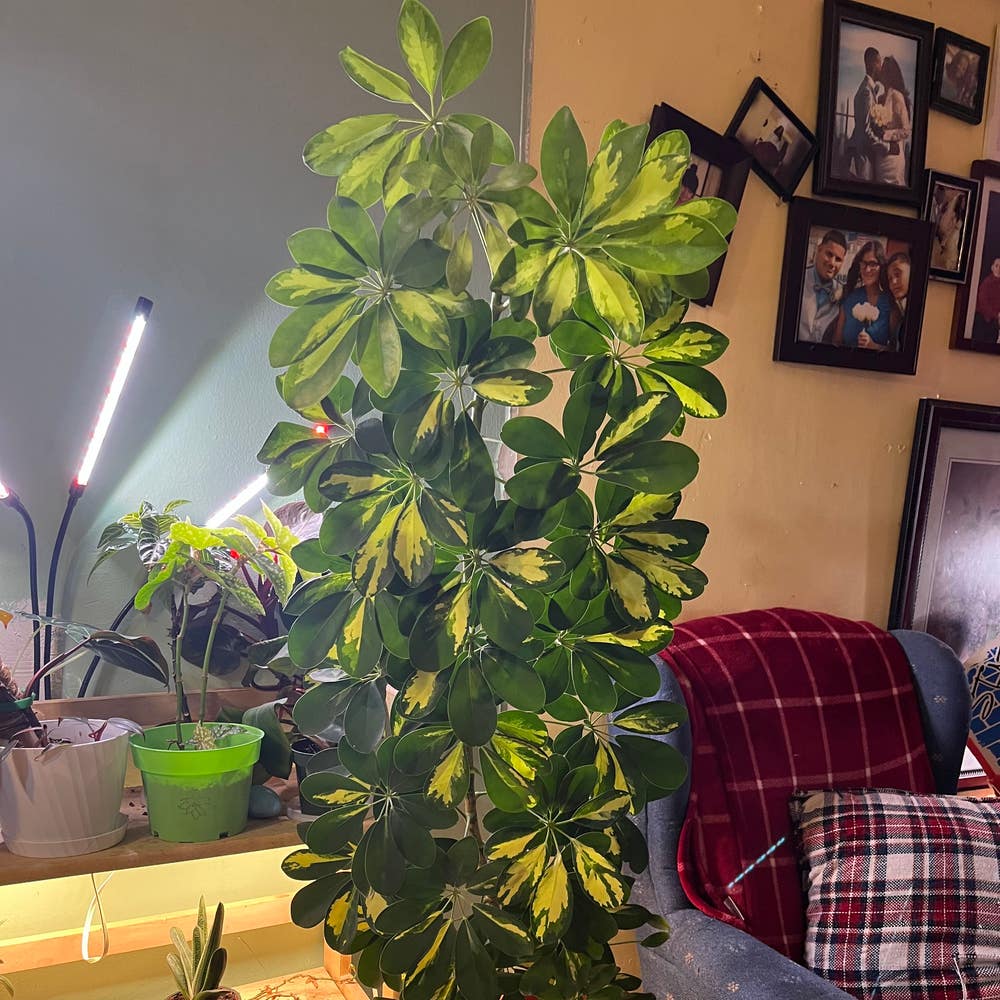
Why Are My Variegated Dwarf Umbrella Tree Leaves Curling?
Heptapleurum arboricola 'Variegata'
By the Greg Editorial Team
Jun 18, 2024•3 min read
This article was created with the help of AI so we can cover more plants for you. May contain errors. See one? Report it here.
Unravel the mystery behind your Umbrella Tree's leaf curl 🍃 and revive its vibrant allure with expert tips!
- 🌀 Leaf curling signals stress from water, light, pests, or disease.
- 💧🌡️ Adjust water, light, and temperature to fix and prevent curling.
- 🕵️♂️ Regular inspections for pests and disease maintain plant health.
Spotting the Signs: When Your Plant's Leaves Start to Curl
🌿 Identifying Leaf Curl
Curling leaves on a Variegated Dwarf Umbrella Tree can vary from slight to severe, forming tight or loose spirals. This is your plant's non-verbal way of indicating stress. Leaves may fold inward or upward, resembling a scroll. Pay attention to these visual cues; they're critical distress signals.
🚨 Immediate Checks
Light: Too much sun scorches leaves, causing them to curl as a shield. Not enough light? Expect the same reaction, as the plant struggles to reach for more.
Temperature: Extreme heat or cold can trigger leaf curling. Your plant prefers stability, not temperature roller coasters.
Humidity: Aim for that 40%-60% sweet spot. Outside this range, leaves curl to conserve moisture or react to dampness.
Quickly assess these factors to prevent further damage and set the stage for recovery.

Unraveling the Curl: Pinpointing the Cause
💧 Thirsty Roots or Drowning?
Overwatering can turn roots into mushy hostages, leading to leaves that curl down as if in defeat. Yellowing and a general bloated appearance are the plant's way of waving a white flag. Conversely, underwatering leaves the plant reaching for a lifeline, resulting in dry, brittle leaves curling up in a silent plea for hydration.
🐜 Unwanted Guests
Pests are like that friend who crashes on your couch and eats all your food. Spider mites and aphids are notorious freeloaders, causing leaves to curl and deform. They leave behind sticky residue and misshapen leaves, their calling cards of destruction.
🍄 Fungal Foes
Fungal infections are the uninvited guests that ruin the party. Symptoms like a musty smell or wilting leaves are your cue to boost airflow and reconsider your watering habits. If you spot powdery mildew or suspect root rot, it's time for a fungicide intervention.

Turning Over a New Leaf: Fixing the Curl
💡 Fine-Tuning the Environment
Adjusting your plant's environment is key. Ensure it's getting bright, indirect light; direct sunlight can cause leaf curl. Keep the temperature consistent, avoiding sudden changes that stress the plant.
🚰 Water Wisdom
Watering should be a careful balance. Let the top inch of soil dry out before watering again. Use filtered or rainwater to avoid chemical build-up that can harm your plant.
🐜 Pest Patrol
Regularly inspect for pests. Treat infestations with neem oil or insecticidal soap, focusing on the undersides of leaves. Consistency is crucial for keeping pests at bay.
🛡️ Disease Defense
Improve air circulation to prevent fungal diseases. Avoid wetting leaves during watering to reduce disease risk. If you suspect a fungal infection, isolate the plant and treat it with a fungicide.

Keeping It Straight: Prevention Practices
🕵️ Routine Checks
Regular inspections are the cornerstone of plant health. Like a personal trainer for your Variegated Dwarf Umbrella Tree, you need to be vigilant. Check for early signs of distress—discoloration, odd patterns, or curling leaves. This isn't just about being observant; it's about acting fast to prevent a leafy catastrophe.
Creating the Ideal Home
Stability is the name of the game when it comes to your plant's environment. Rotate your plant occasionally to ensure all sides receive equal love from the light. Adjust your care with the changing seasons—think less water in the winter, more shade in the summer. Spot pests? Show them the door immediately. It's all about being a proactive plant parent, ready to adjust the living conditions at the first whisper of leaf curl.
⚠️ Safety First
This content is for general information and may contain errors, omissions, or outdated details. It is not medical, veterinary advice, or an endorsement of therapeutic claims.
Always consult a qualified healthcare professional before using any plant as food, medicine, or supplement.
Never eat any plant (or feed one to pets) without confirming its identity with at least two trusted sources.
If you suspect poisoning, call Poison Control (800) 222-1222, the Pet Poison Helpline (800) 213-6680, or your local emergency service immediately.
Spotted an error? Please report it here.
Keep your Variegated Dwarf Umbrella Tree happy and healthy 🌿 with Greg's personalized care reminders, tailored to prevent leaf curling and ensure your green buddy prospers.