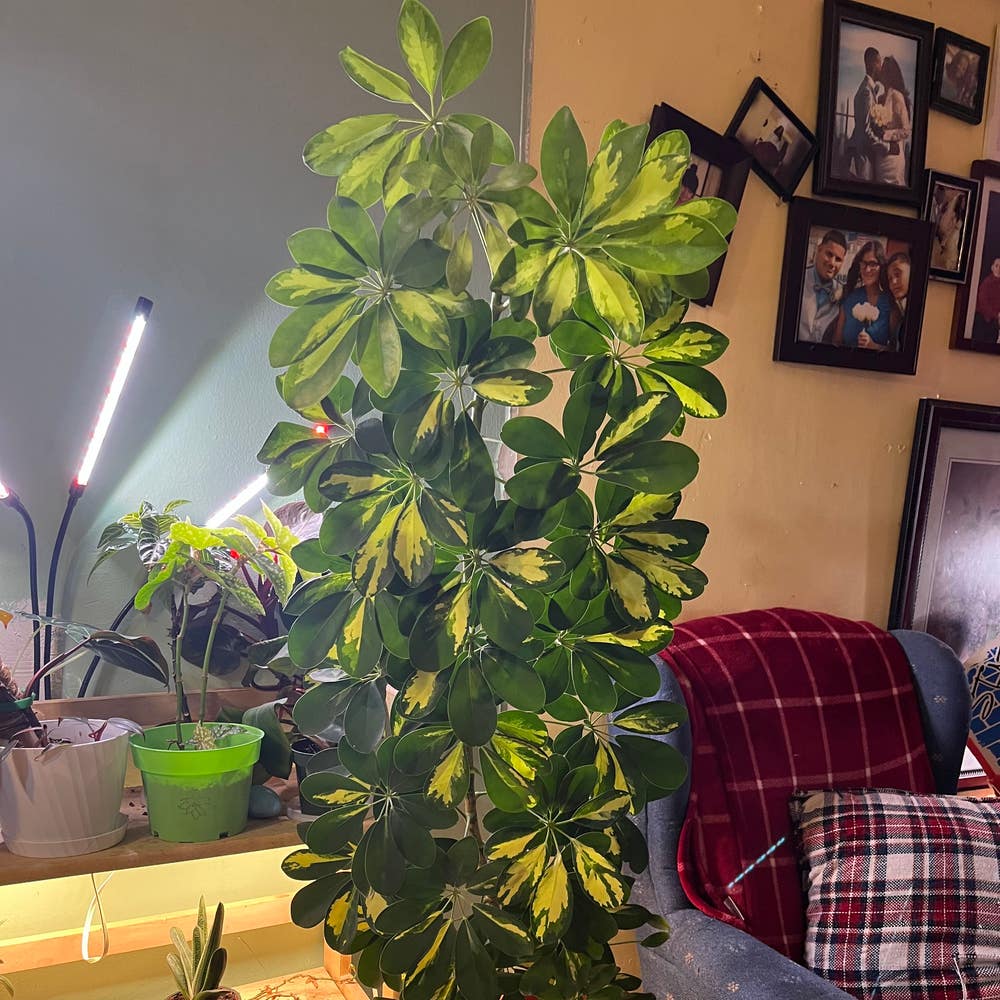
Variegated Dwarf Umbrella Tree Temperature
Heptapleurum arboricola 'Variegata'
By the Greg Editorial Team
Jun 18, 2024•4 min read
This article was created with the help of AI so we can cover more plants for you. May contain errors. See one? Report it here.
Ensure your Dwarf Umbrella Tree flourishes 🌿 by nailing the perfect indoor climate! 🌡️
- 65°F to 75°F is ideal for Variegated Dwarf Umbrella Trees.
- Consistent temperature prevents leaf discoloration and wilting.
- Position away from drafts and use humidifiers for health.
Spotting Temperature Stress in Your Plant
🌡️ Telltale Signs of Too Hot or Too Cold
Leaf discoloration and wilting often scream "I'm too hot!" in plant language, while brown spots or edges whisper "I'm freezing over here." If your Variegated Dwarf Umbrella Tree's leaves start looking more like a sad salad than a vibrant canopy, it's time to reassess its living conditions.
🥶 What's Causing the Shivers or Sweats?
Drafts and cold air are the silent assassins of tropical bliss, turning leaves into a brown and crispy mess. Heat sources, on the other hand, can push your plant into a growth spurt on overdrive, leaving it leggy and stretched. Keep an eye out for these temperature traitors, and remember: sudden changes are as welcome as a snowstorm in July.

The Goldilocks Zone: Ideal Temperature Range
♨️ The Perfect Climate Indoors
The optimal temperature for a Variegated Dwarf Umbrella Tree is a cozy 65°F to 75°F (18°C to 24°C). This range is the sweet spot, fostering robust health and vigorous growth.
Consistency is the plant’s best pal; it thrives on a steady climate without wild swings. Think of it as the roommate who likes the thermostat untouched.
🌡️ When Temperatures Dip or Soar
When the mercury climbs or plummets, it's time to tweak your plant care. Summer heat can be combated with strategic shading and increased hydration.
In the winter chill, shield your green friend from drafty windows and dial down the AC. It's all about keeping the vibe steady, avoiding the drama of temperature tantrums.

Keeping Your Plant Cozy: Practical Temperature Tips
🏡 Home Hacks for Temperature Control
Positioning your Variegated Dwarf Umbrella Tree correctly is crucial. It's like real estate; location matters. Keep it away from the fickleness of drafty windows and the oppressive heat of radiators.
Appliances can be allies or adversaries. Use humidifiers to add moisture, but dodge the direct blast of air conditioners. Thermostats? Non-negotiable. Set them to maintain a steady ambiance between 65°F and 80°F (18°C to 27°C).
🚨 Emergency Measures for Temperature Extremes
When the thermometer spikes, your plant could be baking. Draw the blinds to shield it from a scorching sun. If it's freezing, think of moving it to a warmer room, away from the treachery of icy drafts.
Gadgets are your secret weapon. A reliable thermometer keeps you on top of things. For the tech-savvy, smart home devices can automate temperature control, ensuring your plant lives in a bubble of consistent comfort.

A Quick Word on Humidity
Humidity is the hydration buddy of your Variegated Dwarf Umbrella Tree, playing a crucial role in temperature comfort. It's essential to strike a balance; too much humidity invites a fungal party, while too little feels like a drought for your plant. Consistency in humidity levels is key, acting as a buffer against temperature fluctuations.
🌡️ Recognizing the Humidity-Temperature Link
Warm air holds more moisture, so as temperatures rise, so does the potential for higher humidity. Conversely, cold air can't hold as much moisture, leading to drier conditions.
🌿 Humidity Control: Keeping It Balanced
Monitor humidity with a hygrometer to avoid guessing games. If the air is too dry, consider a humidifier or a pebble tray. For excessive moisture, ensure good air circulation or dehumidify.
🌱 Humidity and Plant Health
High humidity can lead to pests and diseases—like leaving sweets out at a picnic. Low humidity might cause leaf curl or browning. Aim for an indoor relative humidity (RH) of 40-60% for optimal plant health.
🌴 Practical Humidity Hacks
Grouping plants together can create a microclimate of shared humidity. Avoid drafts from air conditioning or heaters, as these can disrupt both temperature and humidity levels.
⚠️ Safety First
This content is for general information and may contain errors, omissions, or outdated details. It is not medical, veterinary advice, or an endorsement of therapeutic claims.
Always consult a qualified healthcare professional before using any plant as food, medicine, or supplement.
Never eat any plant (or feed one to pets) without confirming its identity with at least two trusted sources.
If you suspect poisoning, call Poison Control (800) 222-1222, the Pet Poison Helpline (800) 213-6680, or your local emergency service immediately.
Spotted an error? Please report it here.
Ensure your Variegated Dwarf Umbrella Tree flourishes 🌡 by using Greg to monitor and adjust your home's climate, keeping it within the ideal range for lush growth.