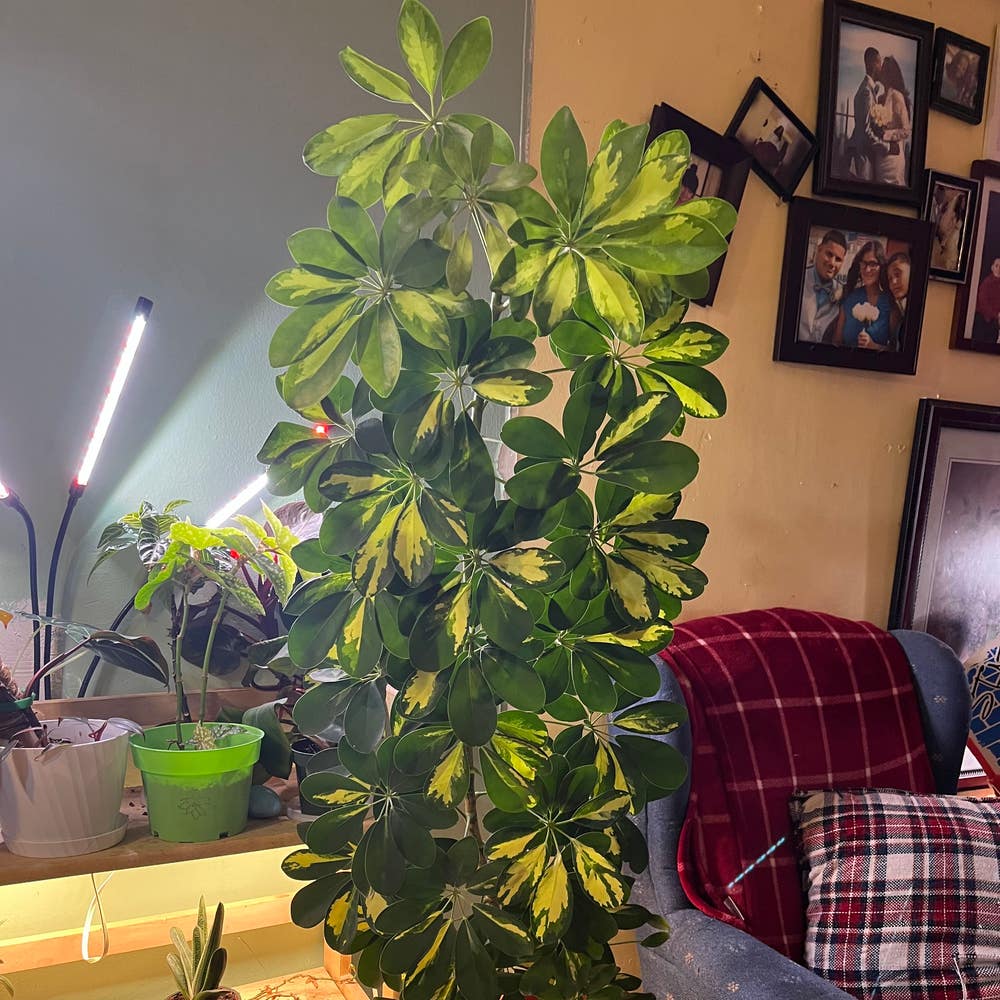
Why Is My Variegated Dwarf Umbrella Tree Dropping Leaves?
Heptapleurum arboricola 'Variegata'
By the Greg Editorial Team
Jun 18, 2024•4 min read
This article was created with the help of AI so we can cover more plants for you. May contain errors. See one? Report it here.
Stop your beloved 🌿 Umbrella Tree's leaf-drop and reclaim its vibrant allure with these expert insights!
- 🍂 Yellowing, drooping leaves signal stress; assess for over/underwatering and light issues.
- 💧🌡️ Balance moisture, temperature (60-75°F), and humidity for a healthy plant.
- 🌱 Regular care and proper soil mix prevent future leaf drop.
Spotting the Signs: Is Your Plant Stressed?
🚨 Visual Clues of Distress
- Yellowing leaves can scream "I'm stressed!" from across the room. If your Variegated Dwarf Umbrella Tree is flashing these yellow flags, it's time to play plant detective.
- When foliage droops or wilts, it's like your plant is saying, "Hey, I'm not okay!" Drooping leaves are a visual cue that your green buddy could use some TLC.
🌡️ Environmental Red Flags
- Light conditions are crucial; too little and your plant might as well be in a cave, too much and it's like a day at the beach without sunscreen.
- Humidity and temperature swings can turn your plant's life into a rollercoaster. Assess the air around your plant; it might just be crying out for a more stable environment.

The Usual Suspects: Pinpointing the Culprit
💧 Too Much Love: Overwatering Woes
Yellowing leaves and a soggy soil feel are the telltale signs of overwatering. Your plant's roots are gasping for air, literally drowning in too much love.
To adjust your watering routine, let the top inch of soil dry out before going in with the watering can. Weigh your pot; a heavier feel could indicate excess water, signaling it's time to ease up on the hydration.
🏜️ Thirsty Roots: The Underwatering Problem
Brittle leaves and a pot lighter than your last paycheck? That's underwatering. Roots are parched, and your plant is throwing up the white flag.
Find the watering sweet spot by ensuring the soil is consistently moist—not a desert, not a swamp. When the top inch of soil feels dry, it's time to water.
🌞 Light Struggles: Finding the Perfect Glow
Variegation in leaves is a diva that demands the perfect lighting. Too little light, and the variegation fades; too much, and the leaves can burn.
Best practices for light placement include providing bright, indirect light. Think of it as the plant's sunglasses—protection with a clear view.
🌡️ Climate Control: Temperature and Humidity Factors
The ideal temperature range for your Variegated Dwarf Umbrella Tree is between 60-75°F. It's like choosing the right outfit for the weather—comfort is key.
Managing humidity levels can be as simple as placing a humidifier nearby or grouping plants together. Think of it as creating a mini tropical getaway for your green friend.

Emergency Care: Reviving Your Droopy Friend
💧 Adjusting Water Habits
Techniques for proper watering are crucial. Check the soil's top inch; if it's dry, it's time to water. Use room-temperature water to avoid root shock. Water deeply, but allow the soil to dry before the next round. This prevents root rot and overwatering, which are like kryptonite to your plant's health.
☀️ Optimizing Light and Location
Creating the ideal light environment is non-negotiable. Your plant craves bright, indirect light, not a sunbath. Gradually acclimate it to brighter areas to avoid stress. Rotate the plant for even growth and avoid placing it near heat sources or drafts. If sunlight is scarce, consider grow lights—they're a game-changer.
🌡️ Balancing the Climate
Temperature and humidity management can't be overlooked. Keep temperatures consistent; your plant despises fluctuations more than a cat hates water. Use a humidifier or a pebble tray to increase humidity if your home's air rivals a desert. Monitor conditions with a thermometer and hygrometer—think of them as your plant's personal weather station.

Keeping It Leafy: Prevention Is Better Than Cure
🕵️ Routine Checks and Balances
Regular monitoring is the backbone of plant health. It's about being the plant's personal bodyguard, always on the lookout for signs of distress. Rotate your plant periodically to ensure even light exposure and growth. Keep a close eye on the soil moisture—too wet or too dry, and you're asking for trouble. Adjust your care with the changing seasons; your plant's needs in the scorching summer aren't the same as in the winter chill.
🏺 The Right Pot and Soil Mix
The right soil mix is your plant's lifeline. Aim for a well-draining concoction, with perlite or coarse sand to keep it airy. Make sure your pot has enough drainage holes to prevent your plant's roots from drowning in excess water. It's like setting up a good drainage system in a house—you want to avoid water damage at all costs. Regularly check the soil and drainage holes to prevent any blockages that could lead to waterlogging.
⚠️ Safety First
This content is for general information and may contain errors, omissions, or outdated details. It is not medical, veterinary advice, or an endorsement of therapeutic claims.
Always consult a qualified healthcare professional before using any plant as food, medicine, or supplement.
Never eat any plant (or feed one to pets) without confirming its identity with at least two trusted sources.
If you suspect poisoning, call Poison Control (800) 222-1222, the Pet Poison Helpline (800) 213-6680, or your local emergency service immediately.
Spotted an error? Please report it here.
Revive your leafy friend 🍃 with Greg's personalized care reminders, ensuring your variegated dwarf umbrella tree thrives in the perfect balance of light and moisture.