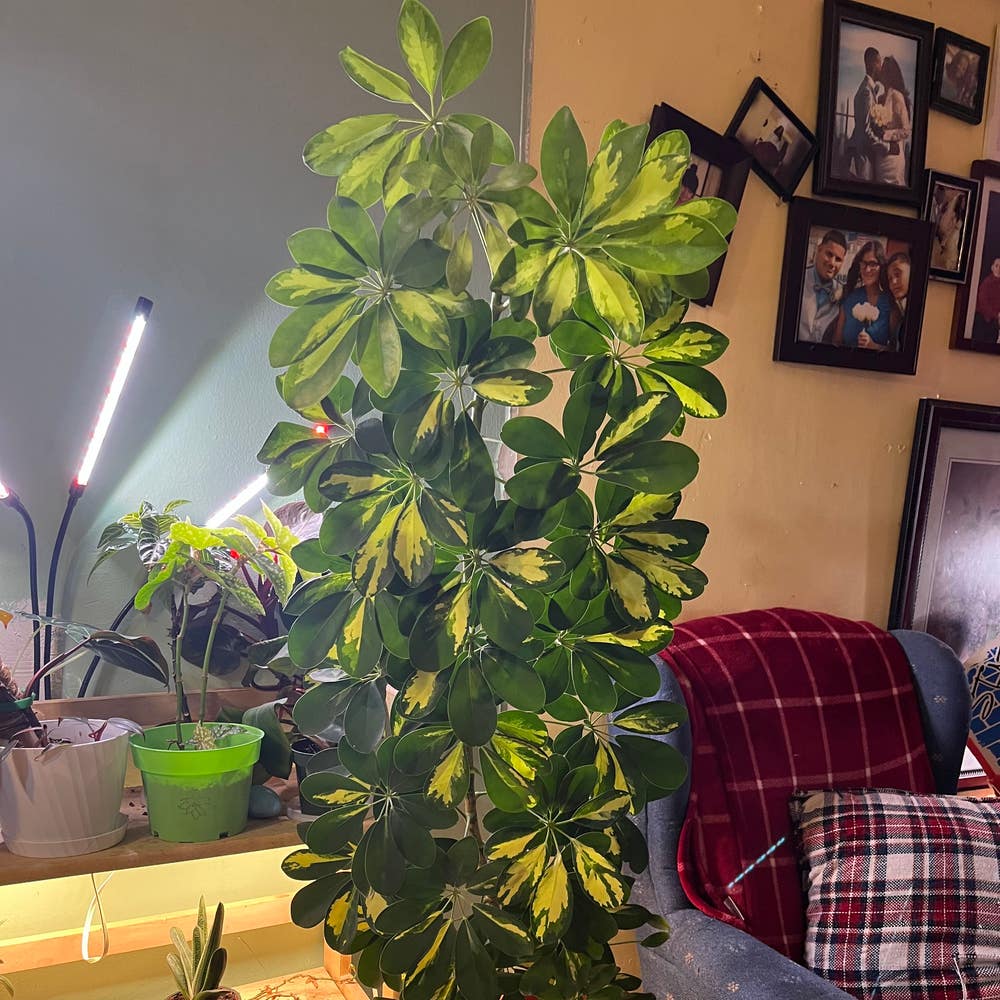
Common Variegated Dwarf Umbrella Tree Problems
Heptapleurum arboricola 'Variegata'
By the Greg Editorial Team
Jun 18, 2024•4 min read
This article was created with the help of AI so we can cover more plants for you. May contain errors. See one? Report it here.
Save your beloved 🌿 from common woes with these life-saving Dwarf Umbrella Tree care secrets!
- 🚱 Over-watering causes yellow leaves; under-watering leads to droopiness.
- 🌞 Bright, indirect sunlight and 65-75°F stabilize plant health.
- 🕵️♂️ Watch for pests and fungus, use insecticidal soap or fungicide as needed.
Water Woes: Too Much or Too Little?
🌊 Over-watering Havoc
Yellow leaves and mushy stems are the plant's SOS. Over-watering is like a love that smothers; it's well-intentioned but can be fatal. If the soil feels like a wet sponge, it's time for an intervention.
- Check the soil: Before you water, dig an inch down. If it's damp, hold off on the watering can.
- Assess the damage: Soft, discolored roots call for some tough love—trim the rot away.
- Let it breathe: Move your plant to a spot with good air circulation to help dry out the soil.
- Monitor and adjust: Keep tabs on soil moisture and tweak your watering routine as needed.
🏜️ Under-watering Blues
Droopy leaves and dry soil are your plant's way of telling you it's parched. Under-watering is like forgetting your plant's birthday—neglectful and bound to lead to a wilted party.
- Spot the thirst: If the top inch of soil is bone dry, it's time for a drink.
- Hydration tips: Water slowly, letting the plant soak it up at its own pace—think spa day, not a splashdown.
- Consistency is key: Establish a watering schedule that's as reliable as your morning alarm.
- Observe and adapt: Every plant has its own hydration needs. Pay attention and cater to your plant's unique thirst level.

Light and Temperature Tango
🌞 Finding the Sweet Spot for Sunlight
Crispy leaf tips or brown patches are distress signals; your plant is getting too much sun. On the flip side, a plant stretching towards the light is begging for more exposure. The ideal is bright, indirect sunlight—like a gentle morning glow rather than the harsh noon blaze.
🌡 Keeping the Chill at Bay
Leaves that wilt or sport crispy edges might be throwing a temperature tantrum. Yellowing or blackened leaves suggest extreme temperatures. Aim for a stable climate, ideally between 65-75°F (18-24°C), to keep your plant from feeling like it's either in the Sahara or the Arctic.

The Unseen Enemies: Pests and Diseases
🐛 Bug Battles
Pests—they're the uninvited guests at your plant's dinner party. Spider mites, aphids, and mealybugs are the usual suspects, leaving a trail of sticky "honeydew" and misshapen leaves. If you spot these freeloaders, it's time for action.
🕷 Identifying Common Pests
Look for tiny webs, sticky leaves, or sooty mold. These are tell-tale signs that pests are gatecrashing your plant's good vibes.
🦟 Fight Back: Safe and Effective Pest Control Strategies
To show these critters the door, grab your insecticidal soap or neem oil. It's like flipping on the lights at last call—party's over, pests.
🍄 Fungal Foes and Mold Monsters
Fungus and mold—they're the awkward party guests who overstay their welcome. White or black spots on leaves are your cue that it's time to crank up the airflow and bring out the fungicide.
🍃 Spotted Leaves and Musty Smells: Signs of Fungal Issues
Keep an eye out for a powdery or fuzzy residue. It's the equivalent of finding someone's forgotten jacket after a bash—evidence of an unwelcome visitor.
💨 Clearing the Air: Preventing and Treating Mold and Fungus
Improve air circulation and keep the foliage dry. It's like setting a no-dance zone; it keeps the fungal rave from kicking off. If you spot these signs, bring out the fungicide—it's your bouncer, ready to clear the crowd.

Root Rot: The Silent Killer
🚨 Catching it Early
Warning signs: What does root rot look like?
Root rot sneaks up like a thief in the night, but you can catch it if you're vigilant. Yellowing leaves and a stunted growth are your plant's cry for help. Pull it out of its pot and examine the roots. Healthy roots should be firm and white, not black or brown and mushy like a rotten apple. A bad smell is another red flag—root rot reeks of decay.
Surgery for the soil: How to save a plant with root rot.
Time to play doctor. First, remove the plant from its pot and shake off the dirt. Then, give the roots a gentle wash to see which ones are still in the game. Snip the damaged roots; don't hesitate, it's for the greater good. After the operation, let the roots dry, then repot in fresh, well-draining soil. A sprinkle of cinnamon can act as a natural antiseptic. If all else fails, take cuttings from healthy parts to start anew. Remember, overwatering is the enemy—water with a measured hand.
⚠️ Safety First
This content is for general information and may contain errors, omissions, or outdated details. It is not medical, veterinary advice, or an endorsement of therapeutic claims.
Always consult a qualified healthcare professional before using any plant as food, medicine, or supplement.
Never eat any plant (or feed one to pets) without confirming its identity with at least two trusted sources.
If you suspect poisoning, call Poison Control (800) 222-1222, the Pet Poison Helpline (800) 213-6680, or your local emergency service immediately.
Spotted an error? Please report it here.
Avoid the common pitfalls of plant care and keep your Variegated Dwarf Umbrella Tree thriving 🌿 with Greg's custom watering and sunlight reminders.