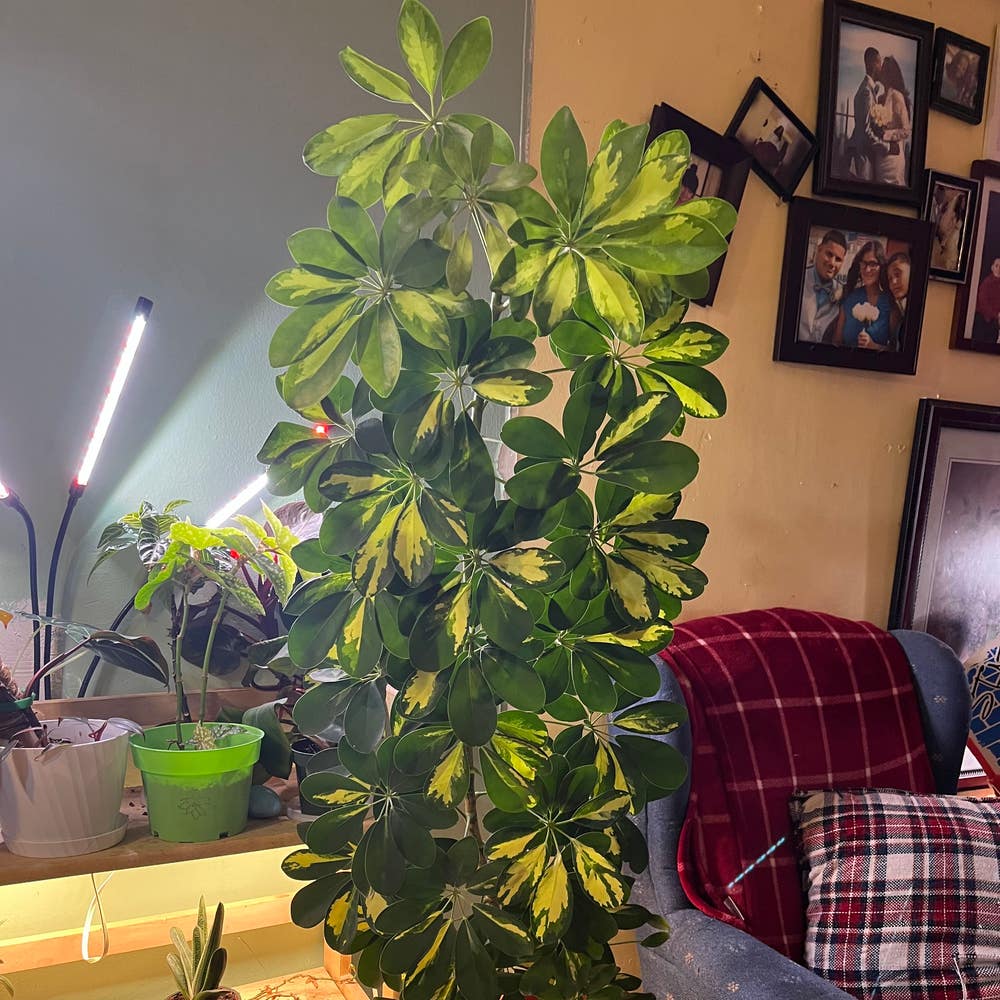
Brown Spots On Variegated Dwarf Umbrella Tree Leaves
Heptapleurum arboricola 'Variegata'
By the Greg Editorial Team
Jun 18, 2024•4 min read
This article was created with the help of AI so we can cover more plants for you. May contain errors. See one? Report it here.
Banish brown spots 🍂 from your Dwarf Umbrella Tree with these proven care secrets! 🌟
- Water wisely to prevent brown spots—balance is key.
- Light and temperature matter; adjust plant location for health.
- Fend off fungi and bacteria with cleanliness and air circulation.
Spotting the Trouble: Diagnosing Brown Spots
🚨 Signs and Symptoms
Brown spots on Variegated Dwarf Umbrella Tree leaves are alarm bells. They can start as tiny specks or emerge as larger patches, varying from light tan to dark brown. Some spots may appear dry, while others look water-soaked. It's crucial to observe the progression and patterns of these spots to distinguish them from natural leaf variations.
🔍 How to Differentiate
Consistency in the appearance of brown spots is a tell-tale sign of trouble. Look for uniform patterns or repetitions that deviate from the plant's natural leaf markings. Spots with distinct edges or yellow halos are particularly concerning, as they often indicate disease rather than simple environmental stress.
🕵️ Common Culprits
Watering Issues
Improper watering can lead to brown spots. Overwatering often results in water-soaked spots, while underwatering leaves dry, crispy patches. The key is to find a balance in soil moisture.
Light Stress
Too much direct sunlight can scorch leaves, causing brown spots with a bleached look. Conversely, too little light can weaken the plant, making it susceptible to other issues that manifest as brown spots.
Infections
Fungal and bacterial infections present with spots that may have a wet appearance, often surrounded by a yellow halo. These spots can grow and merge, leading to significant leaf damage.
Environmental Factors
Temperature extremes and inconsistent humidity can also lead to brown spots. Leaves may exhibit a scorched appearance from excessive heat or light, or they may become spotted due to cold drafts.
Pest Damage
Pests can leave behind sticky residue or visible insects, along with brown spots. These spots often come with additional signs of distress, such as wilting or leaf curl.
🕵️ Investigative Steps
- Isolate the plant to prevent potential spread of disease.
- Inspect the leaves from all angles, including the undersides.
- Monitor the spots' progression and note any changes in size or color.
- Evaluate your watering routine and the plant's environmental conditions.
- Adjust care practices as needed and monitor for improvement.

Hitting the Root Cause
🚰 Investigating Watering Woes
Overwatering is often the villain behind those unsightly brown spots. Your plant's roots need to breathe, and too much water drowns them, leading to leaf blemishes. Underwatering can also cause trouble, leaving leaves thirsty and browned at the edges.
Tell-tale Signs of Water-Related Leaf Damage
Look for soft, dark spots on leaves, a classic SOS for less water. Conversely, dry, crispy edges scream for hydration. Check the soil before watering; it should feel like a wrung-out sponge, moist but not wet.
🌞 Light and Temperature: Finding the Sweet Spot
Too much sun can fry leaves like bacon, leaving behind brown, brittle patches. On the flip side, too little light starves leaves, causing them to fade and spot. Cold drafts? Just as bad, stressing your plant out and inviting brown spots to the party.
Adjusting the Plant's Location for Optimal Growth
Move your plant to a spot with bright, indirect sunlight and away from temperature extremes. Think of it as a VIP lounge for your plant, where the conditions are just right for it to thrive.
🛡️ Fending Off Fungi and Bacteria
Brown spots with yellow halos or concentric rings are the calling cards of fungal and bacterial infections. These uninvited guests love wet conditions, so keeping leaves dry and ensuring good air circulation is key.
Quick Tips for Cleanliness and Plant Care
Keep the area around your plant clean—fallen leaves are a fungi festival waiting to happen. Regularly wipe down leaves with a dry cloth to remove dust and potential spores. Remember, cleanliness is next to plant-godliness.

Turning Over a New Leaf: Treatment and Prevention
💧 Watering Wisdom
Balancing soil moisture is key to preventing those unsightly brown spots. Overwatering can drown your Dwarf Umbrella Tree's roots, while underwatering leaves it parched and stressed.
- Check the soil before watering—stick your finger in; if it's dry an inch below the surface, it's time to water.
- Use tools like moisture meters or self-watering pots to maintain consistency.
🛋 Creating a Cozy Corner
Your plant craves stable light and temperature conditions. Too much direct sunlight can scorch its leaves, and cold drafts can shock its tropical sensibilities.
- Position your plant in bright, indirect light, away from drafty windows or heating vents.
- Relocate the plant seasonally to ensure it's getting just the right amount of light and warmth.
🦠 Disease Defense Tactics
Fungal and bacterial infections love to feast on stressed plants, causing those dreaded brown spots.
- Remove infected leaves promptly to stop the spread of disease.
- Improve air circulation around your plant; it's like giving it room to breathe.
- Apply fungicides when necessary, but always read the label first—more isn't always better.
Remember, prevention is better than cure. Keep an eye on your plant's environment and watering habits, and you'll be well on your way to a spot-free Dwarf Umbrella Tree.

⚠️ Safety First
This content is for general information and may contain errors, omissions, or outdated details. It is not medical, veterinary advice, or an endorsement of therapeutic claims.
Always consult a qualified healthcare professional before using any plant as food, medicine, or supplement.
Never eat any plant (or feed one to pets) without confirming its identity with at least two trusted sources.
If you suspect poisoning, call Poison Control (800) 222-1222, the Pet Poison Helpline (800) 213-6680, or your local emergency service immediately.
Spotted an error? Please report it here.
Keep your Variegated Dwarf Umbrella Tree spot-free 🍃 with Greg's personalized care reminders, ensuring you're always on top of the perfect watering and light conditions!