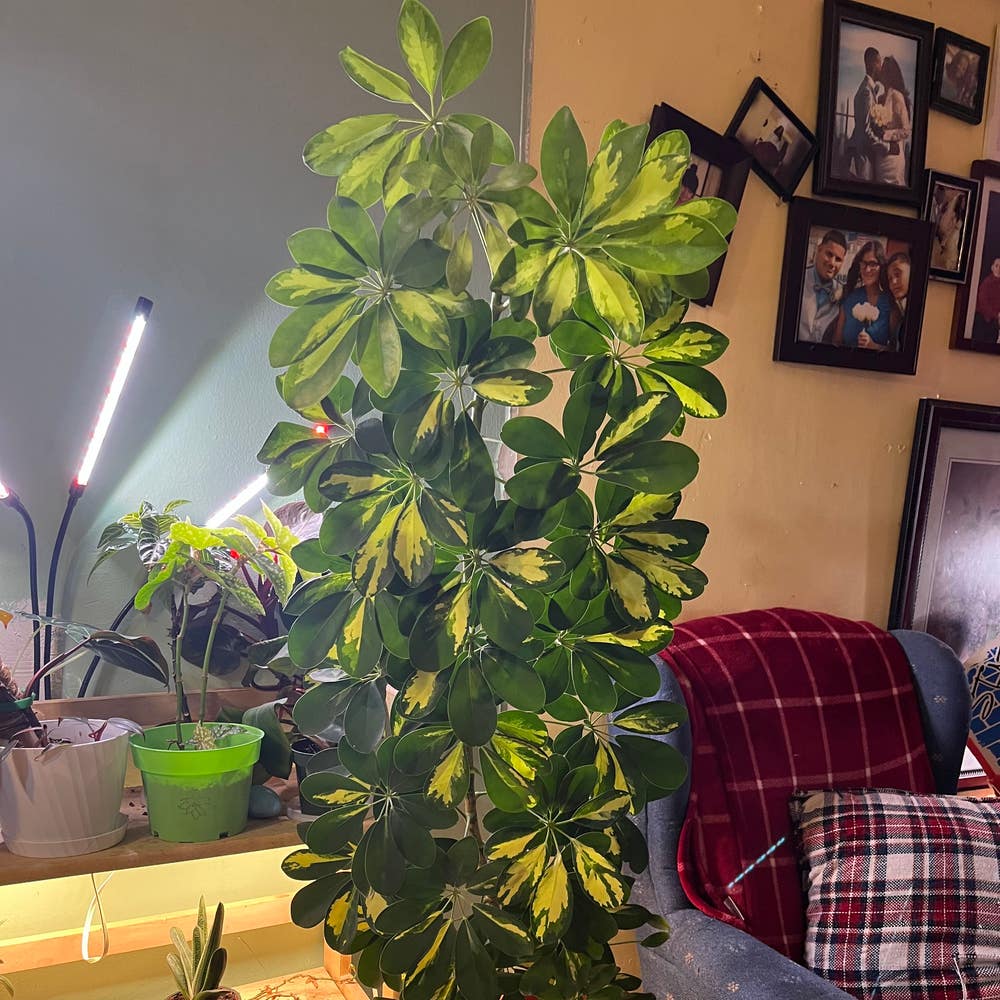
Variegated Dwarf Umbrella Tree Leaves Falling Over
Heptapleurum arboricola 'Variegata'
By the Greg Editorial Team
Jun 18, 2024•4 min read
This article was created with the help of AI so we can cover more plants for you. May contain errors. See one? Report it here.
Halt the leaf droop 🍂 with top tips for a thriving Dwarf Umbrella Tree!
- 🌱 Overwatering? Yellow leaves, musty smell—reduce water, improve drainage.
- 🌞 Sunlight & Temperature: Bright, indirect light and stable temps prevent droop.
- 📅 Consistent Care: Regular watering, feeding, and observation keep plants perky.
When Water Woes Make Leaves Limp
💧 Too Much H2O: The Overwatering Ordeal
Yellowing leaves and a musty smell are your plant's way of waving a white flag. If the soil feels like a wet sponge, it's time to dial back the water. Mushy stems and leaves that resemble overcooked vegetables are screaming for an intervention. To avoid turning your plant's home into a swamp, water deeply but allow the soil to dry out a bit between sessions. Ensure your pot has adequate drainage to prevent a waterlogged disaster.
🏜️ Parched Plants: The Underwatering Undertaking
Crispy leaves are the plant's equivalent of a parched throat. If the leaves feel like brittle paper, your plant is sending an SOS for hydration. Wilting and browning tips are the plant's dramatic way of telling you it's thirsty. Create a watering calendar that suits your plant's needs—check the soil moisture before you water, not just the calendar. If the soil is dry as a bone, it's time to quench that thirst. Remember, a quick perk-up post-watering is a good sign; continued droopiness means you've either gone too far or not far enough.

Light and Temperature: The Balancing Act
⛅️ Seeking the Light Without Getting Burned
Too much sun can turn the Variegated Dwarf Umbrella Tree into a crispy critter, while too little leaves it reaching for more. Strike a balance with bright, indirect sunlight—the plant's happy hour. Rotate your plant to ensure even growth; think equal opportunity for every leaf.
🧣 The Chill Factor: Keeping Your Tree Toasty Without the Toast
Avoid the chill—keep your tree in a stable environment away from drafts and cold windows. Aim for a temperature range of 65°F to 80°F to avoid the wilt and chill, creating a cozy sweater-like atmosphere for your plant.
❄️ The Cold Truth About Temperature Troubles
Sudden temperature changes can send your plant into a tizzy. Stability is key; maintain a consistent temperature to prevent leaf droop. Keep it away from heat sources in summer and cold windows in winter to avoid temperature tantrums.
🌡️ Setting Up a Stable and Suitable Climate for Consistent Leaf Cheer
Craft a climate that's just right—not too hot, not too cold. Think of it as setting up a personal comfort zone for your leafy friend. Monitor and adjust as needed to keep those leaves standing at attention and your Dwarf Umbrella Tree thriving.

The Nutrient Know-How: Feeding for Strength
🍃 Spotting Starvation in Your Stalks
Yellow leaves? They're not just trying a new autumn look. Nutrient deficiencies often manifest as discoloration or stunted growth. If your Dwarf Umbrella Tree looks like it's been on a diet it never signed up for, it's time to intervene.
Mixing a fertilizer cocktail tailored to your plant's needs can turn those yellow leaves back to a vibrant green. Remember, it's not about dumping the entire bottle; it's about precision. A soil test can be your best friend here, revealing exactly what's missing from your plant's diet.
🕰️ The Fertilizer Frequency Formula
Timing is everything. Your Dwarf Umbrella Tree craves a regular feeding schedule, but not a buffet that leads to a nutrient overdose. During the growing season, a monthly meal might be just right.
But watch for cues. If your plant starts looking like it's wearing oversized clothes (read: the leaves are too small), it might be time to increase the dosage. Conversely, if the leaves look like they're in a heavyweight boxing match (thick and crusty), pull back. It's a delicate dance, but with a little attention, you'll find the rhythm.

The Proactive Plant Parenting Plan
🌱 Routine to the Rescue: Crafting Consistent Care
Consistency isn’t just a buzzword; it’s the backbone of plant care. For your Variegated Dwarf Umbrella Tree, think of daily, weekly, and monthly tasks as the checkpoints of plant parenthood.
📅 Daily Duties
- Inspect leaves for signs of distress.
- Whisper sweet nothings to your plant (just kidding, but a little pep talk never hurts).
🗓️ Weekly Work
- Water your tree when the top inch of soil feels dry—no more guessing games.
- Prune any yellow or damaged leaves to keep things tidy.
📆 Monthly Musts
- Evaluate the plant’s growth; rotate it for even sun exposure.
- Check for uninvited guests, like pests or mold.
👀 Vigilant Vigil: Keeping an Eye Out for Early Warnings
Observation is your secret weapon. It’s less about having a green thumb and more about being a plant detective.
🔍 The Art of Observation
- Notice subtle shifts in leaf color or texture.
- Be alert to changes after environmental adjustments; plants are sensitive to their surroundings.
🛡️ Preemptive Peeks
- Keep an eye on the soil moisture; it’s the crystal ball of plant health.
- Regularly scan for pests—catching them early is easier than an exorcism later on.
⚠️ Safety First
This content is for general information and may contain errors, omissions, or outdated details. It is not medical, veterinary advice, or an endorsement of therapeutic claims.
Always consult a qualified healthcare professional before using any plant as food, medicine, or supplement.
Never eat any plant (or feed one to pets) without confirming its identity with at least two trusted sources.
If you suspect poisoning, call Poison Control (800) 222-1222, the Pet Poison Helpline (800) 213-6680, or your local emergency service immediately.
Spotted an error? Please report it here.
Prevent your Dwarf Umbrella Tree's leaves from dropping 🍂 by using Greg to balance watering, sunlight, and feeding schedules for a stable and happy plant.