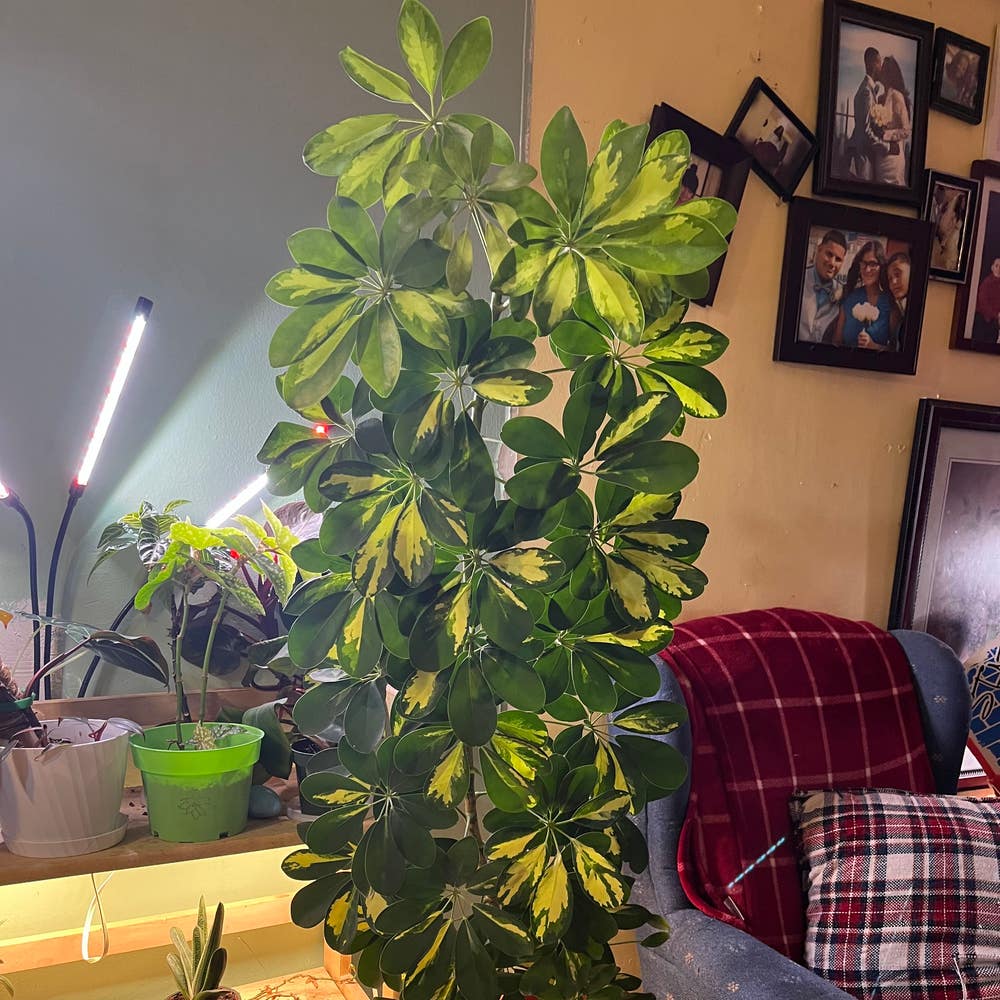
Variegated Dwarf Umbrella Tree Zones
Heptapleurum arboricola 'Variegata'
By the Greg Editorial Team
Sep 30, 2024•4 min read
This article was created with the help of AI so we can cover more plants for you. May contain errors. See one? Report it here.
Master the temperature secrets 🌡️ for a thriving Variegated Dwarf Umbrella Tree in your garden paradise!
- 🌡️ Variegated Dwarf Umbrella Tree thrives in USDA zones 9-11; avoid harsh winters.
- 🌞 Optimal growth occurs between 60°F and 80°F; protect from frost and extreme heat.
- 🏙️ Urban microclimates enhance growth; consider local conditions for successful planting.
Temperature Tolerance of Variegated Dwarf Umbrella Tree
❄️ Cold Tolerance Specifics
The Variegated Dwarf Umbrella Tree can handle temperatures as low as 30°F (-1°C). However, it is sensitive to frost, making it crucial to know your area's first and last frost dates when planning to plant.
☀️ Heat Tolerance Specifics
On the flip side, this tree thrives in warmer climates, with a maximum temperature tolerance of up to 90°F (32°C). During extreme heat, providing shade and maintaining moisture is essential for its health.
🌱 Ideal Temperature Ranges for Growth
For optimal growth, aim for temperatures between 60°F and 80°F (15°C to 27°C). Temperature fluctuations outside this range can negatively impact the tree's overall health and growth.
Understanding these temperature tolerances is vital for successfully cultivating the Variegated Dwarf Umbrella Tree. With the right conditions, you can ensure a thriving plant that adds beauty to your space.
Ideal Growing Regions for Variegated Dwarf Umbrella Tree
🌎 Examples of US States Suitable for Growth
The Variegated Dwarf Umbrella Tree thrives in USDA zones 9-11. Ideal states include Florida, California, Texas, and parts of Arizona, where the climate supports its growth.
In Florida, regions like Miami and Orlando offer warm temperatures year-round. California's coastal areas, such as San Diego, provide a perfect mix of warmth and humidity.
🌱 Factors Contributing to Ideal Growing Conditions
A warm climate is crucial for the Variegated Dwarf Umbrella Tree. Consistent temperatures above freezing
Microclimates and Their Impact
🌱 How Microclimates Can Extend Growing Zones
Microclimates play a crucial role in the growth of the Variegated Dwarf Umbrella Tree, allowing it to thrive beyond its typical hardiness zones. These localized climates can create conditions that are more favorable than the surrounding areas, enabling the tree to flourish even in less-than-ideal environments.
Several factors influence these microclimates. Building materials can absorb and retain heat, while vegetation can provide shade and moisture. Additionally, topography—such as hills or valleys—can affect wind patterns and temperature, creating pockets of warmth that benefit the tree.
🏙️ Examples of Microclimates that Benefit Variegated Dwarf Umbrella Tree
Urban gardens often serve as excellent microclimates for the Variegated Dwarf Umbrella Tree. The heat retained by buildings and pavement can create a warmer environment, which is particularly beneficial during cooler nights.
Protected areas, such as those shielded by fences or other structures, can also enhance growing conditions. These sheltered spots reduce wind exposure and minimize frost risk, allowing the tree to thrive in otherwise challenging climates.
Understanding these microclimates can significantly impact your gardening success. By identifying and utilizing these unique conditions, you can create a thriving environment for your Variegated Dwarf Umbrella Tree.
As we explore the ideal growing regions next, consider how these localized factors might influence your choice of planting location.
State-Level Suitability Analysis
🌞 List of US States Within Suitable Hardiness Zones
The Variegated Dwarf Umbrella Tree thrives in several warm climates across the United States. Ideal states include Florida, California, Texas, Louisiana, and parts of Arizona, where temperatures remain consistently mild and frost risk is minimal.
These regions offer the perfect blend of warmth and humidity, essential for the tree's growth. The low likelihood of frost allows for year-round cultivation, making these states a gardener's paradise for this tropical beauty.
❄️ List of US States Not Suitable for Growth
Conversely, some states are not conducive to the Variegated Dwarf Umbrella Tree's survival. North Dakota, Montana, Maine, and parts of the Midwest face harsh winters that can be detrimental to this plant.
The frequent frost and low temperatures in these areas create an inhospitable environment. This tree simply cannot withstand the cold, making these states unsuitable for its growth.
🚫 Reasons for Unsuitability in Certain States
The Variegated Dwarf Umbrella Tree has a cold tolerance limit of 30°F (-1°C). This means that any region experiencing temperatures below this threshold poses a significant risk to its survival.
Additionally, understanding first and last frost dates is crucial for gardeners in colder regions. Without this knowledge, the risk of frost damage increases, further complicating the tree's chances of thriving.
In summary, while the Variegated Dwarf Umbrella Tree flourishes in warm, frost-free areas, it struggles in colder climates. Knowing where it can thrive helps gardeners make informed decisions about planting and care.
As we explore the next section, we'll delve into how microclimates can impact the growth of this unique tree, potentially expanding its suitable zones.
⚠️ Safety First
This content is for general information and may contain errors, omissions, or outdated details. It is not medical, veterinary advice, or an endorsement of therapeutic claims.
Always consult a qualified healthcare professional before using any plant as food, medicine, or supplement.
Never eat any plant (or feed one to pets) without confirming its identity with at least two trusted sources.
If you suspect poisoning, call Poison Control (800) 222-1222, the Pet Poison Helpline (800) 213-6680, or your local emergency service immediately.
Spotted an error? Please report it here.
Grow your Variegated Dwarf Umbrella Tree flourishingly 🌿 by using Greg's tailored reminders and tips to navigate your local climate for optimal success!