Buttonweed
Also known as
Velvetleaf, Velvetleaf, Velvetleaf, velvet plant, velvetweed, chinese jute, china jute, crown weed, buttonweed, lantern mallow, butterprint, pie-marker, and Indian mallow
Taxonomy

Abutilon theophrasti
Abutilon
Malvaceae
Malvales

How to care for Buttonweed
How often to water your Buttonweed

every 9
Buttonweed needs 0.5 cups of water every 9 when it doesn’t get direct sunlight and is potted in a 5" pot.
Use our water calculator to personalize watering recommendations to your environment or download Greg for more advanced recommendations for all of your plants.

Water 0.5 cups every
9
Finding light for Velvetleaf in your home

a window
Buttonweed love being close to bright, sunny windows 😎.
Place it less than 1ft from a south-facing window to maximize the potential for growth.
Buttonweed does not tolerate low-light 🚫.
Select your region to see how the current weather in your area affects the placement of Buttonweed in your home 🏡.
How to fertilize Buttonweed

Most potting soils come with ample nutrients which plants use to produce new growth.
By the time your plant has depleted the nutrients in its soil it’s likely grown enough to need a larger pot anyway.
To replenish this plant's nutrients, repot your Buttonweed after it doubles in size or once a year—whichever comes first.
-
My favorite plant now.
-
My micans is getting huge and outgrowing it’s 3 foot moss pole which is great. Started shedding older leaves which I know plants can do during maturity to push energy toward new growing leaves. But a few of the leaves are yellow before falling off. Plant has drainage, adequate light ~10ft from a NE window with ~2 hrs of direct dawn light, airy tropical custom mix soil, and close to a humidifier. Am I just worrying or could yellow leaves be a sign of over/under watering? I use a moisture meter and end up watering it about once every 10-14 days but I know my smaller micans want water weekly so maybe it’s slight underwatering? I also only water the moss pole at that ~ 2 week mark so it’s pretty dry when I do so. Let me know if anyone has a super mature or climbing micans with this happening. If anyone uses moss poles (mine is plastic filled with sphagnum) let me know your routines/methods of watering. Mine would dump water in the plant soil if I just threw an upside down water bottle in it like people do. So I use a pressure mister and water it through the front with nutrients every other watering. I also know velvet leafs can be finicky when the weather turns cold & heaters are bing run so there’s daily changes in temp. Have a great weekend greg fam! #micans #philodendronmicans #velvetleaf #philodendron #climbing #mosspole
-
One of my new favorites plants that came home today! She is such a stunning purple plant and she has the softest leaves! 💜 Plus I found a use for my glass pitcher with a crack in it! #plantsofthe40thstreetbungalow #Velvetleaf #purpleplants #potsthatarenotpots
-
I just need all the help I can get for this sweet little plant that has so much meaning behind it!! #HappyPlants #floweringmaple
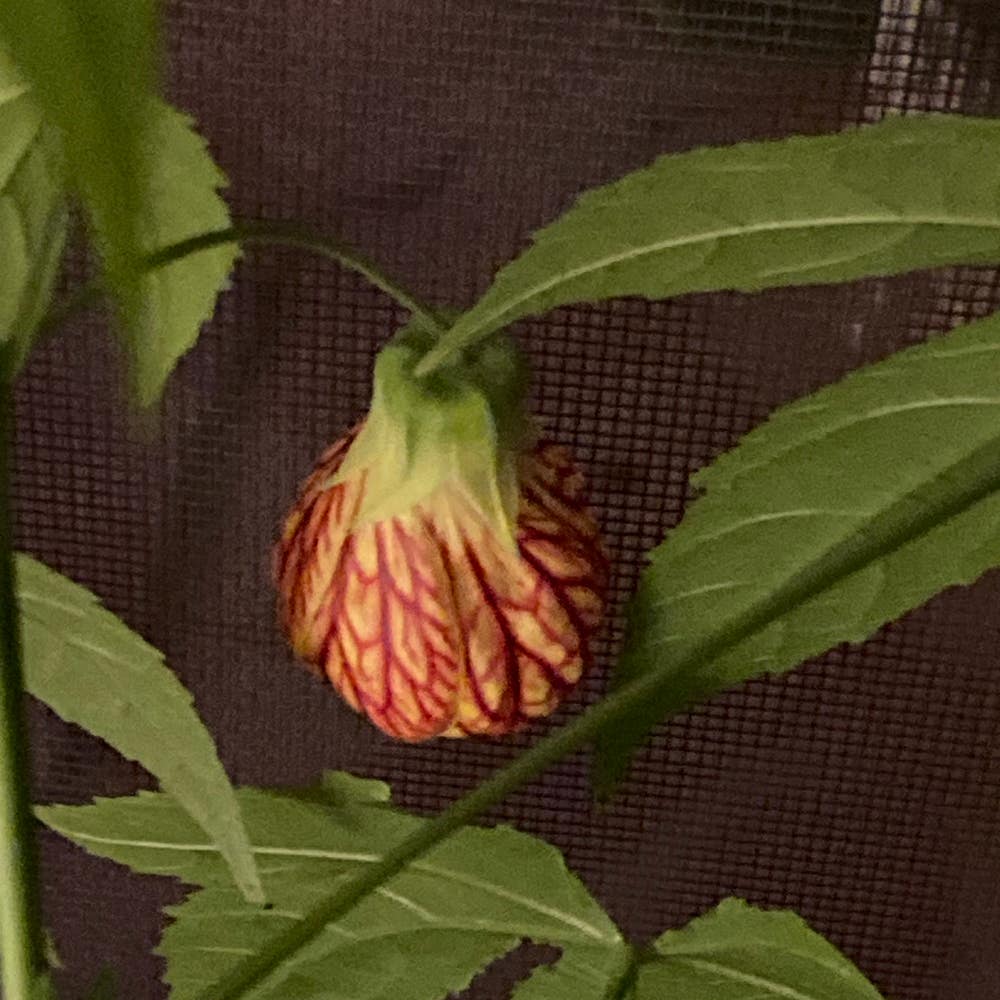

Care Summary for Buttonweed

Buttonweed
 Greg recommends:
 Water
Water
0.5 cups every 9 days
 Placement
< 1ft from a window
 Nutrients
Repot after 2x growth
Based on the 4” pot your plant is in, and that it doesn’t get direct sunlight.
 Trending in your area
















 Similar to Buttonweed

✨ Discover rare plants

Scindapsus pictus 'Si…

Aeonium 'Blushing Bea…

Euphorbia

Lithops
Skeleton Key Pothos
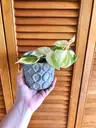
Philodendron 'Gabby'

Chinese Evergreen 'Go…

Phalaenopsis schiller…

Euphorbia baioensis

Tuber Fleeceflower

Miss All-American Bea…

Begonia hydrocotylifo…

Aloe 'Lavender Star'

Red Mistletoe Cactus

Haworthia emelyae com…

Chandelier Plant
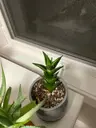
Astroloba congesta