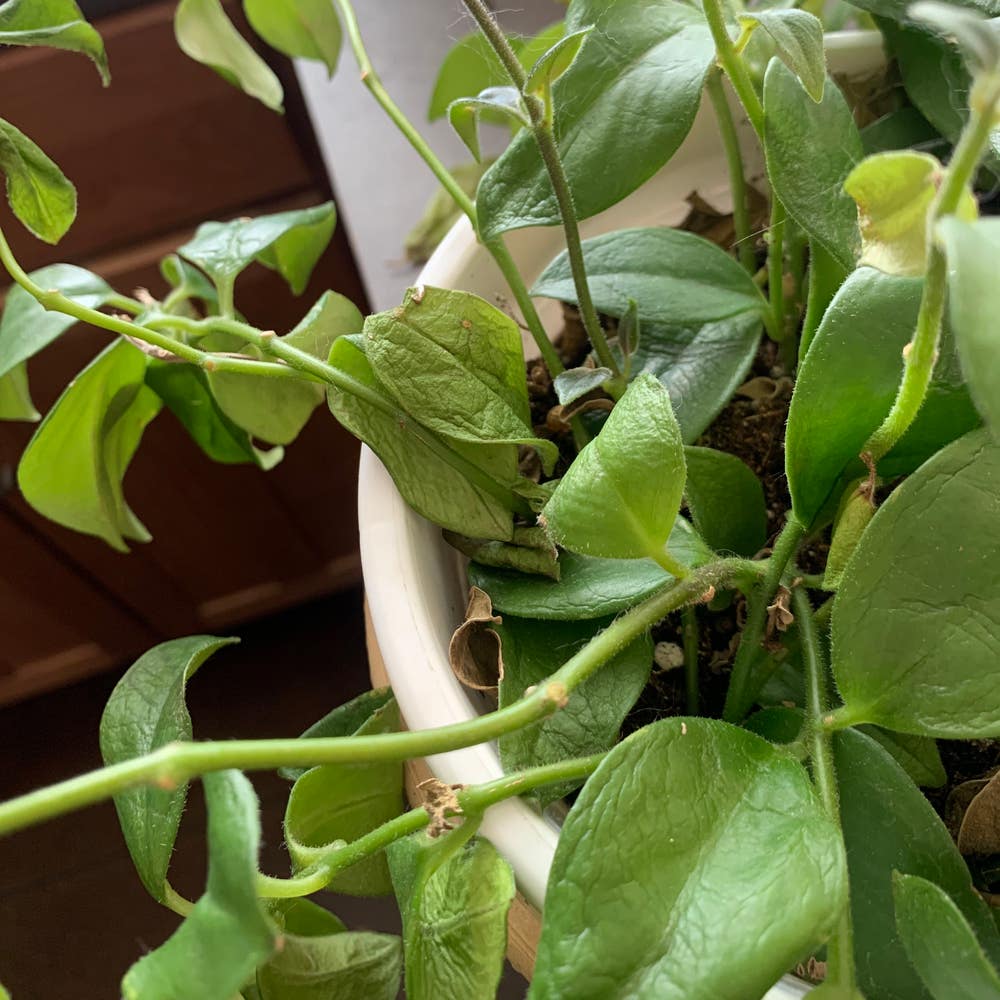
💄 Why Is My Mona Lisa Lipstick Plant Not Doing Well?
Aeschynanthus radicans 'Mona Lisa'
By the Greg Editorial Team
Jun 18, 2024•5 min read
This article was created with the help of AI so we can cover more plants for you. May contain errors. See one? Report it here.
Nurse your Mona Lisa Lipstick Plant back to health 🌿 by tackling these typical care slip-ups!
- 🌧️ Over-watering leads to yellow leaves; let soil dry out.
- ☀️🌱 Balance light exposure to prevent burnt or pale leaves.
- 🌡️ Maintain 65-75°F to avoid temperature stress and dropping leaves.
When Water Works Against You
💧 Over-watering Woes
Spot the Signs
Yellowing leaves and wilting are the plant's way of waving a white flag. If the soil feels as soggy as a soaked sponge, you've overdone it with the H2O.
Drying Out
To rescue an over-watered plant, first, stop watering. Let the soil dry out like yesterday's coffee grounds. If the pot lacks drainage, consider a transplant to prevent your plant from drowning in its own home.
💦 The Thirsty Plant
Crispy Leaves?
When leaves resemble potato chips, it's a tell-tale sign of under-watering. Check the soil—if it's drier than a humorist's delivery, it's time to hydrate.
Quenching the Thirst
Proper hydration doesn't mean a flood. Water the plant until it drains out the bottom, ensuring the roots get a good drink without going overboard. Remember, consistency is key; keep a watering schedule to avoid turning your plant into a desert wanderer or a swamp resident.

Light and Shade: Finding the Balance
🌞 Too Much Sun
Burnt leaves are a telltale sign your Mona Lisa Lipstick Plant is getting more sun than it can handle. The leaves may crisp up, showing brown spots or edges, and colors may appear bleached. It's a clear SOS for shade.
Shifting Shades
To protect your plant from harsh light, gradually move it to a spot with indirect sunlight. Consider using sheer curtains or placing it behind taller plants to filter the intensity. Remember, it's about the quality of light, not just quantity.
💡 Not Enough Light
If you notice leggy stems and pale leaves, your plant is likely deprived of adequate light. It's stretching out for more, much like a sunbather inching closer to the pool's sunny edge.
Let There Be Light
Ensure your plant gets its fill by positioning it in a space with bright, indirect light. Rotate the plant regularly to promote even growth and prevent it from reaching for the light one-sidedly. Adjust its location with the changing seasons to maintain the right light levels.

A Matter of Degree: Temperature and Your Plant
Dropping leaves can be a red flag for temperature stress. Your Mona Lisa Lipstick Plant might be throwing a tantrum because it's too chilly or overheated.
🌡️ Keeping it Cozy: Tips for Maintaining Ideal Temperatures
Avoid drafts and direct heat like they're bad news. These can cause your plant's leaves to drop faster than a hot potato.
Keep the thermostat steady. Fluctuations are the enemy. Aim for a comfortable 65-75°F (18-24°C) to keep your plant from getting the shivers or sweats.
Insulate your space in winter to prevent your plant from thinking it's stuck in a snow globe. In summer, use sheer curtains to fend off that intense sun glare.
Monitor the ambient temperature with a thermometer. It's like a health check-up for your plant's environment.
Remember, your plant's comfort zone is a Goldilocks scenario: not too hot, not too cold. Keep it stable, and you'll avoid those dramatic leaf drops.

Uninvited Guests: Dealing with Pests and Diseases
🐜 Pests on Patrol
Identifying the culprits is step one. Spider mites leave tiny webs, aphids make things sticky, and scale insects look like little bumps. These pests are like that one annoying relative who always overstays their welcome.
Eviction methods need to be safe for your plant. Insecticidal soaps or neem oil can act as your plant's personal bodyguards. For a non-toxic approach, consider introducing predatory insects like ladybugs—they're the unpaid interns of the garden world, working hard to keep the pests in check.
🍄 Fungus Among Us
When leaves sport discoloration or powdery spots, it's a red flag for mold or fungus. It's like finding out there's a secret party in your plant's pot that you weren't invited to.
Stopping the fungal fiesta involves cranking up airflow and maybe hitting the problem with a fungicide. Think of it as flipping on the lights at a party and telling everyone to go home. Keep the soil dry and the air moving; mold and fungus hate a good breeze.
Remember, regular monitoring is like checking your plant's ID at the door. Catch those pests before they make themselves at home, and always be ready to show them the door again if they try to sneak back in.
Root of the Problem: Tackling Root Rot
🦠 Smelly soil? Signs of root rot
If your plant's perfume is more eau de decay than fresh earth, root rot may be the culprit. Yellow leaves and stunted growth are the plant's cry for help, while roots that resemble overcooked spaghetti spell trouble. Don't be fooled by dry topsoil; the real problem is a party of pathogens below the surface.
Starting fresh: Steps to save your plant's roots
🕵️ Step 1: Unearth and Assess
Gently lift your plant from its pot and brush off the soil. Healthy roots should be firm and white, not brown and mushy. If they squish like a horror movie prop, it's time for action.
✂️ Step 2: Surgical Snips
With sterilized scissors, perform an impromptu rootectomy, cutting away the rotten parts. No mercy—only the healthy roots should remain.
🌱 Step 3: Fresh Soil and Pot
Repot your patient in fresh, well-draining soil, and consider a pot upgrade for better drainage. This is like a spa day for your plant's foundation, minus the cucumber water.
💧 Step 4: Water Wisely
Post-op care includes a moderate watering regimen. Love your plant, but don't drown it in affection. Overwatering is the enabler of root rot, so keep the H2O in check.
📈 Step 5: Monitor and Adjust
Keep a close eye on your green buddy. Adjust your watering routine and ensure the pot has proper drainage to prevent a sequel to this soggy saga.
⚠️ Safety First
This content is for general information and may contain errors, omissions, or outdated details. It is not medical, veterinary advice, or an endorsement of therapeutic claims.
Always consult a qualified healthcare professional before using any plant as food, medicine, or supplement.
Never eat any plant (or feed one to pets) without confirming its identity with at least two trusted sources.
If you suspect poisoning, call Poison Control (800) 222-1222, the Pet Poison Helpline (800) 213-6680, or your local emergency service immediately.
Spotted an error? Please report it here.
Keep your Mona Lisa Lipstick Plant thriving 🌿 with Greg's custom watering schedules and expert community advice to prevent pests and diseases!