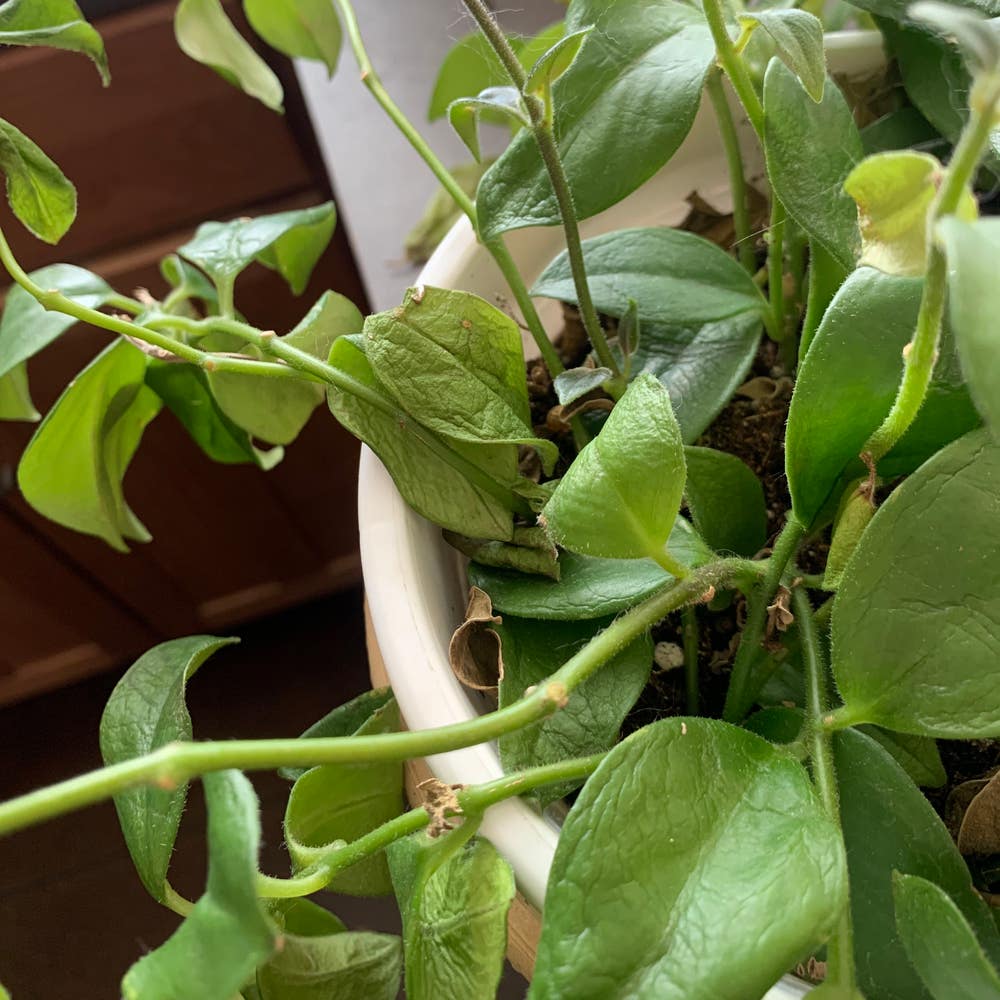
Why Are My Mona Lisa Lipstick Plant Leaves Curling?
Aeschynanthus radicans 'Mona Lisa'
By the Greg Editorial Team
Jun 18, 2024•3 min read
This article was created with the help of AI so we can cover more plants for you. May contain errors. See one? Report it here.
Unravel the mystery of curling leaves 🍃 and revive your Lipstick Plant's allure with expert care tips!
- Temperature and drafts can make leaves curl up or down.
- 🌊💧 Over/underwatering and light affect leaf curling; balance is key.
- 🌱 Nutrient balance and monitoring prevent curling; use soil tests and fertilizers.
Spotting the Culprits: Direct Causes of Leaf Curling
🌡️ Temperature Tantrums and Drafty Dramas
Temperature swings are the drama queens of the plant world, causing your Mona Lisa Lipstick Plant to throw a leaf-curling tantrum. Too hot, and the leaves curl up, trying to conserve water; too cold, and they curl down, as if seeking warmth. Drafts? They're the sneaky culprits that can stress your plant into a curled-leaf frenzy, whether they're hot or cold.
💧 Thirsty Roots or Drowning Despair
Overwatering your plant is like throwing it a pool party without an exit strategy, leading to soggy soil and curled leaves begging for mercy. Underwatering, on the other hand, turns the soil into a desert, with leaves curling tighter than a miser's fist, hoarding every last drop. Roots need a drink, not a swim or a drought.
🌞 Light: Finding the Sweet Spot
Direct sunlight can fry your plant's leaves faster than an egg on a sidewalk, causing them to curl up in self-defense. Insufficient light, however, leaves them stretching out, desperate for a sunbeam. Aim for that bright, indirect light sweet spot, where your plant can photosynthesize without playing hide and seek with the sun.
🍽️ Hungry for Nutrients
A nutrient-starved plant is like a hangry diner—leaves curling in protest, craving a good feed. Conduct a soil test to uncover what's missing in the menu. If your plant's leaves are curling, it might be time to serve up a balanced meal of fertilizer to satisfy those hungry roots.

Fixing the Curl: How to Smooth Things Over
💡 Making Peace with the Thermostat
Temperature fluctuations are a no-go for your Mona Lisa Lipstick Plant. Ensure a steady climate by keeping it away from drafts and direct heat sources. Use a thermometer to monitor the room temperature, aiming for a consistent range that mimics the plant's natural habitat.
🚰 Watering Wisdom
Your plant's thirst is specific: it dislikes both desert dryness and swampy soils. Start with a weekly watering schedule, adjusting based on the plant's feedback. If the leaves perk up, you're on track. Droopy or yellow leaves? Time to reassess your approach.
🌞 Let There Be (The Right Amount of) Light
Bright, indirect light is the sweet spot. Too much sun and the leaves will protest; too little, and they'll sulk. Observe your plant's reaction as you find a spot that's just right, and consider using sheer curtains to filter intense sunlight.
🍽️ Feeding Finesse
Nutrients are your plant's secret sauce. Choose a balanced, water-soluble fertilizer and serve it up monthly during the growing season. In winter, give the plant a break to rest. Remember, overfeeding is as harmful as starving—moderation is key.

Prevention: Keeping Those Leaves Lush and Flat
💨 Climate Control Mastery
Rotate your plant. This simple act ensures even growth and prevents your Mona Lisa Lipstick Plant from throwing a leafy tantrum. Adjust care with the seasons—less water in winter, more shade in summer. Keep temperatures consistent; think mild spring days, all year round.
💦 Moisture Monitoring
Hygrometers and thermometers are not just for show; they're essential for keeping an eye on your plant's environment. Soil should feel like a wrung-out sponge—moist but not waterlogged. Use tools like moisture meters or the good old finger test to keep soil moisture just right.
🌞 Light and Nutrient Love
Bright, indirect light is the sweet spot for your plant. Rotate the pot regularly for balanced exposure. Keep soil pH neutral, ensuring nutrients are readily available. Regular check-ups on leaf color and texture can give you insights into your plant's health, helping you adjust light and nutrient levels as needed.

⚠️ Safety First
This content is for general information and may contain errors, omissions, or outdated details. It is not medical, veterinary advice, or an endorsement of therapeutic claims.
Always consult a qualified healthcare professional before using any plant as food, medicine, or supplement.
Never eat any plant (or feed one to pets) without confirming its identity with at least two trusted sources.
If you suspect poisoning, call Poison Control (800) 222-1222, the Pet Poison Helpline (800) 213-6680, or your local emergency service immediately.
Spotted an error? Please report it here.
Ensure your Mona Lisa Lipstick Plant leaves stay elegantly flat 🍃 with Greg's personalized care reminders, helping you adjust to the whims of nature without the stress.