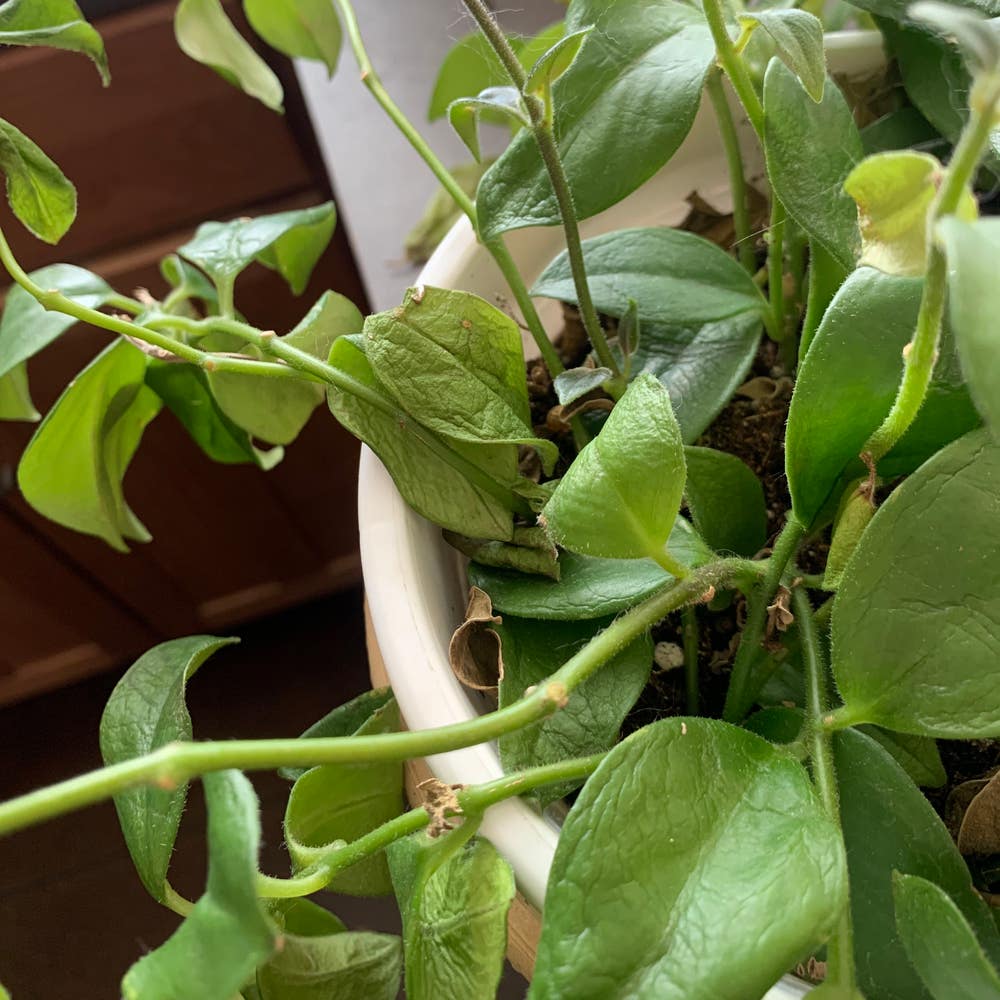
Why Are My Mona Lisa Lipstick Plant Leaves Falling Over?
Aeschynanthus radicans 'Mona Lisa'
By the Greg Editorial Team
Jun 18, 2024•4 min read
This article was created with the help of AI so we can cover more plants for you. May contain errors. See one? Report it here.
Rescue your wilting Lipstick Plant 🌿 and restore its upright glory with these vital care secrets! 🌟
- Overwatering causes droopiness, let soil dry before watering again.
- 🌞 Bright, indirect sunlight is key; rotate for even growth.
- Prune in spring/summer for a fuller, healthier plant.
When Water Works Against You
🌊 Overwatering Overload
Yellowing leaves and a soggy soil feel are your plant's way of waving a white flag. Overwatering can lead to a nutrient uptake crisis, leaving your plant as malnourished as it is waterlogged. To combat this, stop watering immediately and let the soil dry out. Check for proper drainage and, if necessary, repot with fresh, well-draining soil. Once the soil feels like a dry desert on top, that's your cue to water again, but with moderation.
🏜️ The Thirsty Plant Plight
Wilting leaves and browning tips are your plant's cry for help in a drought. To avoid this, check the soil's moisture by feeling an inch below the surface; it should be dry before you water again. When you do water, do so thoroughly, allowing excess to drain away. Adjust your watering schedule based on the plant's environment, considering factors like temperature and humidity. Remember, a thirsty plant is better than a drowned one.

Light and Temperature Tango
🌞 Seeking the Perfect Sunbeam
Bright, indirect sunlight is the sweet spot for your Mona Lisa Lipstick Plant. Direct sun can lead to a leafy equivalent of a sunburn, while too little light can cause the plant to stretch and strain towards the light, resulting in weak growth.
Rotate your plant periodically to promote even growth and prevent it from leaning towards the light source. If you notice yellowing or browning on the tips, it's a signal to adjust its position.
❄️ Keeping the Chill at Bay
The Mona Lisa Lipstick Plant prefers a stable, warm environment, ideally between 65-75°F (18-24°C). Sudden temperature drops or drafts can stress your plant, leading to droopy leaves.
In winter, shield your plant from cold windows, and in summer, protect it from the intense heat that can accumulate behind glass. Consistency is key; think of maintaining a comfortable room temperature that avoids extremes.

Feeding Frenzy: Nutrients Needed
💡 Spotting Starvation in Leaves
Yellow leaves can be a distress signal; they're practically holding up a sign that says "I need nitrogen!" If your plant's growth seems stunted, it might be crying out for potassium. When it comes to nutrients, your Mona Lisa Lipstick Plant isn't playing hard to get—it's telling you exactly what it needs.
Balanced diets aren't just for humans. Your plant thrives on a mix of nutrients, and a soil test can be the Rosetta Stone for understanding its cravings. Once you crack the code, feed it during the growing season. It's like a power breakfast for your plant's day ahead.
🍽️ The Fertilizer Fix
To properly pamper your plant, think of fertilizer as a spa treatment—it should be rejuvenating, not overwhelming. Choose a balanced N-P-K (nitrogen, phosphorus, potassium) blend and don't forget the micronutrients. It's like a multivitamin for your plant, and just as with humans, dosage matters.
Timing is everything. Apply fertilizer when your plant is in growth mode, not when it's trying to hibernate. Think of it as a seasonal feast; your plant's version of a Thanksgiving dinner, but spread out over the growing season to keep it from getting bloated.

Tactical Pruning and Plant Care
✂️ Snip Snip for Health
Pruning isn't just a cosmetic fix; it's vital for your Mona Lisa Lipstick Plant's health. Timing is crucial—spring or early summer, when the plant is in its growth phase, is ideal. Use sharp, sterilized shears to make clean cuts right where the leaf meets the stem. This isn't just a trim; you're the director of your plant's growth narrative.
Encouraging Growth Without the Droop
Pruning encourages the plant to redirect its energy to healthier parts. Don't be overzealous; removing more than one-third of the plant can cause stress. Aim for strategic snips that promote a fuller, bushier appearance, and always snip just above a leaf node to encourage new growth.
The Long Game: Ongoing Care
Routine care is the secret sauce to a perky plant. Check weekly for any signs of droopiness or damage. Prune as needed, but also ensure your plant isn't sitting in a draft or scorching near a heat source. A stable environment helps maintain those upright leaves.
Preventative Measures to Keep the Leaves Lively
Be proactive with your plant care. Regularly inspect for pests, and if you spot trouble, act fast. Early detection means less hassle later. And remember, your plant's not just surviving, it's thriving under your watchful eye and careful snips.
⚠️ Safety First
This content is for general information and may contain errors, omissions, or outdated details. It is not medical, veterinary advice, or an endorsement of therapeutic claims.
Always consult a qualified healthcare professional before using any plant as food, medicine, or supplement.
Never eat any plant (or feed one to pets) without confirming its identity with at least two trusted sources.
If you suspect poisoning, call Poison Control (800) 222-1222, the Pet Poison Helpline (800) 213-6680, or your local emergency service immediately.
Spotted an error? Please report it here.
Ensure your Mona Lisa Lipstick Plant thrives 🌿 with Greg's custom watering schedules, nutrient tracking, and pruning reminders, tailored to keep those leaves perky and healthy!