


Snakeshead
Also known as
Adder's root, Arum, Wild arum, Arum lily, Lords-and-ladies, Devils and angels, Cows and bulls, Cuckoo-pint, Soldiers diddies, Priest's pintle, Adam and eve, Bobbins, Naked girls, Naked boys, Starch-root, Wake robin,, Friar's cowl, Sonsie-give-us-your-hand, Jack in the pulpit and Cheese and toast
Taxonomy

Arum maculatum
Arum
Araceae
Alismatales

How to care for Snakeshead
How often to water your Snakeshead

every 9
Snakeshead needs 0.5 cups of water every 9 when it doesn’t get direct sunlight and is potted in a 5" pot.
Use our water calculator to personalize watering recommendations to your environment or download Greg for more advanced recommendations for all of your plants.

Water 0.5 cups every
9
Finding light for Snakeshead in your home

a window
Snakeshead love being close to bright, sunny windows 😎.
Place it less than 1ft from a south-facing window to maximize the potential for growth.
Snakeshead does not tolerate low-light 🚫.
Select your region to see how the current weather in your area affects the placement of Snakeshead in your home 🏡.
How to fertilize Snakeshead

Most potting soils come with ample nutrients which plants use to produce new growth.
By the time your plant has depleted the nutrients in its soil it’s likely grown enough to need a larger pot anyway.
To replenish this plant's nutrients, repot your Snakeshead after it doubles in size or once a year—whichever comes first.
-
#PlantsMakePeopleHappy #ItalianArum #OutdoorGrowing It can’t be stopped. Any tips on controlling? Came with property and apparently likes it here a lot
-
Why is it turning purple #ItalianArum
-
Just identified this as an #italianarum. Can it grow roots again? So, I pulled this out of the ground as gently and carefully as I could but accidentally tore off the roots and the little "ball" connecting to the roots. I think I tore it off really close to that zone, though. Will it grow back, or is it a loss? #happyplants #plantsmakepeoplehappy #plantaddict #planttherapy #plantcorner #plantlove #iloveplants #newgrowth
-
My daughter bought me 2 bulbs early in the summer. They were Italian arum. I had never heard of this plant. So I put them in a pot and watered them. Nothing ever happened. I thought they were no good. I never threw them out. Well I actually didn't pay them any attention. To my surprise today I looked and I was more than excited to see this leaf and others poking through the soil.
-
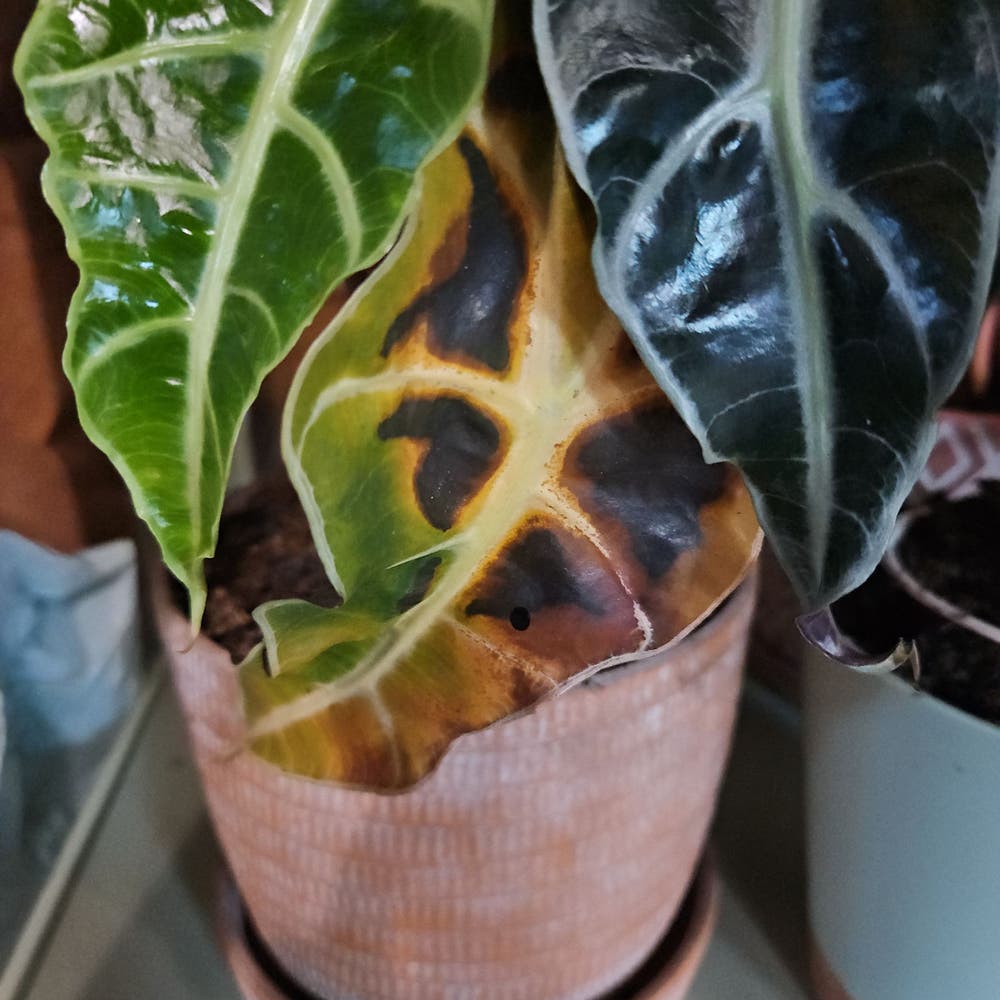
Leaf browning and dying off. Should I be worried? #ItalianArum
Care Summary for Snakeshead

Snakeshead
 Greg recommends:
 Water
Water
0.5 cups every 9 days
 Placement
< 1ft from a window
 Nutrients
Repot after 2x growth
Based on the 4” pot your plant is in, and that it doesn’t get direct sunlight.
 Trending in your area













 Similar to Snakeshead


✨ Discover rare plants
Astroloba congesta

Dinteranthus microspe…

Anastasia Weeping Fig

Hoya 'Millie'

Sedum 'White Diamond'

Peperomia 'Harmony's …

Anthurium 'Fantasy Lo…

Kilimanjaro Plant
Carolina Reaper

Aglaonema 'Green Bowl'

Ceropegia simoneae

Bonsai Crassula

Begonia hydrocotylifo…

Pink Ruby Sedevaria

Tuber Fleeceflower

Burro's Tail

Miss All-American Bea…
