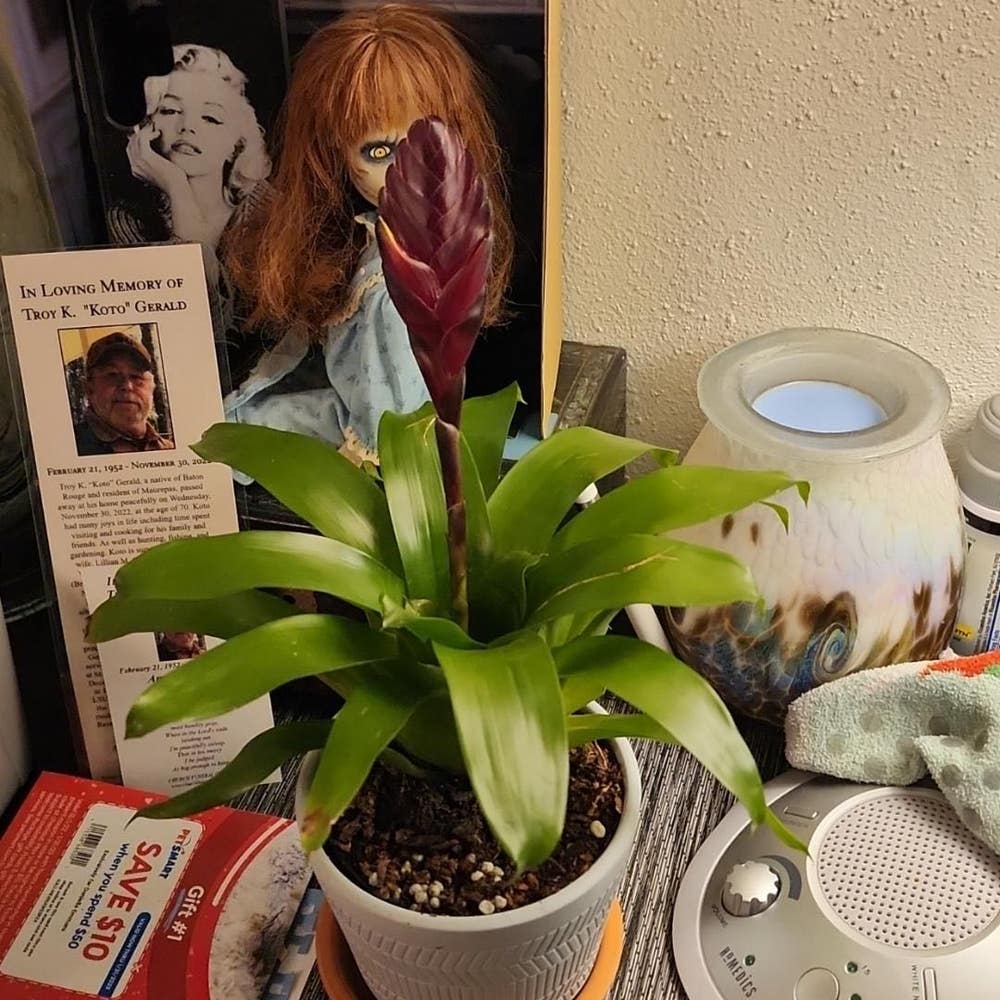
How to Cure Leaves Falling Over on Your Lobster Claw 🦞
Vriesea carinata
By the Greg Editorial Team
Oct 16, 2024•3 min read
This article was created with the help of AI so we can cover more plants for you. May contain errors. See one? Report it here.
- 💧 Overwatering causes drooping leaves; let soil dry and use well-draining mix.
- 🌱 Underwatering leads to crispy edges; water thoroughly until excess drains out.
- 🐛 Pests like aphids harm Lobster Claw; inspect regularly and treat with neem oil.
Diagnosing the Problem
💧 Overwatering: Symptoms and Solutions
Overwatering is a common issue for Lobster Claw plants. Look for yellowing leaves and mushy stems as key symptoms.
Root rot is another red flag, characterized by dark, mushy roots. If you notice these signs, it’s time to act.
Solutions:
- Allow the soil to dry out before the next watering.
- Improve drainage by repotting in well-draining soil. This can be moderately challenging.
- Always use pots with drainage holes to prevent water accumulation.
🌵 Underwatering: Symptoms and Solutions
Underwatering can also lead to drooping leaves. Symptoms include crispy, brown leaf edges and soil pulling away from the pot edges.
If your plant shows these signs, it’s crucial to adjust your care routine.
Solutions:
- Water thoroughly until excess drains out of the bottom. This is an easy fix.
- Establish a consistent watering schedule based on seasonal changes.
- Monitor soil moisture regularly using a moisture meter to ensure optimal hydration.
🥦 Nutrient Deficiencies: Identifying and Correcting
Nutrient deficiencies can stunt your Lobster Claw's growth. Common signs include yellowing leaves from nitrogen deficiency and browning leaf tips from potassium deficiency.
Identifying these issues early can make a significant difference.
Solutions:
- Use a balanced fertilizer every 4-6 weeks during the growing season. This is an easy step.
- Conduct a soil test to determine specific nutrient needs.
- Amend the soil with organic matter to improve nutrient content.
🐞 Pest Infestations: Common Pests and Treatment
Pests can wreak havoc on your Heliconia. Common culprits include aphids, which cause leaf curling, and spider mites, which leave fine webbing and stippled leaves.
Regular inspections can help catch these pests early.
Treatment Methods:
- Regularly inspect plants for signs of pests. This can be moderately challenging.
- Use insecticidal soap or neem oil for effective treatment.
- Introduce beneficial insects like ladybugs for natural pest control.
By diagnosing these problems early, you can take proactive steps to keep your Lobster Claw healthy and thriving. Next, we’ll explore how to revive a drooping Lobster Claw and ensure it stays vibrant.
Troubleshooting Common Issues
🌊 How to Revive a Drooping Lobster Claw
Reviving a drooping Lobster Claw starts with assessing its watering needs. Adjust your watering routine based on the symptoms you observe.
Next, check for pests. If you spot any, treat them promptly to prevent further damage.
Finally, ensure your plant is in an environment with adequate humidity and temperature. Heliconia thrives in warm, humid conditions, so make adjustments as necessary.
🛡️ Long-term Care Strategies to Prevent Leaf Drooping
Establishing a consistent care routine is key to preventing future drooping. Regularly water, fertilize, and monitor for pests to keep your plant healthy.
Creating an optimal growing environment is equally important. Maintain humidity and temperature levels that suit Heliconia, ensuring it remains vibrant and strong.
👩⚕️ When to Seek Professional Help
Sometimes, despite your best efforts, your Lobster Claw may still droop. If this happens, it might be time to seek professional help.
Look for signs like persistent drooping or severe pest infestations. Consulting local horticulturists or plant care specialists can provide you with the expertise needed to tackle these challenges effectively.
With the right care and attention, your Lobster Claw can flourish beautifully!
⚠️ Safety First
This content is for general information and may contain errors, omissions, or outdated details. It is not medical, veterinary advice, or an endorsement of therapeutic claims.
Always consult a qualified healthcare professional before using any plant as food, medicine, or supplement.
Never eat any plant (or feed one to pets) without confirming its identity with at least two trusted sources.
If you suspect poisoning, call Poison Control (800) 222-1222, the Pet Poison Helpline (800) 213-6680, or your local emergency service immediately.
Spotted an error? Please report it here.
Keep your Lobster Claw thriving 🌿 by using Greg's tailored watering reminders and nutrient tips to tackle drooping leaves and pests effectively!