How Should Hoya australis 'Bordvare' Be Cut Back?
Hoya australis 'Bordvare'
By the Greg Editorial Team
Jun 18, 2024•3 min read
This article was created with the help of AI so we can cover more plants for you. May contain errors. See one? Report it here.
- Spring/early summer pruning enhances Hoya's health and blooming.
- Sterilize tools, prune at nodes for clean cuts and disease prevention.
- Post-trim care: let cuts heal, then bright light, no immediate fertilizer.
Best Times to Get Snipping
🌸 Seasonal Smarts
Spring into action when spring arrives. This is the prime time for pruning your Hoya australis 'Bordvare'. The plant is waking up, stretching its limbs, and ready to grow. Early summer is also acceptable, but it's like hitting a sweet spot – not too early, not too late. Pruning in the dormant phase is a no-go; it's like expecting a bear to start dancing during hibernation.
👀 Watch for the Signs
Your Hoya will tell you when it's time for a trim. Look for new growth or a pause in blooming – these are your cues. Faded blooms? They're practically begging for a snip. Leggy stems are a cry for help, reaching for the light in all the wrong ways. Keep an eye out for these signs; they're the plant's way of nudging you into action.

Pruning Like a Pro
🛠️ Gear Up
Before you dive into pruning, sterilize your tools. A swab of isopropyl alcohol or a bleach solution is like a flu shot for your Hoya—preventing nasty infections. Post-trim, clean those shears again; it's basic hygiene for the next plant spa day.
🌿 Making the Cut
Sharp and clean are the watchwords for your pruning shears. When you're ready to snip, think of it as directing traffic—each cut guides your Hoya's energy. Aim for a cut close to a node, and remember, it's a haircut, not a beheading—never remove more than a third of the plant.
Quick Steps for Pruning
- Inspect your Hoya for dead or yellowing leaves—these are your first targets.
- Find the node: that's your cut's finish line.
- Angle your shears and make a confident cut. Hesitation leads to jagged edges.
- Step back after each snip. It's easy to get carried away.
💐 Flower Power Pruning
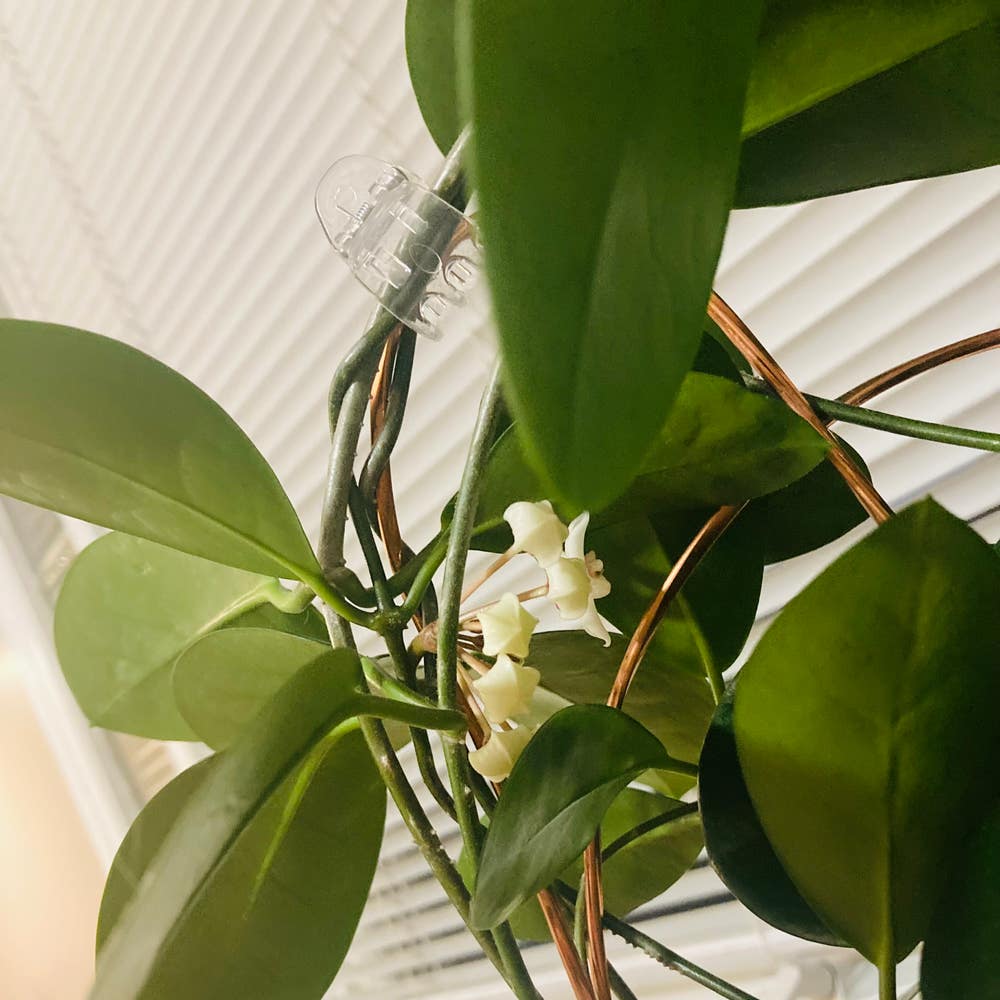
To coax your Hoya into blooming, think like a coach—trimming back leggy stems encourages the plant to focus on flowers. It's a delicate balance, though. Over-pruning is like overtraining; it can leave your Hoya too exhausted to put on a floral show.

Tackling the Tangles
🌿 Vine Vigilance
Overgrowth can stifle your Hoya's vitality. Regularly check for vines that are outgrowing their space. If they're getting too long or starting to look untidy, it's time for action. Use sharp, sterilized scissors to trim the vines back to a healthy leaf node. This encourages new growth and helps maintain the plant's shape.
🌱 Lush not Leggy
A leggy Hoya loses its charm. To encourage a bushier appearance, prune above a leaf node where new branches can sprout. Avoid over-pruning; just a few strategic cuts can transform your Hoya into a fuller, more attractive plant. Remember, moderation is key to avoid shocking the plant and halting its growth.

Post-Pruning Care
🌱 Healing and Helping
After pruning your Hoya australis 'Bordvare', hold off on watering to let the cuts heal. This is not the time for a drink; it's recovery time. Place your plant in a spot with bright, indirect light—direct sunlight is too harsh for fresh wounds.
🌿 Growth Watch
Patience is essential as your Hoya recovers. Celebrate new growth—it's a sign your plant is on the mend. Keep a vigilant eye for any signs of distress like yellowing or drooping leaves, and be ready to tweak your care routine. Remember, no fertilizer just yet—your Hoya is still in its detox period.
⚠️ Safety First
This content is for general information and may contain errors, omissions, or outdated details. It is not medical, veterinary advice, or an endorsement of therapeutic claims.
Always consult a qualified healthcare professional before using any plant as food, medicine, or supplement.
Never eat any plant (or feed one to pets) without confirming its identity with at least two trusted sources.
If you suspect poisoning, call Poison Control (800) 222-1222, the Pet Poison Helpline (800) 213-6680, or your local emergency service immediately.
Spotted an error? Please report it here.
Prune your Hoya australis 'Bordvare' like a pro ✂️ with Greg's custom pruning alerts, ensuring you never miss the perfect time for a trim.