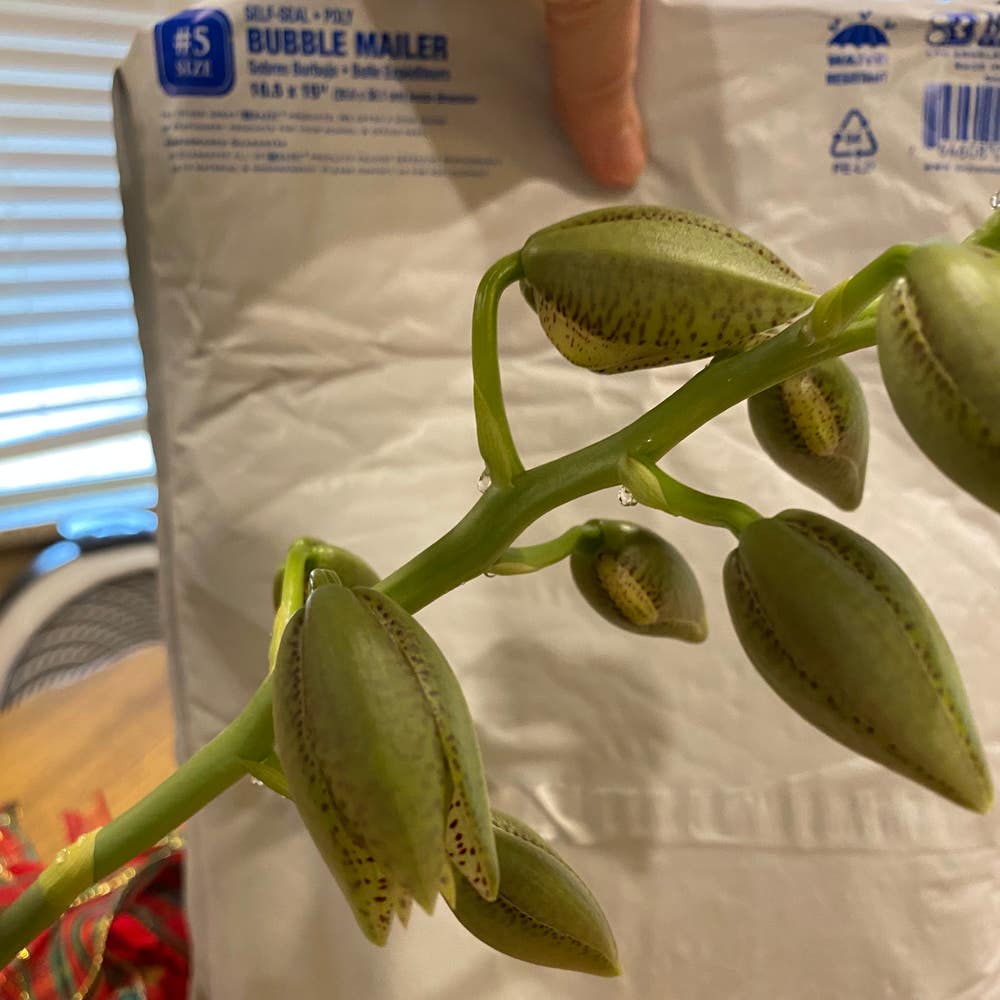
How and When Should I Cut Back My Catasetum 'Susan Fuchs'?
Catasetum 'Susan Fuchs'
By the Greg Editorial Team
Apr 21, 2024•4 min read
This article was created with the help of AI so we can cover more plants for you. May contain errors. See one? Report it here.
Ensure vibrant Catasetum blooms 🌸 with timely pruning—your orchid's secret to thriving!
- Prune in spring during the active growth phase for best results.
- 🌸 Post-bloom pruning sets the stage for next season's blooms.
- Use sharp, sterilized tools for healthy cuts and plant safety.
Best Time to Prune Your Catasetum 'Susan Fuchs'
🌱 Syncing with the Growth Cycle
Pruning your Catasetum 'Susan Fuchs' isn't rocket science, but it does require timing. You want to whip out those shears when the plant's in its active growth phase. Spring is your best bet, as the plant wakes up from its winter snooze and is all about that growth life.
🌸 Post-Bloom Pruning
Once the last flower bids adieu, it's your cue to get snippy. Post-bloom pruning is like hitting the reset button for your Catasetum. It's not just about cleaning up; it's setting the stage for a spectacular show next season. So, after the flowers fade, grab your tools and give your plant the fresh start it deserves.
Pruning Tools and Techniques
🌿 Choosing the Right Tools
Sharpness is your friend when it comes to pruning Catasetum 'Susan Fuchs'. Grab a pair of sterilized pruning shears or micro-tip snips; they're like a surgeon's scalpel for your orchid's delicate stems. Before you start, give those tools a dip in rubbing alcohol or a bleach solution. It's the hand sanitizer for your plant's health.
🌱 Step-by-Step Pruning Guide
First things first, suit up with protective gloves to dodge those spines. Inspect your plant for any damaged or diseased growth—these are your targets. Plan your attack; aim to maintain the plant's natural shape while evicting unwanted growth. Now, make the cut: snip at the base, and don't go hacking into healthy tissue. Remember, it's a trim, not a complete makeover—less is more. Dispose of the severed parts like they're hazardous waste; you're preventing a disease outbreak. Finally, step back and admire your handiwork, ensuring your plant hasn't been left lopsided.
Encouraging Blooms Through Pruning
Pruning isn't just about keeping your Catasetum 'Susan Fuchs' tidy—it's a growth strategy.
✂️ Stimulating New Flower Spikes
To coax your orchid into showcasing more blooms, strategic pruning is key. After the flowering phase, when the plant's energy is recalibrating, it's time to make your move.
Trim back any excess foliage that isn't contributing to the plant's splendor. This channels the plant's resources into the development of new, potentially flowering growth.
Remember, it's a delicate balance—overzealous cuts can do more harm than good. Aim to remove just enough to encourage new growth without putting the plant under stress.
🥀 Handling Spent Blooms
Once the flowers have faded, it's deadheading time. Remove spent blooms to prevent the plant from diverting energy into seed production.
Snip the flower spikes below the spent blossoms and above the first set of healthy leaves. This not only tidies up your plant but also signals it to prep for another round of flowering.
Keep an eye out for old flower spikes that are unlikely to bloom again. These can be cut back to the base to clean up the plant's appearance and focus its energy where it counts.
By following these steps, you're setting the stage for your Catasetum 'Susan Fuchs' to put on a floral spectacle that's worth the wait.
Special Considerations for Pseudobulbs
🌱 When to Remove Pseudobulbs
Pseudobulbs are the lifeline of your Catasetum 'Susan Fuchs', storing nutrients and water for the plant's growth. Timing is crucial when deciding to remove them. Only consider cutting off pseudobulbs that are yellowing or have significantly shrunk, as these are signs they're no longer beneficial to the plant.
🛠 Technique for Pseudobulb Removal
When removing pseudobulbs, sterilize your cutting tools to prevent the spread of disease. Make a clean cut at the base of the pseudobulb, ensuring you do not damage the healthy parts of the plant. If the pseudobulb is healthy but detached, consider potting it in sphagnum moss to propagate a new plant. Remember, each cut is a wound that needs to heal, so be as gentle as a surgeon to keep your Catasetum thriving.
⚠️ Safety First
This content is for general information and may contain errors, omissions, or outdated details. It is not medical, veterinary advice, or an endorsement of therapeutic claims.
Always consult a qualified healthcare professional before using any plant as food, medicine, or supplement.
Never eat any plant (or feed one to pets) without confirming its identity with at least two trusted sources.
If you suspect poisoning, call Poison Control (800) 222-1222, the Pet Poison Helpline (800) 213-6680, or your local emergency service immediately.
Spotted an error? Please report it here.
Ensure your Catasetum 'Susan Fuchs' is pruned on time 🕒 with Greg's custom reminders, helping you nurture a show-stopping bloom season after season.